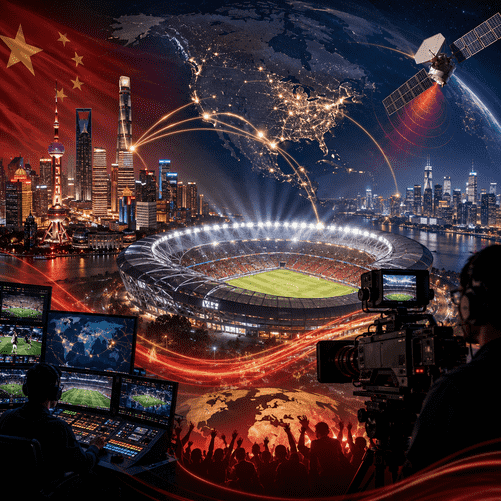
The late agreement with China Media Group highlights both football’s global pull and the commercial challenges facing the expanded 2026 tournament.

FIFA has finalized a broadcast rights deal in China just weeks before the opening of the 2026 World Cup, securing access to one of the world’s largest media markets at a critical moment for the tournament’s global rollout. The agreement with China Media Group covers four World Cups through 2031, including two men’s and two women’s tournaments.
The timing is striking. The deal was completed only 27 days before the 2026 World Cup begins in North America, where the United States, Canada and Mexico will host the first edition of the tournament expanded to 48 teams. For FIFA, China remains a crucial audience even though the national team failed to qualify for this year’s competition.
The financial terms also reveal a more complicated commercial picture. FIFA had reportedly sought a much higher figure, but the final agreement for the 2026 rights was around $60 million, far below the initial target of about $300 million. One factor weakening FIFA’s leverage was the time-zone gap between China and the North American host cities, which could place many matches outside peak viewing hours for Chinese audiences.
Still, China remains deeply connected to the business of the World Cup. Major Chinese companies are already linked to the tournament through sponsorships, including Lenovo, Mengniu and Hisense. That corporate presence reflects Beijing’s continuing influence in global football commerce, even as China’s own ambitions on the pitch remain limited.
The agreement also comes as international football becomes more dependent on emerging markets, media rights and global sponsorships. The 2026 World Cup will be the largest in history, and FIFA needs strong international distribution to maximize both audience reach and commercial value. China, with its vast population and major technology and consumer brands, remains too important to ignore.
For Chinese fans, the deal ensures official coverage of the sport’s biggest event. For FIFA, it closes an important gap before kickoff. But the reduced price also sends a clear message: even the World Cup is not immune to market realities, time-zone problems and shifting media economics.
The tournament may still command global attention, but the China deal shows that in modern sport, reach alone is not enough. Timing, local demand and commercial leverage now matter almost as much as the spectacle itself.