Kyiv says drones hit the Syzran refinery more than 800 kilometres inside Russia, intensifying pressure on Moscow’s war economy

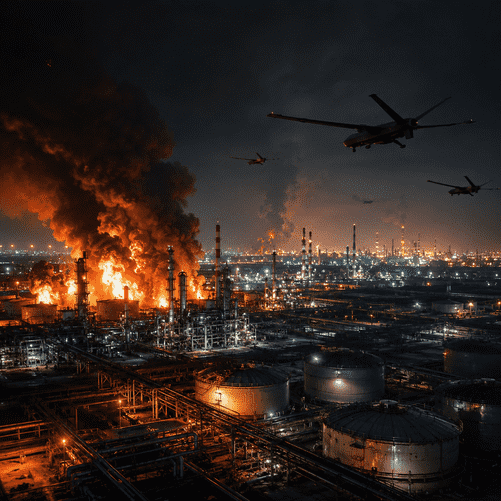
Ukraine has claimed another long-range drone strike on Russia’s energy infrastructure, saying its forces hit the Syzran oil refinery deep inside Russian territory and triggered a fire at the facility.
The attack, reported on Thursday, May 21, 2026, marks the latest escalation in Kyiv’s campaign to target Russian refineries, depots and fuel facilities that help finance and support Moscow’s war effort. According to the Associated Press, Ukrainian President Volodymyr Zelenskyy said drones struck the Syzran refinery, located more than 800 kilometres from Ukraine, underscoring Kyiv’s expanding ability to hit strategic targets far beyond the front line.
The strike is part of a broader pattern. Reuters reported that Ukraine has repeatedly targeted Russian energy sites in recent months, including refineries and fuel infrastructure, as it seeks to weaken the Kremlin’s revenue base and disrupt supplies to the Russian military.
For Ukraine, the campaign serves both military and economic objectives. Oil and refined fuels remain central to Russia’s war machine: they supply the army, generate export revenue and support the state budget. By attacking refineries rather than only battlefield positions, Kyiv is attempting to raise the cost of the war inside Russia itself.
The timing is significant. Ukraine is also strengthening its northern defences amid warnings of possible renewed Russian offensive plans, while Moscow continues to launch large-scale drone and missile attacks against Ukrainian cities and infrastructure.
The deep-strike campaign also carries political weight. Each successful attack inside Russia challenges Moscow’s claim that it can shield its population and critical infrastructure from the consequences of the war. Fires at refineries, fuel shortages and disruptions to logistics can create domestic pressure, especially if attacks become more frequent.
Russia, meanwhile, has responded with a mix of military escalation and strategic signalling. This week, Moscow said its forces carried out a major exercise involving the delivery of nuclear warheads, a move likely intended to project strength and deter further Western support for Ukraine.
The conflict is increasingly defined by technology. Ukraine’s use of long-range drones has allowed it to strike targets that would once have required aircraft or missiles in much larger numbers. That has changed the economics of the war: relatively low-cost systems can now threaten high-value industrial assets hundreds of kilometres away.
Still, the strategy carries risks. Russian retaliation against Ukrainian cities could intensify, and attacks on energy infrastructure may add volatility to fuel markets. But Kyiv appears to believe that the benefits outweigh the dangers, especially as it looks for ways to offset Russia’s larger manpower and artillery advantages.
The Syzran strike shows that the war is no longer confined to trenches, border regions or occupied territory. It is becoming a contest over industrial endurance, technological adaptation and national resilience. For Moscow, Ukraine’s message is increasingly clear: Russia’s war economy is no longer safely behind the front line.