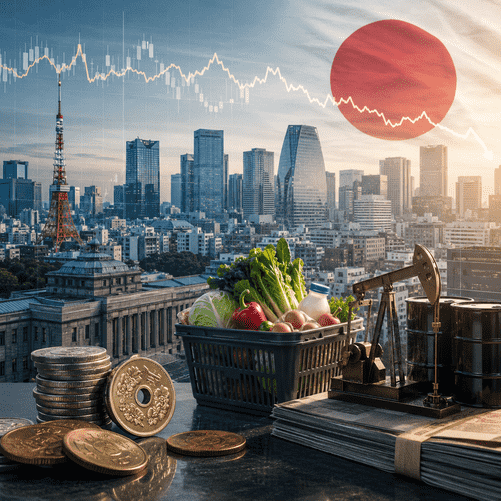
Tokyo weighs a new budget package while the Bank of Japan watches for renewed price pressure from energy markets

Japan’s economy is entering a delicate phase, as lower consumer inflation gives households temporary relief while rising import costs and fiscal pressures complicate the government’s next move.
Fresh data showed Japan’s core inflation slowed to 1.4% in April 2026, its lowest level in four years, down from 1.8% in March. The decline was helped by government fuel subsidies and a sharp drop in education fees, suggesting that public support measures are still cushioning consumers from some price pressures.
Yet the apparent easing may not last. Analysts expect inflation to rebound as higher fuel costs filter through the economy, while a Bank of Japan-tracked measure that excludes both fresh food and fuel rose 1.9% in April, pointing to more persistent underlying price pressure.
The fiscal debate is intensifying. Finance Minister Satsuki Katayama said Japan will try to avoid excessive reliance on new debt when preparing a possible supplementary budget. Domestic reports suggest the package could reach around 3 trillion yen, or roughly $18.9 billion, as Prime Minister Sanae Takaichi considers measures to soften the impact of rising living costs.
The challenge is familiar but difficult: Japan must support households without weakening investor confidence in its public finances. The country already carries one of the heaviest debt burdens among advanced economies, making any additional spending politically sensitive and closely watched by bond markets.
At the same time, the Bank of Japan is under pressure to decide whether price risks justify another interest-rate increase. Wholesale inflation recently accelerated, driven by higher petroleum, chemical and metals prices, strengthening expectations that the central bank may consider a rate hike at its June policy meeting.
For Japan, the coming weeks could define the balance between fiscal caution and monetary tightening. A poorly calibrated response risks either allowing inflation to regain momentum or adding further strain to public finances. A targeted package, combined with careful communication from the Bank of Japan, may be Tokyo’s best chance to protect consumers while preserving market confidence.