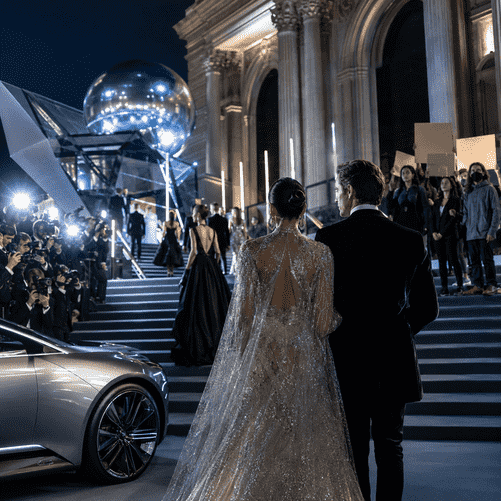
The controversy around Jeff Bezos and Lauren Sánchez Bezos’ Met Gala patronage has reignited debate over whether luxury fashion is becoming dependent on billionaire technology money.

The global fashion world is facing a new question that goes beyond hemlines, handbags and seasonal trends: who now pays for culture?
The debate has intensified after Jeff Bezos and Lauren Sánchez Bezos reportedly became major patrons of the 2026 Met Gala, one of the most visible events in the global luxury calendar. Their involvement has triggered criticism from activists, fashion insiders and cultural commentators who argue that Big Tech’s growing presence in high fashion risks turning elite cultural institutions into platforms for reputation management.
The Met Gala has long been a meeting point between celebrity, fashion, art and wealth. But the arrival of technology billionaires as increasingly prominent sponsors and guests reflects a deeper shift inside the luxury industry. As traditional fashion houses confront slower growth, cautious consumers and uncertainty in China, Silicon Valley capital is becoming harder to ignore.
For critics, the issue is not simply that tech executives are attending glamorous events. It is that fashion, once built around designers, editors, models and luxury houses, is becoming more dependent on the money and influence of the world’s largest technology fortunes. The Guardian reported that the 2026 Met Gala controversy included protests outside the museum and criticism over Amazon’s labor record, with some fashion voices warning that the industry is allowing billionaire power to reshape its moral and cultural image.
The timing is significant. Luxury fashion has entered a more difficult phase after years of rapid expansion. McKinsey’s 2026 State of Fashion report describes an industry facing low single-digit growth, macroeconomic volatility and increasingly value-conscious consumers. Tariffs, weak sentiment and shifting demand have made the business environment more challenging for many brands.
China, once the engine of global luxury growth, remains uncertain. Bain has forecast a rebound in China’s luxury market in 2026, but the recovery appears uneven. Beauty has shown stronger momentum, while fashion, leather goods and watches have struggled, partly because consumers are more selective and price increases have weakened demand.
Against that backdrop, the growing visibility of tech money in fashion is not accidental. Luxury brands and cultural institutions are seeking new sources of funding, influence and relevance. Technology leaders, meanwhile, are searching for softer forms of cultural power. Fashion offers prestige, access and a glamorous public stage that can help recast business figures as patrons of art, creativity and philanthropy.
But this new alliance carries risks. Fashion has always relied on wealth, but the industry’s identity is also built on taste, exclusivity and cultural authority. If its most prestigious events become too closely associated with corporate power, especially companies criticized over labor practices, surveillance, market dominance or social impact, the sector could face a credibility problem among younger consumers.
That matters because younger buyers are already changing the luxury market. They are more likely to mix high and low fashion, care about brand values and question whether luxury labels represent authenticity or status theater. A fashion industry seen as too close to Big Tech may find it harder to speak convincingly about creativity, sustainability and social responsibility.
At the same time, luxury brands cannot easily separate themselves from the economic reality around them. The next phase of fashion will be shaped by artificial intelligence, e-commerce, digital identity, data-driven marketing and immersive retail experiences. Technology is no longer just an outside sponsor; it is becoming part of how fashion is designed, sold and consumed.
The controversy surrounding the Met Gala therefore captures a broader transformation. Fashion is no longer merely borrowing glamour from Hollywood or aristocratic wealth. It is increasingly negotiating with the power of technology capital.
For the luxury industry, the challenge is delicate. Tech money can fund exhibitions, events and global visibility. But if fashion becomes too dependent on it, the price may be cultural independence. In an industry built on image, that may become the most expensive cost of all.