The Swiss watchmaker’s second increase of the year reflects soaring precious-metal costs—but also a luxury market increasingly dependent on ultra-wealthy clients who remain largely untouched by economic uncertainty.

Rolex has raised the prices of its gold watches for the second time this year, offering the clearest indication yet that the uppermost tier of the luxury market continues to operate by different rules from the rest of the industry.
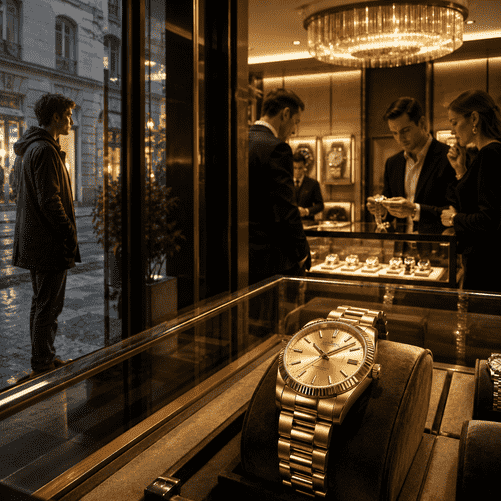
The Swiss watchmaker increased prices on gold models by an average of approximately 5 percent across major markets, including the United States, Britain and Hong Kong. The adjustment followed an earlier rise in January and represents an unusually aggressive move for a company known for maintaining tight control over its pricing, production and distribution.
Steel models were largely spared from the latest increase, while solid-gold and two-tone watches absorbed the largest adjustments. The strategy suggests that Rolex believes the customers seeking its most expensive pieces are unlikely to be discouraged by another rise in price.
That confidence stands in sharp contrast to the mood across much of the global luxury industry.
After years of rapid expansion and repeated price increases, many fashion houses are struggling with weaker demand, cautious middle-class consumers and growing resistance to products whose prices have risen more quickly than their perceived quality or creativity.
Rolex, however, occupies a particularly protected position. Its best-known watches remain difficult to obtain through authorised retailers, while waiting lists and controlled supply reinforce the impression of scarcity.
For wealthy collectors, the increase may even enhance the appeal of the product. Higher prices can strengthen the perception that a watch is exclusive, difficult to access and capable of preserving its value over time.
Gold Becomes Both Material and Message
The immediate explanation for the increase is the dramatic rise in the price of gold.
Geopolitical instability, inflation concerns and demand for safe-haven assets have pushed the precious metal to historically elevated levels. That has raised production costs for manufacturers of jewellery and high-end watches, particularly for models containing large quantities of solid gold.
Rolex is not alone in responding. Cartier and other luxury watch and jewellery houses have also introduced price increases on precious-metal products, citing the cost of raw materials and currency movements.
Yet the retail adjustments are not simply mechanical responses to the gold market.
Luxury brands price their products according to desirability, exclusivity and what their most affluent customers appear willing to pay. The value of the gold contained in a watch matters, but it represents only one part of the final price.
Brand reputation, craftsmanship, distribution, collectability and scarcity account for much of the premium.
The latest increase therefore carries a symbolic message as well as a financial one: Rolex believes demand at the top of its market remains strong enough to absorb higher prices without undermining sales.
Certain gold Daytona models have risen substantially in price since 2024, while the cost of some Day-Date watches increased by several thousand euros in June alone.
For customers operating at this level, the difference may be less important than obtaining the desired model.
Luxury’s Shrinking Middle
The decision highlights a broader transformation taking place across fashion, jewellery and watches.
For much of the past decade, the luxury industry pursued growth by attracting a wide population of aspirational consumers. These customers might not purchase couture, high jewellery or complicated watches, but they could participate through entry-level handbags, shoes, fragrances and accessories.
Repeated price rises have weakened that model.
Many consumers now feel that luxury products have become unaffordable without becoming meaningfully better. Some have shifted towards premium independent brands, second-hand platforms or experiences such as travel and hospitality.
Others have stopped buying altogether.
The result is a more polarised market. At one end are consumers who remain highly sensitive to inflation, interest rates and economic uncertainty. At the other are ultra-wealthy clients whose purchasing decisions are less affected by the cost-of-living pressures shaping the wider economy.
Rolex’s latest increase is aimed squarely at the second group.
The pattern is increasingly visible throughout the sector. Luxury houses are investing more heavily in private salons, invitation-only events, bespoke services and exceptionally expensive products intended for their wealthiest customers.
At the same time, brands are becoming less dependent on high sales volumes and more focused on extracting greater value from a smaller number of clients.
Swiss Watches Move Further Upmarket
The Swiss watch industry has undergone a particularly striking form of premiumisation.
Over the past quarter-century, Switzerland has exported far fewer watches by volume, but the total value of those exports has risen dramatically. The industry has progressively withdrawn from the mass market and concentrated on expensive mechanical timepieces.
Watches priced above 20,000 Swiss francs now account for a dominant share of Swiss export value. Their importance has increased sharply since before the pandemic, even as sales of more accessible watches have faced pressure from smartwatches, changing tastes and economic uncertainty.
This transformation has made the industry more profitable at the top—but also more exposed to a narrow group of wealthy buyers.
Rolex is better positioned than most competitors because its name is recognised far beyond specialist watch collectors. Its products function simultaneously as precision instruments, status symbols and, for some owners, portable stores of value.
The company’s tightly managed production also protects it from the discounting that can damage other luxury brands.
A handbag or watch that is widely available at reduced prices can quickly lose its aura of exclusivity. Rolex limits that risk by controlling supply and maintaining a disciplined authorised-retailer network.
The Vintage Market Feels the Gold Rush
Soaring gold prices are also producing a more troubling development in the second-hand watch market.
Some older gold watches from less collectible brands are now worth more for their precious-metal content than as complete timepieces. Dealers have reported cases in which vintage watches are dismantled and melted because the value of the gold exceeds what collectors are prepared to pay.
Rare Rolex, Patek Philippe and highly desirable vintage models remain protected by their collector premiums. More ordinary pieces, however, may not survive the calculation.
The trend exposes a paradox at the centre of the watch market.
At the highest level, gold watches are becoming more expensive and prestigious. Lower down, some older watches are losing their identity as designed objects and being reduced to the market value of their materials.
This places additional importance on brand strength, provenance and scarcity. A gold watch is safest from the melting furnace when collectors value the name and history on its dial more highly than the metal in its case.
Price as a Luxury Strategy
Rolex’s decision will be closely watched by competitors.
A successful increase could encourage other brands to follow, particularly those seeking to protect margins from higher material and manufacturing costs. But few companies possess the same combination of demand, scarcity and global recognition.
For weaker brands, another increase could drive customers towards the resale market or away from luxury watches entirely.
The strategy is therefore not without risk. Even affluent consumers can resist increases they consider opportunistic, particularly when prices rise repeatedly without significant changes to design or quality.
Luxury depends on emotion, but it also depends on trust. Customers must believe that a product’s price reflects genuine desirability rather than a company’s attempt to test the limits of their spending.
For now, Rolex appears confident that it has not reached that limit.
Its latest move reveals a market in which price is no longer merely the cost of obtaining a luxury product. It is part of the product’s identity—an instrument used to preserve exclusivity, distinguish elite customers and strengthen the sense that access itself is a privilege.
As the wider luxury sector struggles to reconnect with cautious consumers, Rolex is moving in the opposite direction.
It is not trying to make its gold watches easier to buy. It is making them more expensive, more selective and even further removed from the mainstream.
That may be the most important luxury trend of 2026: not expansion, but separation.