Israeli critics fear Washington is offering Tehran economic and strategic relief before securing firm nuclear concessions, while opponents of the war say the agreement exposes the failure of months of costly fighting.

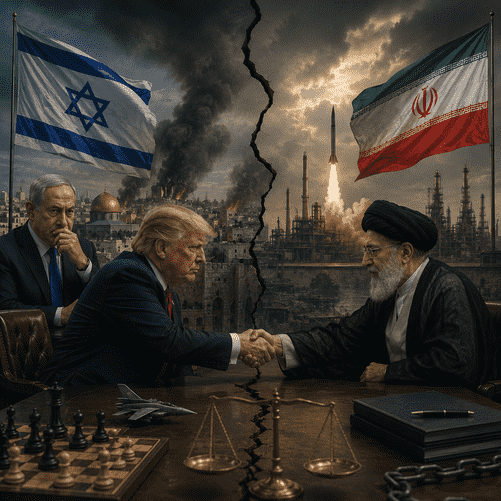
President Donald Trump’s emerging agreement with Iran has generated deep unease in Israel, where political leaders and security analysts fear that Washington is ending the conflict before Tehran’s nuclear capabilities, missile programme and regional alliances have been decisively contained.
The preliminary accord offers a possible route out of more than three months of war. It is designed to extend the ceasefire for 60 days, reopen the Strait of Hormuz and begin negotiations on a broader nuclear settlement. In exchange, Iran could eventually receive limited sanctions relief and access to some frozen assets, provided it satisfies conditions connected to its nuclear programme.
For Trump, the agreement represents an opportunity to halt a conflict that has destabilised the Middle East, disrupted international shipping and placed further pressure on energy markets. His administration argues that diplomacy can now secure commitments that military force alone could not deliver.
Many in Israel see the situation differently.
Israeli critics believe the proposed arrangement gives Tehran time, money and political breathing room while postponing the most difficult questions. They are particularly concerned that the initial framework does not immediately eliminate Iran’s enriched uranium stockpile, dismantle its ballistic missile infrastructure or permanently cut financial and military support to Hezbollah and other allied groups.
The absence of Israel from the direct negotiations has intensified those concerns. Although Trump has argued that the agreement will ultimately protect Israel by preventing Iran from obtaining a nuclear weapon, Israeli officials fear that Washington’s priorities have shifted towards ending the war and reopening the Strait of Hormuz as quickly as possible.
The dispute has exposed growing tension between Trump and Israeli Prime Minister Benjamin Netanyahu. Their governments entered the conflict with broadly shared objectives, but differences have widened over how long military pressure should continue and what would constitute an acceptable settlement.
Trump has publicly criticised recent Israeli military action in Lebanon, warning that further attacks could undermine the agreement with Tehran. Israel, however, remains unwilling to accept restrictions that it believes would prevent it from acting against Hezbollah or other threats along its borders.
This divergence is especially important because the agreement is expected to include an extension of the ceasefire in Lebanon. Iran has insisted that an end to the wider conflict must also reduce Israeli attacks on Hezbollah, while Israel argues that it must retain the freedom to respond to weapons transfers, missile launches and attempts by the group to rebuild its military presence.
Former Israeli defence minister Avigdor Lieberman and other political figures have described the proposed agreement as dangerous, arguing that it rewards Iran before its strategic capabilities have been neutralised. The criticism has crossed some traditional political divisions, reflecting a broader Israeli fear that Tehran could use a temporary pause to recover from the war.
The economic provisions are among the most controversial elements. Even limited sanctions relief could generate substantial revenue for Iran through renewed oil exports and access to previously frozen funds. Israeli critics warn that such resources may not remain confined to civilian reconstruction but could help rebuild Iran’s armed forces and support its regional partners.
Supporters of the agreement respond that sanctions relief is expected to be conditional rather than automatic. Vice-President JD Vance has said Iran will receive access to frozen assets only after fulfilling specific nuclear obligations. The administration has also said international inspectors will return and assist in dealing with Iran’s highly enriched uranium.
However, the complete text of the memorandum has not yet been released publicly, leaving considerable uncertainty over how those commitments would be verified and enforced. Washington and Tehran have also offered differing interpretations of some provisions, raising doubts about whether they have truly agreed on the substance or merely on a temporary diplomatic framework.
The Strait of Hormuz remains another unresolved issue. The waterway is one of the world’s most important routes for oil and gas shipments, and its disruption has had consequences far beyond the region. Reopening it would relieve pressure on global markets and provide Trump with an immediate political victory.
Yet commercial shipping has not fully returned. Maritime companies remain concerned about attacks, unclear security guarantees and reports that Iran may seek to impose passage fees or establish a new system of control over the strait.
These uncertainties reinforce the Israeli view that Iran has secured important concessions without yet surrendering its strongest leverage. Tehran can present the agreement domestically as evidence that it resisted American and Israeli pressure while forcing Washington back to the negotiating table.
Iranian officials have already claimed victory, portraying the accord as proof that the country survived the military campaign and preserved its ability to bargain over nuclear enrichment, sanctions and regional security.
That narrative has also strengthened the argument of those who opposed the war from the beginning. They say the United States and Israel have returned to negotiations over many of the same issues that existed before the fighting, but only after months of destruction, economic disruption and loss of life.
From this perspective, the deal does not mark the success of the war. Instead, it suggests that the conflict failed to achieve its most ambitious objectives, including the permanent destruction of Iran’s nuclear programme or a fundamental weakening of its government.