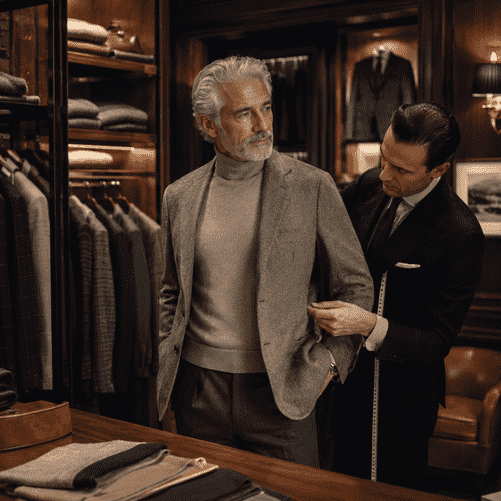
As younger consumers become more price-sensitive, heritage brands are shifting attention toward mature men who value craftsmanship, loyalty and long-term style.

The luxury menswear market is undergoing a quiet but significant recalibration. After years of focusing heavily on Gen Z, streetwear energy and digital-first marketing, fashion houses are paying renewed attention to older male consumers — a group with substantial spending power and a more stable relationship with luxury.
The shift reflects a broader change in the luxury industry. With many younger shoppers facing higher living costs and becoming more selective about discretionary purchases, brands are looking again at customers who buy less impulsively but more consistently. Gen X and baby boomer men are increasingly seen as valuable clients because they tend to prize quality, heritage and fit over fast-moving trends.
This audience has often been underrepresented in fashion advertising, despite its financial importance. Many mature menswear consumers are brand loyal, deliberate and willing to invest in pieces that can remain in their wardrobes for years. For them, luxury is not primarily about novelty or social-media visibility. It is about trust, materials, tailoring and personal service.
Brands such as Zegna, Loro Piana and Brunello Cucinelli have been well positioned for this moment. Their emphasis on understated elegance, cashmere, soft tailoring and refined casualwear speaks directly to men who want clothing that signals status without excessive display. Rather than chasing viral fashion moments, these labels build appeal through continuity and discretion.
The change is also visible in retail strategy. Older luxury consumers often value in-store relationships, knowledgeable staff and personalized attention. While Gen X shoppers are comfortable researching online, many still expect a seamless connection between digital discovery and physical service. For brands, this means that luxury retail cannot rely only on e-commerce or spectacle; it must also restore the human relationship at the center of high-end shopping.
The trend does not mean that fashion is abandoning younger consumers. Instead, it suggests that luxury brands are widening their definition of relevance. In a more cautious market, the most dependable clients may be those who already understand the value of investment dressing.
The return of the older menswear shopper also challenges fashion’s obsession with youth. Style, in this new reading, is less about age and more about authority. A well-cut coat, a cashmere knit or a pair of tailored trousers can communicate confidence more effectively than a seasonal trend.
For the luxury industry, the lesson is clear: growth may not come only from the next generation of buyers. It may also come from customers who have been there all along — mature, affluent and ready to spend when brands speak to them with respect.


