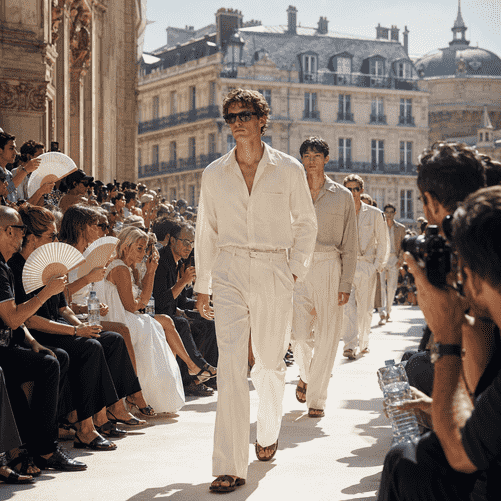
As extreme temperatures hit Paris during the men’s shows, the luxury industry faces growing pressure to rethink seasonal collections, event planning and the meaning of summer style.

Paris Fashion Week Men’s has long been a stage for spectacle, elegance and creative ambition. This season, however, the most powerful presence was not on the runway. It was the heat.
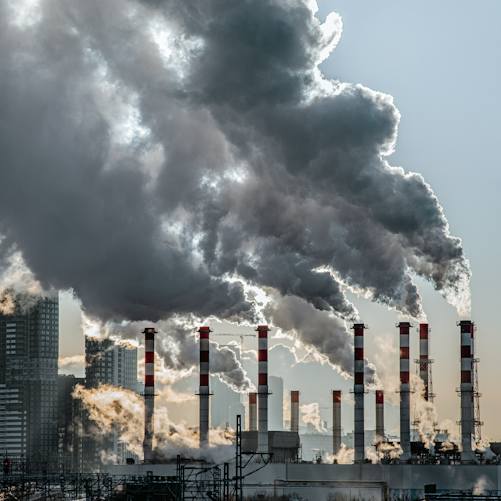
A historic heat wave across Europe turned the June fashion calendar into a test of endurance for designers, models, guests and organizers. In Paris, where many venues remain poorly equipped for extreme summer temperatures, the conditions exposed a growing tension inside the fashion industry: luxury still sells seasonal fantasy, but the climate is increasingly forcing reality into the front row.
Guests arrived at shows armed with fans, water bottles and sunglasses, while organizers relied on mist machines, ice packs and adjusted schedules to reduce the strain. Yet the larger issue was difficult to ignore. Fashion’s traditional calendar continues to present spring-summer collections months in advance, often filled with heavy tailoring, leather, knits and layered styling that feel disconnected from the actual conditions consumers now face.
The contradiction was visible across the European menswear season. Even as cities experienced dangerous heat, many runways continued to show garments designed around image rather than function. For critics, the moment highlighted how slowly luxury fashion has adapted to climate change, despite years of public commitments on sustainability.
Some designers did engage more directly with the new reality. Collections that emphasized breathability, movement, lighter fabrics and looser silhouettes stood out not simply as aesthetic choices, but as practical responses to a warming world. These looks suggested a future in which elegance may depend less on structure and excess, and more on comfort, airflow and adaptability.
The heat wave also raised logistical questions for the industry’s most important events. Fashion weeks are built around packed schedules, crowded venues and global travel, all of which are becoming harder to justify under worsening climate conditions. Paris, Milan and other major fashion capitals may eventually need to rethink not only what is shown, but when and how it is shown.
For luxury brands, the challenge is cultural as much as operational. Climate-conscious consumers are increasingly skeptical of fashion that appears detached from environmental realities. Younger shoppers, in particular, are looking for brands that can combine beauty with relevance, craftsmanship with responsibility, and aspiration with practicality.
That does not mean the end of glamour. But it may change its definition. In a hotter world, the most desirable clothes may be those that help people live better, not merely look richer. Technical fabrics, natural fibers, modular garments and climate-responsive tailoring could become central to high-end design.
The episode in Paris should be read as more than a weather disruption. It was a warning about the future of style. The fashion industry has spent years discussing sustainability in terms of materials, emissions and supply chains. Now, climate change is also challenging the industry’s creative language.
Luxury has always been about control: control of image, craft, scarcity and desire. Extreme weather is a reminder that the environment does not follow a show schedule.
As temperatures rise, fashion’s most urgent trend may not be a color, silhouette or accessory. It may be adaptation.