The appointment of Romain Spitzer as chief executive signals Kering’s determination to expand one of its strongest houses through jewellery, lifestyle products and a deeper push into China.

Bottega Veneta is preparing for a new phase of international expansion after appointing Romain Spitzer as its next chief executive, placing an experienced luxury and beauty executive alongside creative director Louise Trotter as the Italian house seeks growth without diluting the discreet craftsmanship that has become its signature.
Spitzer will assume the role on September 1, succeeding Bartolomeo Rongone, who left the company earlier this year after six years at the helm. He joins from LVMH, where he led the group’s fragrance division and oversaw brands including Givenchy Parfums, Kenzo Parfums and Acqua di Parma.
The appointment comes at a pivotal moment for Bottega Veneta and its parent company, Kering. The French luxury group is attempting to revive growth across its portfolio while managing the prolonged difficulties of Gucci, historically its largest and most profitable brand.
Bottega Veneta has emerged as one of the more resilient businesses within the group. Its revenue increased by 3 percent in 2025 to approximately €1.7 billion, while its performance remained comparatively robust during the opening months of 2026. That strength has made the house increasingly important to Kering’s wider recovery strategy.
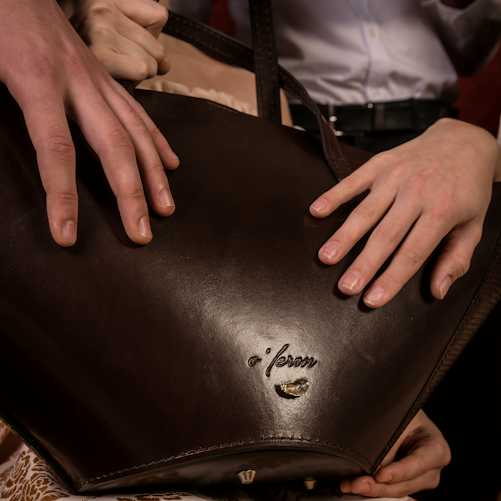
Unlike many luxury competitors, Bottega Veneta has built its reputation without relying heavily on visible logos. Its identity is rooted in woven leather, restrained silhouettes and an emphasis on materials and construction. The approach anticipated the rise of so-called quiet luxury, a style movement centred on subtle design, neutral colours and products whose value is communicated through quality rather than conspicuous branding.
The challenge facing Spitzer will be to transform that cultural relevance into significantly larger sales without making the brand appear overexposed.
Kering wants to strengthen Bottega Veneta’s visibility, particularly in China, while expanding its presence beyond leather goods. The group has identified jewellery, gifting and lifestyle products—sometimes described as the “art of living”—as important future categories. It aims to more than double revenue from non-leather products by 2030.
That diversification reflects a broader shift across the luxury industry. Jewellery has recently outperformed many fashion and handbag businesses because consumers increasingly regard precious objects as durable purchases with emotional and potential resale value. Richemont, the owner of Cartier and Van Cleef & Arpels, reported a 24 percent increase in jewellery sales during its latest quarter, highlighting the exceptional strength of the category.
Bottega Veneta’s move into jewellery and decorative lifestyle objects could therefore help the company participate in one of luxury’s fastest-growing areas while reducing its reliance on handbags.
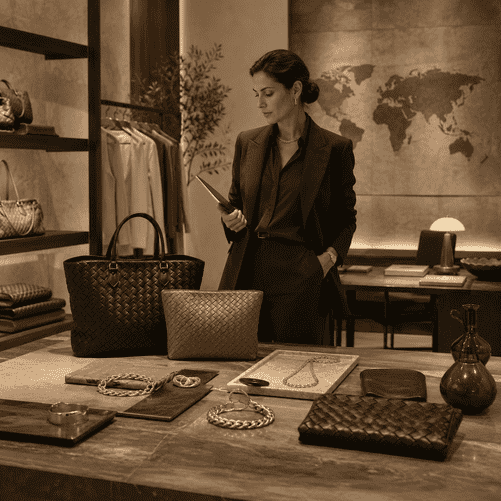
Leather goods will nevertheless remain central to the house. Its signature Intrecciato weaving technique provides an immediately recognisable identity without requiring a prominent monogram. Bags including the Andiamo, Jodie and Sardine have helped Bottega Veneta remain relevant to both established clients and younger fashion consumers.
The company’s ability to create recognisable products without obvious logos has proved particularly valuable as some shoppers turn away from heavily branded accessories. Years of steep price increases have also encouraged customers to examine craftsmanship, originality and long-term value more carefully.
Industry research suggests that luxury companies can no longer rely primarily on higher prices to generate growth. Around 80 percent of the sector’s expansion between 2023 and 2025 was estimated to have come from price increases rather than greater sales volumes, a strategy that has weakened trust among some consumers.
Bottega Veneta’s positioning may offer an alternative. Its products are expensive, but the company’s marketing consistently emphasises handwork, material innovation and Italian manufacturing. Its stores and campaigns tend to present the brand as culturally sophisticated rather than aggressively commercial.
Louise Trotter, who became creative director following Matthieu Blazy’s departure, will be crucial to preserving that balance. Her early collections have received favourable attention for maintaining Bottega Veneta’s tactile minimalism while introducing a more personal and relaxed interpretation of the house’s codes.
The relationship between a luxury brand’s creative director and chief executive is often decisive. The designer must produce collections that generate cultural excitement, while the executive must convert that attention into profitable products, effective distribution and sustainable international growth.
Spitzer’s background in fragrance may be especially relevant. Perfume businesses depend on translating a luxury identity into more accessible products that can reach a wider audience without undermining a brand’s prestige. Although Bottega Veneta’s immediate strategy is focused on jewellery and lifestyle categories, his experience could eventually support a broader beauty or fragrance expansion.
Such products offer luxury companies an entry point for customers who cannot afford a handbag or ready-to-wear garment. They can also generate recurring purchases, unlike expensive leather goods that consumers may buy only occasionally.
Expansion carries risks, however. Adding too many categories can weaken a tightly controlled identity, while increasing production too quickly can undermine perceptions of rarity. Luxury companies that chase rapid sales growth frequently discover that broader availability reduces their appeal among their most valuable clients.
China presents another complex opportunity. The mainland market is expected to return to modest growth in 2026 after contracting in the previous two years, but the recovery is likely to remain uneven. Economic uncertainty and a weaker property sector have made Chinese consumers more selective, favouring brands with strong products and distinctive identities.
Bottega Veneta may benefit from this environment because its understated aesthetic aligns with the growing interest in less conspicuous luxury. Yet it will face intense competition from Hermès, Loewe, The Row and independent Asian designers offering similarly refined products.
Kering is likely to support the brand with more events, exhibitions and cultural programmes designed to deepen its relationship with Chinese consumers. The objective will not simply be to open more stores, but to create a sense of relevance around craftsmanship, design and contemporary culture.
The appointment also reflects a wider wave of leadership changes across luxury fashion. Companies have replaced executives and creative directors as they search for new ideas capable of reversing slowing sales. The industry’s recovery is expected to be gradual, with personal luxury-goods spending forecast to grow by only 2 to 4 percent in 2026.
In that environment, the strongest brands are likely to be those that combine a coherent creative identity with disciplined commercial expansion.
Bottega Veneta already possesses many of those advantages. It has recognisable craftsmanship, strong accessories, growing cultural prestige and an aesthetic that feels well suited to the current preference for discretion and longevity.
Spitzer’s task will be to build a larger business around those strengths without turning restraint into ubiquity.
For Kering, the stakes extend beyond a single fashion house. A successful Bottega Veneta could provide the group with a more balanced portfolio and reduce the pressure created by Gucci’s difficulties. For the luxury market, the brand will offer an important test of whether quiet luxury can evolve from a fashion trend into a durable global business model.