Long board shorts, faded T-shirts and uncomplicated footwear are replacing polished resort dressing as European fashion embraces the freedom—and contradictions—of surf culture.

European summer style is moving away from immaculate linen tailoring and carefully coordinated resort wear. In its place has arrived something looser, longer and deliberately less polished: the board short.
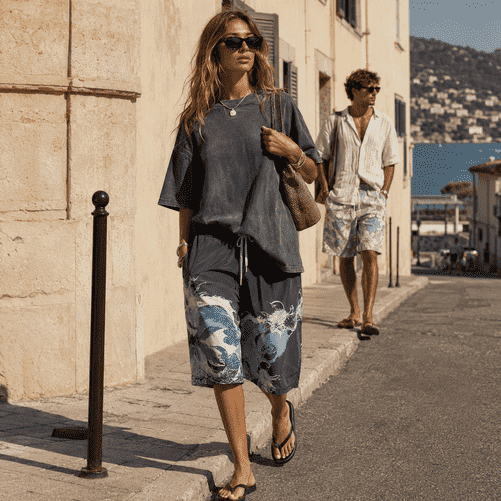
Once associated almost exclusively with surfers and coastal sportswear, knee-length board shorts are appearing on luxury runways, city streets and secondhand marketplaces. The emerging aesthetic combines oversized shorts with faded T-shirts, flip-flops, baseball caps and sun-worn fabrics, creating the impression of a life spent near the ocean—even when the wearer is navigating Paris, London or Milan rather than a beach.
The phenomenon has been labelled “board-short summer,” a phrase describing the growing desire to dress like a surfer without necessarily participating in the sport. Its rise reflects fashion’s continuing fascination with practical uniforms, 1990s nostalgia and subcultures that appear to offer an escape from highly managed digital life.
The trend’s arrival in Europe has been accelerated by some of the industry’s most influential fashion houses.
Miu Miu presented satin shorts resembling traditional surfwear, transforming an athletic garment into a luxury proposition. Dries Van Noten introduced embellished interpretations, while Chloé, Balenciaga and Bottega Veneta helped restore the flip-flop as a legitimate runway shoe rather than an item reserved for beaches and swimming pools.
Louis Vuitton made the connection unmistakable at its Spring-Summer 2027 menswear show in Paris on June 23. Pharrell Williams presented a collection inspired by coastal dressing against the backdrop of a monumental artificial wave. The house described the collection as a meeting between urban tailoring and surf culture, using sea-inspired details, sun-weathered materials and technical clothing to carry the atmosphere of the coast into the luxury wardrobe.
The show demonstrated how thoroughly surfwear has entered fashion’s upper tier. Board shorts were no longer presented simply as functional swimwear but as part of a broader lifestyle proposition involving refined jackets, handcrafted textures, accessories and expensive surfboards.
Miu Miu’s summer campaign has approached the theme from a softer direction. Its L’Été 2026 collection uses navy, cerulean, white and sand across relaxed shirts, canvas trousers and shorts, presenting the seaside as a place of optimism, simplicity and seemingly endless leisure.
On European streets, however, the trend is generally less luxurious and more nostalgic.
The recognisable formula involves long, loose shorts rather than fitted hot pants; an old Quiksilver, Billabong or Rip Curl T-shirt; inexpensive flip-flops; and hair that appears naturally altered by salt and sunlight. The desired effect is relaxed rather than immaculate. Clothing should look collected over time, not assembled for a single photograph.
That distinction separates board-short summer from the highly polished Mediterranean aesthetic that has dominated social media in recent years. The familiar “European summer” wardrobe—linen shirts, silk scarves, woven handbags and neutral tailoring—communicated controlled elegance. Surf-inspired dressing suggests movement, spontaneity and indifference to conventional rules of refinement.
It also fits within the wider expansion of sportswear on European runways. British Vogue identified “mode sportif” as a major Spring-Summer 2026 direction, with designers including Prada, Loewe and Fendi reworking tracksuits, technical jackets and athletic shorts in bold colours and layered combinations. Sports clothing is no longer treated as a separate casual category; it has become part of fashion’s ordinary vocabulary.
The board-short trend pushes that development toward a particular cultural fantasy. Surfwear represents more than physical activity. It evokes coastal travel, independence, outdoor community and resistance to rigid professional life.
“Consumers aren’t just buying into surfing as a sport; they’re buying into what it represents,” WGSN youth-fashion strategist Mia Jacobs told the Guardian. She linked its appeal to a growing desire for a slower and more carefree existence as everyday life becomes increasingly digital and fast-moving.
Commercial evidence suggests that the aesthetic has moved beyond runway experimentation.
Searches for board shorts on Vinted reportedly increased by 132 percent in one month compared with July 2025. On eBay, searches for Quiksilver board shorts rose by 338 percent from the beginning of the year, while searches for O’Neill flip-flops increased by 686 percent compared with the previous July. British vintage retailer Rokit has also recorded greater demand for pieces from established surf brands including Billabong, Rusty and Rip Curl.
The strength of the secondhand market is central to the trend’s identity. New luxury versions may provide visibility, but many consumers are searching for authentic garments from the late 1990s and early 2000s. Faded colours, outdated logos and signs of wear can make a secondhand pair more desirable than a newly manufactured imitation.
That preference creates an unusual dynamic. Luxury fashion is helping to increase the cultural value of garments that shoppers may ultimately purchase from vintage platforms rather than luxury boutiques. A fashion house can place the board short on a Paris runway, but the consumer may decide that the most convincing version is a €15 pair produced two decades ago.
The trend is also relatively gender-fluid. Long shorts, oversized shirts and uncomplicated footwear can move easily between menswear and womenswear. Rather than emphasising the body through fitted tailoring or abbreviated hemlines, surf dressing creates a loose silhouette built around proportion and ease.
That does not mean styling has disappeared. The fashion interpretation depends on carefully controlled contrasts: board shorts with a tailored blazer, a faded surf T-shirt with an expensive handbag, or flip-flops with jewellery and an evening top. The clothing may communicate indifference, but the strongest looks are often highly considered.
There is nevertheless tension between the image sold by fashion and the reality of surfing.
Experienced surfers point out that European conditions rarely resemble the warm coastal fantasy displayed in advertising. In Cornwall, Brittany and much of northern Europe, surfers spend considerable time in cold water, wearing wetsuits rather than shorts and dealing with weather, physical danger and demanding conditions.
For members of established surf communities, the activity is a discipline and way of life rather than a seasonal costume. The fashion industry’s ability to extract the most attractive elements—freedom, youth, beaches and rebellion—while removing the hardship risks turning a genuine culture into another temporary aesthetic.
Similar tensions have followed skateboarding, workwear and outdoor clothing into luxury fashion. Items originally designed for practical communities become desirable precisely because they appear authentic, only to lose some of that authenticity when they are reproduced, branded and sold at significantly higher prices.
Surfwear may be particularly vulnerable to this process because its appeal depends on appearing unconcerned with fashion. A perfectly coordinated outfit made entirely from new surf-branded products can look less convincing than clothing that has been worn, repaired and mixed without regard for seasonal collections.
The movement therefore contains two competing versions of the European summer.
One is commercial and highly visible: luxury board shorts, designer flip-flops and coastal styling presented against elaborate runway scenery. The other is rooted in secondhand garments, practical dressing and the belief that possessions should become more personal as they age.
Both versions respond to the same desire. After years of quiet luxury, immaculate minimalism and rigidly categorised online aesthetics, consumers appear increasingly attracted to clothes that permit imperfection.
Board-short summer offers an accessible silhouette and an appealing fantasy of escape. Its success does not depend on whether the wearer can surf. It depends on whether fashion can persuade people that a longer pair of shorts, an old T-shirt and uncomplicated shoes might make urban life feel a little closer to the sea.