The Houthis’ warning against vessels using Saudi ports could disrupt the kingdom’s vital western export route just as conflict around the Strait of Hormuz has forced more Gulf crude toward the Red Sea.

Yemen’s Houthi movement has warned international shipping companies that vessels using Saudi Arabian ports could be attacked, escalating a regional confrontation that threatens to place two of the Middle East’s most important maritime energy routes under pressure simultaneously.
The warning was delivered to multiple shipping companies in an email from the Houthis’ Sanaa-based Humanitarian Operations Coordination Center, the body previously used to communicate restrictions during the group’s campaign against commercial shipping. The message prohibited vessels from loading or discharging cargo at Saudi ports and said ships violating the order could be targeted anywhere within the movement’s operational reach. The restrictions took effect at 12.01pm GMT on Monday, July 20.
The declaration goes considerably further than a threat against Saudi-owned tankers alone. It potentially places any vessel calling at a Saudi terminal at risk, regardless of its flag, ownership or final destination. For shipowners, charterers and insurers, that uncertainty may be almost as disruptive as an actual attack: companies can reroute vessels simply because the financial and human consequences of testing the warning are too great.
The Houthis announced what they described as a naval blockade of Saudi Arabia after accusing Riyadh of maintaining restrictions on Houthi-controlled areas of Yemen and supporting a recent strike on Sanaa’s international airport. Saudi Arabia rejected the allegations and said it would take all necessary measures to protect its vessels and maintain freedom of navigation.
The immediate concern centres on the Bab el-Mandeb Strait, the narrow passage connecting the Red Sea with the Gulf of Aden and the Arabian Sea. The waterway forms the southern entrance to the route leading through Egypt’s Suez Canal and carries a substantial share of trade between Europe and Asia. Approximately 12 percent of global trade, including around a quarter of container traffic, normally passes through the corridor.
Although the Houthis do not control the coastline directly bordering the narrowest section of the strait, they hold territory within striking distance. The movement has previously demonstrated its ability to attack merchant vessels with missiles, drones and explosive boats. Houthi officials have also indicated that naval mines and attempts to board ships could form part of any renewed campaign.
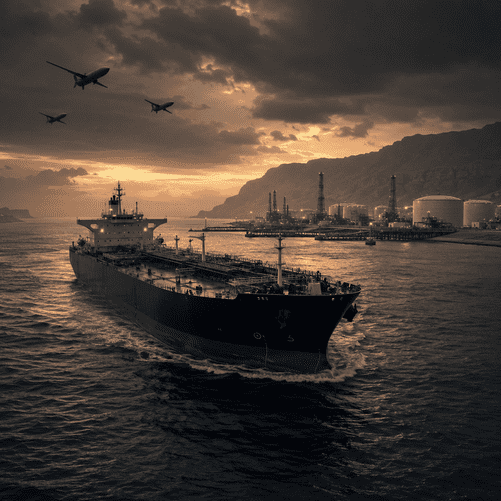
The threat is particularly serious because the Red Sea has become an essential alternative outlet for Saudi oil following severe disruption in the Strait of Hormuz. Since the conflict involving Iran, Israel and the United States intensified on February 28, Saudi Arabia has redirected more than 70 percent of its normal crude exports to Yanbu, its principal oil terminal on the Red Sea coast. Recent shipments from Yanbu have averaged approximately four million barrels a day, compared with less than one million barrels daily a year earlier.
Tankers departing Yanbu for European markets can sail north through the Suez Canal. Vessels bound for India, China and other Asian destinations generally travel south toward Bab el-Mandeb, placing them closer to Houthi-controlled territory.
The first signs of disruption emerged on Tuesday when two tankers carrying Saudi crude for customers in China and India reversed course in the Red Sea. Instead of continuing south toward Bab el-Mandeb, the vessels headed north toward the Suez Canal. Maritime-security analysts described the manoeuvres as the first confirmed commercial-routing changes following the Houthi announcement.
The diversions illustrate how a maritime threat can affect energy flows before a missile is fired. Shipping companies may order vessels to avoid the southern Red Sea, while insurers could raise premiums or withdraw coverage for ships connected to Saudi ports. Crews may also refuse assignments through high-risk waters, adding further operational pressure.
Should attacks make Bab el-Mandeb commercially impassable, some vessels could sail around the Cape of Good Hope at the southern tip of Africa. That route would add one or two weeks to many voyages, increasing fuel consumption, freight rates and delivery times. The higher costs would eventually be felt by refiners, manufacturers and consumers far beyond the Middle East.
Saudi Arabia retains some alternatives. Crude can be moved north across the Red Sea to Egypt and transferred through the SUMED pipeline to the Mediterranean, while additional volumes can pass through the Suez Canal. Those routes, however, have limited capacity and would not necessarily absorb all the oil currently leaving Yanbu for Asian markets.
The strategic danger is the possibility of simultaneous disruption at Hormuz and Bab el-Mandeb. The Strait of Hormuz is the principal maritime exit from the Persian Gulf, while Bab el-Mandeb provides access between the Arabian Sea and the Red Sea. Pressure on both waterways would leave Gulf exporters with sharply reduced options and could remove millions of barrels of oil and petroleum products from the global market.
Petroleum flows through Bab el-Mandeb reached approximately 7.4 million barrels a day in June—around seven percent of global oil production—as exporters increasingly relied on the Red Sea route. That volume was substantially higher than the 4.2 million barrels recorded a year earlier.
The crisis also risks reviving the wider war in Yemen. Major cross-border fighting between the Houthis and the Saudi-led coalition declined after a 2022 truce, even though no comprehensive peace agreement followed. Direct attacks on Saudi shipping or infrastructure could provoke retaliation and unravel years of cautious de-escalation.
Saudi military spokesperson Maj. Gen. Turki al-Malki said threats against vessels would be confronted “swiftly and firmly,” describing interference with commercial navigation as a violation of international law and an act of maritime piracy. The Houthis, meanwhile, argue that their blockade is a reciprocal response to restrictions imposed on Yemen.
Questions also remain about the extent of Iranian influence over the decision. Tehran supports the Houthis politically and has been accused by the United States of supplying the movement with weapons, training and financing. The Houthis deny acting as an Iranian proxy and retain their own domestic objectives, but their threat provides Iran with additional leverage at a moment when its confrontation with Washington has already destabilised Gulf shipping.
Between 2023 and 2025, Houthi attacks forced major shipping companies to abandon the Red Sea temporarily and reroute vessels around Africa. More than 100 ships were attacked during the earlier campaign, including vessels with limited or disputed connections to the conflict the group claimed to be targeting. That history gives the latest warning credibility even if the Houthis never establish a conventional naval blockade.
For Saudi Arabia, the challenge is no longer simply protecting individual tankers. Riyadh must preserve confidence in Yanbu as a dependable alternative to Persian Gulf terminals. Once shipowners and insurers conclude that both eastern and western export routes are vulnerable, restoring regular traffic may prove difficult even after the immediate military threat recedes.
The warning has therefore transformed the Red Sea from an emergency escape route into a potential second front in the global energy crisis. Whether the Houthis carry out their threat—or merely use it to frighten commercial operators away—the result may be the same: fewer vessels, longer journeys and a more fragile supply system built around two waterways that the world economy cannot easily replace.