The downing of another suspected Russian drone over the Black Sea has intensified NATO concerns about spillover risks from the war in Ukraine.

Romania summoned Russia’s ambassador on Sunday after its military shot down a suspected Russian drone over the Black Sea, the third such incident in three days and the latest sign that the war in Ukraine is pushing security risks deeper into NATO territory.
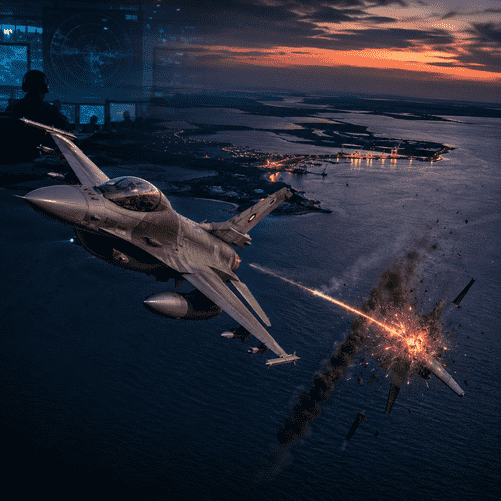
Romanian officials said an F-16 fighter jet intercepted and destroyed the drone after it entered Romanian airspace near the Sulina-Chilia area, close to the Danube Delta and Ukraine’s southern border region. Defence Minister Radu Miruță said the aircraft was brought down roughly five minutes after it crossed into Romanian airspace, in an operation carried out over the Black Sea to avoid danger to civilians.
The Romanian foreign ministry said it would summon the Russian ambassador over what it described as repeated violations of national airspace. President Nicușor Dan condemned the incidents as “inadmissible and intolerable,” saying they represented not only a breach of Romania’s sovereignty but also an infringement of NATO and European Union airspace.
The drone downing follows a series of Russian attacks on Ukrainian infrastructure near the Black Sea and the Danube, an area that has become increasingly sensitive since Ukraine began relying more heavily on river and sea routes for exports after Russia’s full-scale invasion. Romanian territory has repeatedly been affected by drone debris and airspace incursions, raising fears that a miscalculation could pull the alliance into a more direct confrontation with Moscow.
According to Romanian officials, Russian drones have violated the country’s airspace dozens of times since the start of the war, but the latest incidents mark a sharper response from Bucharest. Authorities said one of the previously downed drones was identified as a Russian-made Shahed-type aircraft, a model widely used by Moscow in attacks against Ukrainian targets.
The use of F-16 jets underlines Romania’s growing willingness to actively defend its airspace rather than simply monitor incursions. The country, a NATO member since 2004, occupies a strategically important position on the alliance’s eastern flank, bordering Ukraine and controlling access to parts of the Black Sea region.
NATO said it was monitoring the situation and working with Romania and other allies to strengthen air defences. The alliance has repeatedly said it does not seek direct conflict with Russia, but it has also warned that every member’s territory and airspace must be protected.
The incident places Bucharest in a delicate position. Romania must show firmness against repeated incursions while avoiding steps that could escalate tensions beyond its borders. For the government, summoning Moscow’s envoy is both a diplomatic protest and a signal to domestic and allied audiences that the country will not normalize violations of its airspace.
The latest drone breach also comes amid broader intensification of the war. Russian strikes continue to hit Ukrainian cities and infrastructure, while Ukraine has expanded drone attacks against Russian military and energy targets. As the conflict becomes more heavily defined by long-range drones, NATO’s eastern members are increasingly exposed to accidental or deliberate spillover.
For Romania, the message is clear: the Black Sea frontier is no longer a distant edge of the war, but an active security line. The downing of a third drone in three days suggests that the boundary between Ukraine’s battlefield and NATO’s airspace is becoming more dangerous, more contested and harder to manage.