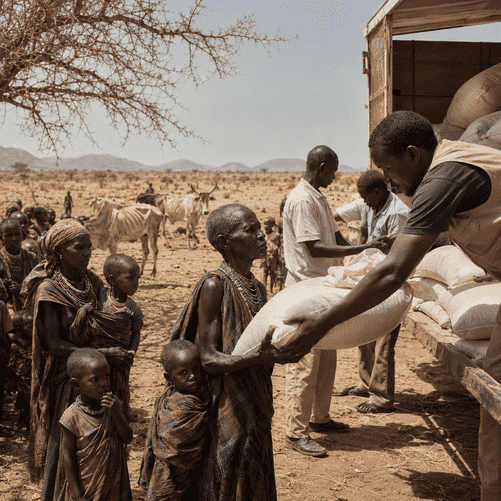
The government has begun distributing thousands of tonnes of food after prolonged drought, failed harvests and rising malnutrition left at least 19 people dead

Uganda has launched an emergency food-distribution operation in the north-eastern region of Karamoja after at least 19 people reportedly died from hunger and prolonged food shortages pushed an estimated 1.5 million residents towards malnutrition.
The government intervention follows months of inadequate rainfall and widespread crop failures across one of Uganda’s poorest and most climate-vulnerable regions. The absence of significant rain since April has damaged harvests, depleted household food reserves and left many pastoral and farming communities with few remaining sources of income.
Under the relief programme, authorities have allocated 45 billion Ugandan shillings to distribute approximately 9,400 tonnes of food over two months. The supplies are expected to include staple products intended for households facing the most severe levels of hunger. Government officials have said the operation will cover vulnerable communities throughout Karamoja and have pledged that those in urgent need will receive assistance.
The distribution represents a significant escalation in the national response to a crisis that local leaders and humanitarian organisations say has been worsening for months. Health centres across the region have reported treating growing numbers of malnourished children, while families in some districts have reduced the number and size of their daily meals.
Food-security assessments indicate that the emergency is especially serious in districts including Kaabong and Kotido, where a large proportion of residents are believed to be experiencing crisis-level hunger. The World Food Programme’s current strategy for Uganda notes that 45% of households in Karamoja were already facing acute food insecurity in 2025, demonstrating that the latest drought has intensified an existing structural problem rather than creating an entirely new one.
Children are among those at greatest risk. UNICEF estimates that about 122,000 children between six months and five years old in Karamoja will require treatment for acute malnutrition between March 2026 and February 2027. The organisation has been working with Ugandan authorities and local health workers to identify affected children, provide therapeutic nutrition and strengthen treatment services in remote communities.
Karamoja has repeatedly experienced severe droughts and food emergencies because of its dependence on rain-fed agriculture and livestock. A historical analysis by the World Food Programme and the UN Food and Agriculture Organization found that the region has a 30% chance of experiencing drought or a damaging dry spell in any given year—one of the highest rates in Uganda.
Environmental degradation has increased that vulnerability. Deforestation, overgrazing and soil exhaustion have reduced the land’s ability to retain water and support crops, while high poverty levels limit families’ capacity to buy food when harvests fail. Karamoja’s poverty rate has historically been far above the national average, leaving many households without savings or alternative livelihoods during periods of crisis.
The current emergency has also revived memories of the region’s 2022 hunger crisis, during which more than 2,200 deaths were reported. Critics say that repeated emergencies demonstrate the limitations of relying mainly on short-term relief distributions whenever rainfall fails.
Ugandan food-rights advocates have welcomed the government’s intervention but argue that emergency handouts alone cannot prevent future disasters. They are calling for greater investment in irrigation systems, boreholes, water storage, drought-resistant crops and agricultural support for small farmers.
Long-term measures could also include restoring degraded grazing areas, diversifying crops and improving local storage facilities so that communities can preserve food after successful harvests. The World Food Programme has promoted similar resilience programmes in Karamoja, including land restoration, crop diversification and improved post-harvest management.
School feeding remains another important protection against hunger. The World Food Programme currently provides daily meals to approximately 255,000 pupils in 320 primary schools in Karamoja. For many children, those meals are one of their most dependable sources of nutrition and can help prevent families from withdrawing them from school during periods of acute hardship.
Uganda’s response is taking place as international humanitarian agencies face growing financial pressure. Reductions in foreign assistance have placed more responsibility on national authorities to finance emergency operations, even as the country manages other humanitarian demands, including support for one of Africa’s largest refugee populations.
For families in Karamoja, however, the immediate concern is survival. The arrival of government food supplies may prevent further deaths and ease the most urgent suffering, but the scale of the emergency means distribution will need to be rapid, transparent and sustained.
The deeper challenge will remain after the current supplies are exhausted. Without lasting improvements in water access, agricultural productivity and social protection, the next failed rainy season could once again push Karamoja’s most vulnerable communities towards catastrophe.