Sepang will stage its first Grand Prix in nine years after the Bahrain race was relocated, reviving one of Asia’s most demanding circuits under an unusual cross-border arrangement.

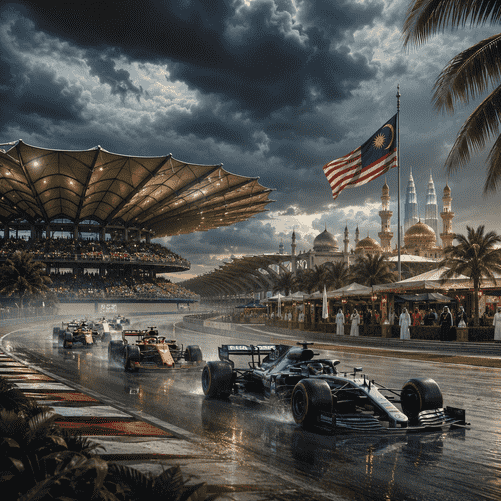
Formula One will return to Malaysia in October for the first time since 2017, after the Sepang International Circuit was selected to host the Bahrain Grand Prix following the cancellation of the original race because of conflict in the Middle East.
The event is scheduled for October 2–4 and will retain the official name Formula 1 Gulf Air Bahrain Grand Prix, despite being held more than 6,000 kilometres from Bahrain. The arrangement remains subject to final agreements and formal approval by the FIA’s World Motor Sport Council.
The decision places Sepang between the Azerbaijan and Singapore rounds of the championship, creating an intense sequence of races across three demanding circuits. Its inclusion restores the 2026 calendar to 23 events after the Bahrain and Saudi Arabian Grands Prix were removed from their original April dates amid security concerns. Saudi Arabia has not received a replacement race.
Sepang’s return represents an unexpected revival for a venue once regarded as a central part of Formula One’s expansion into Asia. The circuit hosted its first Grand Prix in 1999 and remained on the calendar until 2017, when declining attendance and high hosting costs contributed to Malaysia’s withdrawal.
Designed with long straights, wide corners and heavy braking zones, Sepang has traditionally encouraged overtaking while placing severe pressure on tyres, engines and drivers. Tropical heat, high humidity and sudden rainstorms have also produced some of the championship’s most unpredictable races.
The last Formula One event held there was won by Max Verstappen in 2017. Since then, the circuit has remained active through international motorcycle racing, particularly MotoGP, while retaining the infrastructure required for top-level motor sport.
Formula One and the FIA said the agreement was reached in cooperation with the governments of Malaysia and Bahrain. The unusual solution allows Bahrain to preserve its place in the championship and its commercial identity even though the race cannot take place at the Bahrain International Circuit.
For Malaysia, the event offers an opportunity to test whether Formula One’s rapidly expanding global audience can make a renewed long-term relationship financially viable. The championship has grown significantly since Sepang’s departure, driven by social media, streaming coverage and the success of the documentary series Drive to Survive.
A single replacement race does not guarantee that the Malaysian Grand Prix will become a permanent fixture. Hosting costs remain substantial, and Malaysian officials had previously indicated that public money could be better directed toward developing other sports unless significant private funding became available.
However, the October event will give organisers a chance to measure ticket demand, international tourism and corporate interest without immediately committing to a multi-year contract.
The return is also important for Formula One’s Asian strategy. Singapore and Japan remain established races, while the sport continues to view Southeast Asia as a market with a large population, growing middle class and strong automotive culture.
Sepang offers practical advantages because it is located close to Kuala Lumpur International Airport and has experience managing major international events. Its proximity to Singapore also allows teams to move equipment between consecutive races more efficiently than many emergency replacement venues would permit.
The relocation nevertheless illustrates how geopolitical instability is affecting international sport. The Bahrain and Saudi Arabian races were originally scheduled for April but were removed after escalating conflict raised concerns about the safety of teams, officials, spectators and freight operations.
Uncertainty also surrounds the final stages of the season. Qatar and Abu Dhabi remain on the calendar, although Formula One has reportedly considered European alternatives should security conditions make those events impossible.
Moving a Grand Prix requires more than finding an available track. Formula One must organise international broadcasting, freight transport, medical services, security, hospitality and accommodation for thousands of personnel. Tickets and sponsorship agreements must also be prepared within a compressed timetable.
Bahrain is expected to bear much of the financial cost of transferring the race, reflecting the importance of Formula One to the country’s international promotion strategy. The Gulf state has hosted the championship since 2004 and is also home to pre-season testing and significant commercial relationships within the sport.
The event’s name may initially confuse supporters, but Formula One has previously staged races under titles that did not correspond directly to their host countries. The arrangement allows existing commercial commitments to remain in place while recognising that the relocation is intended as an exceptional measure rather than a permanent transfer.
For drivers, the return of Sepang introduces a challenge that most of the younger grid has never experienced in a Formula One car. Teams will need to rely heavily on simulator work, historical information and data from other racing categories to prepare setups for the circuit.
Managing tyre degradation will be critical because Sepang combines high-speed direction changes with long periods of acceleration and strong braking. The climate could place additional strain on the new generation of 2026 cars and power units, particularly if temperatures remain high throughout the weekend.
The possibility of rain adds another strategic variable. Malaysian storms can develop quickly and affect different sections of the circuit unevenly, creating difficult decisions over tyre changes and increasing the likelihood of safety-car periods.
For fans, the race will revive memories of a period when Sepang helped establish Formula One’s modern global identity. It was one of the first purpose-built circuits in Asia to host the championship and became known for dramatic weather, large grandstands and competitive racing.
The return also demonstrates Formula One’s willingness to adapt its calendar when political events make established venues unavailable. That flexibility can protect broadcasting and sponsorship income, but it also raises questions about the sustainability of a schedule increasingly exposed to wars, climate disruption and logistical pressure.
Malaysia’s comeback may ultimately remain a one-off solution to an extraordinary season. Yet if attendance is strong and the event operates successfully, Sepang could present a persuasive case for a more permanent return.
Nine years after Formula One left Malaysia, global instability has unexpectedly reopened the door. What begins as an emergency replacement could become a significant test of Southeast Asia’s renewed appetite for the world’s most commercially powerful motor-racing championship.