The U.S. president has ordered the Pentagon to substantially reduce joint exercises with South Korea, arguing that the drills are costly and unnecessarily provocative as he signals renewed interest in diplomacy with North Korea.

President Donald Trump has ordered the Pentagon to substantially reduce U.S. military exercises with South Korea, invoking his personal relationship with North Korean leader Kim Jong Un and reopening a long-running debate over whether scaling back allied military activity can encourage diplomacy with Pyongyang without weakening deterrence on the Korean Peninsula.
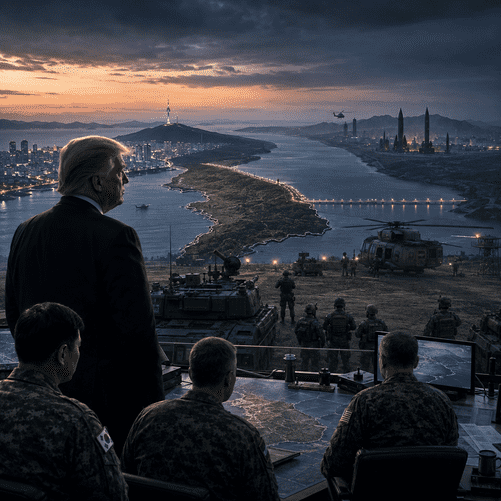
Trump announced the decision on Sunday, August 16, only hours before the annual Ulchi Freedom Shield exercises were scheduled to begin. He said he was unhappy with the scale of American participation and instructed Defense Secretary Pete Hegseth to reduce the drills, describing them as expensive and as sending what he called an inappropriate and hostile signal toward North Korea.
The president specifically pointed to what he described as his “very good relationship” with Kim, reviving the highly personalised diplomatic approach that characterised his first administration, when the two leaders progressed from extraordinary public threats to three face-to-face meetings.
Despite Trump’s announcement, the current Ulchi Freedom Shield exercises began on Monday as scheduled, according to South Korea’s Joint Chiefs of Staff. The manoeuvres are due to continue through August 27 and were originally expected to involve approximately 18,000 South Korean military personnel, together with American forces and personnel from other members of the United Nations Command. Details of exactly how Washington intends to reduce the exercises have not yet been disclosed.
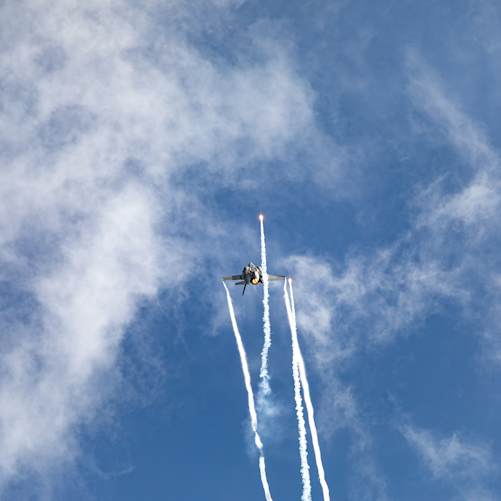
The decision is potentially significant because the joint exercises are one of the foundations of the U.S.-South Korean security alliance. They are designed to test the ability of the two militaries to operate together in the event of conflict and increasingly incorporate simulations involving missiles, cyberwarfare, electronic disruption and other emerging threats.
American and South Korean officials had said before the exercises that this year’s training would incorporate lessons from recent conflicts, particularly the battlefield experience North Korean forces have reportedly acquired through their involvement alongside Russia in the war against Ukraine. U.S. military officials argue that those experiences are changing North Korea’s capabilities and therefore must be reflected in allied training.
That makes Trump’s intervention especially sensitive for military planners. North Korea has continued to expand its nuclear and ballistic-missile programmes, while its increasingly close military relationship with Moscow has generated concerns in Seoul, Washington and Tokyo that Pyongyang may be gaining access to technology, expertise or other assistance that could strengthen its armed forces.
Only days before the exercises began, North Korea condemned Ulchi Freedom Shield and warned that it would strengthen its nuclear deterrent in response. Pyongyang has for decades portrayed major U.S.-South Korean exercises as rehearsals for an invasion, an accusation Washington and Seoul reject, maintaining that the training is defensive.
North Korea has also recently resumed ballistic-missile activity. Two launches have been detected since August 6, according to Reuters, adding to concerns that Pyongyang could use the exercises — or the debate surrounding them — to justify further weapons testing.
Trump, however, appears to be calculating that reducing military pressure could create an opening for renewed negotiations.
His relationship with Kim has been one of the most unconventional elements of recent American diplomacy. During Trump’s first presidency, the two leaders exchanged threats before dramatically shifting toward direct engagement. They met in Singapore in 2018, Hanoi in 2019 and later that year at the Korean Demilitarized Zone, where Trump briefly crossed into North Korean territory.
Those meetings produced extraordinary images and lowered immediate tensions, but they failed to deliver a lasting agreement on denuclearisation. North Korea subsequently continued developing its nuclear arsenal and increasingly sophisticated ballistic missiles.
Trump has nevertheless continued to emphasise his personal rapport with Kim. He has repeatedly suggested that their relationship could provide the basis for another diplomatic initiative, even though the two men have not met during Trump’s current presidency.
The latest decision therefore resembles a strategy Trump employed during his first term, when he surprised South Korea and parts of the U.S. security establishment by suspending or reducing major exercises after his 2018 summit with Kim.
Supporters of such an approach argue that military exercises can be adjusted without dismantling the alliance and that reducing activities perceived as provocative could help create political space for negotiations. They contend that conventional deterrence can be preserved through smaller exercises, computer simulations and other forms of training.
Critics, however, warn that repeated reductions could gradually weaken military readiness, particularly as North Korea’s capabilities become more sophisticated.
The concern is not simply the number of troops participating. Large-scale exercises allow commanders to test communications, logistics, combined command structures and the ability to move personnel and equipment during a crisis — capabilities that can be difficult to replicate entirely through simulations.
The timing is therefore striking. U.S. military officials have recently emphasised that North Korea represents an evolving rather than diminishing security challenge. A senior U.S. Northern Command official said last week that Pyongyang had successfully tested intercontinental ballistic missiles with sufficient performance to potentially deliver a nuclear payload anywhere in North America.
Trump’s announcement also revealed broader strains in Washington’s relationship with Seoul.
In explaining his dissatisfaction, the president criticised South Korea for declining a request to participate in American efforts connected to the denuclearisation of Iran. Seoul responded that discussions over possible military contributions were continuing and that any decision would have to consider South Korea’s own security requirements on the Korean Peninsula as well as domestic legal procedures.
Economic disputes have added another dimension to the relationship. Washington and Seoul reached a trade agreement last year under which South Korea committed to substantial investment in the United States in exchange for lower American automobile tariffs, but implementation remains a subject of discussion between the two governments.
South Korea’s government has nevertheless responded cautiously to Trump’s military announcement rather than confronting Washington publicly.
President Lee Jae Myung’s administration said it hoped the relationship between Trump and Kim would ultimately produce meaningful U.S.-North Korean dialogue and contribute to peace and stability on the Korean Peninsula. Seoul also stressed that the allies would continue coordinating their combined defence posture and military exercises.
For Lee, the possibility of renewed engagement with Pyongyang could complement his own efforts to reduce tensions with the North. But Seoul must simultaneously ensure that diplomatic gestures do not undermine the credibility of an alliance that remains central to South Korean national security.
Approximately 28,500 American troops are stationed in South Korea, a presence that has served as one of the principal deterrents against renewed conflict since the Korean War ended with an armistice rather than a peace treaty.
The wider strategic environment has also changed considerably since Trump’s first meetings with Kim.
North Korea is now more deeply integrated into an emerging network of military and political cooperation with Russia, while strategic competition between the United States and China has intensified across the Indo-Pacific. That means the U.S.-South Korean alliance increasingly has significance beyond the immediate threat from Pyongyang.
Some analysts believe Trump’s decision may therefore have a second objective: creating a diplomatic channel to Kim that could potentially complicate North Korea’s growing dependence on Moscow.
Victor Cha of the Center for Strategic and International Studies suggested that renewed engagement could be viewed as an attempt to gain influence over Pyongyang and potentially disrupt the deepening Russia-North Korea relationship. Jenny Town of the Stimson Center’s 38 North programme similarly said the move could be intended to create a diplomatic opportunity, although she questioned whether its abrupt execution would make a substantial impression in Pyongyang.
The immediate question is whether Kim will respond.
Trump’s decision gives North Korea something it has demanded repeatedly: a reduction in military activity it regards as threatening. But Pyongyang has shown little indication in recent years that limited concessions alone would persuade it to reverse its nuclear strategy.
Kim increasingly portrays nuclear weapons as essential to the survival of his government, while North Korean weapons development has continued despite sanctions, diplomatic engagement and periods of reduced allied military exercises.
Washington is therefore embarking once again on a difficult experiment: determining whether lowering military pressure can produce diplomatic leverage rather than simply provide strategic relief to North Korea.
For Trump, the calculation rests heavily on personal diplomacy. He appears convinced that his unusual relationship with Kim can succeed where traditional pressure has not.
For American and South Korean military planners, however, the challenge will be ensuring that the pursuit of dialogue does not diminish preparedness at a moment when North Korea’s military capabilities — strengthened by nuclear development, missile advances and battlefield experience — may be greater than at any point during Trump’s previous negotiations with Kim.
The reduction in military exercises may therefore become more than a gesture toward Pyongyang. It could mark the beginning of another attempt to reshape security diplomacy on the Korean Peninsula — with the credibility of the U.S.-South Korean alliance, Trump’s relationship with Kim and the future of North Korea’s nuclear programme all potentially hanging in the balance.