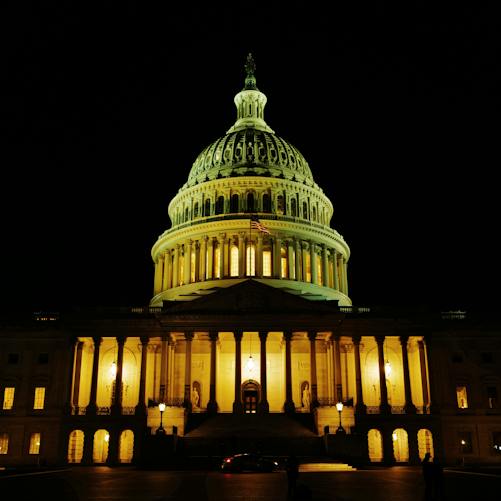
The U.S. House of Representatives has approved a sweeping Russia sanctions bill that would give President Donald Trump broad authority to impose steep tariffs on countries buying Russian energy, sending the legislation to the White House after a 262–159 vote on September 16. The measure, built around a long-running bipartisan effort to increase the economic cost of Moscow’s war in Ukraine, would sanction senior Russian officials and financial institutions, target vessels and companies linked to sanctions evasion, and authorize tariffs of up to 100% on goods from certain major purchasers of Russian oil and natural gas. It also contains a separate authority to raise duties on imports from Russia itself by as much as 500%. The bill passed with significant support from both parties, but the coalition was not seamless: dozens of Democrats backed it as a stronger response to the Kremlin, while Democratic leaders and a small number of Republicans objected to the breadth of presidential waiver and tariff powers. The White House has endorsed the legislation and recommended that the president sign it in its current form. The result creates an unusual political alignment in Washington: lawmakers who want to tighten pressure on Vladimir Putin have joined an administration that insists it needs maximum flexibility to negotiate, while critics warn that the same flexibility could weaken congressional control over sanctions and expose U.S. consumers and allies to unpredictable trade measures.

A bipartisan vote, but not a simple consensus
The House vote was decisive, but it also revealed the complicated politics beneath a measure often described in Washington as bipartisan. Fifty-eight Democrats joined the Republican majority in voting for the bill, while seven Republicans voted against it. The legislation had already cleared the Senate in August after more than a year of negotiations, so the House action completed the congressional process and placed the decision with Trump. The vote came just before lawmakers were due to leave Washington for a pre-election recess, giving the measure added political significance as members returned home to campaign on national security, inflation, trade and the war in Ukraine.
Supporters presented the legislation as a way to increase the economic price of continued Russian military operations without committing American forces. House Speaker Mike Johnson and other Republicans argued that the president should have additional tools to pressure Moscow toward a settlement. Democratic supporters reached a similar conclusion from a different direction: many have criticized Trump’s approach to Russia as too accommodating, but they nevertheless voted for a bill that can impose stronger costs on the Russian state and on foreign buyers that help sustain its energy revenue. That overlap produced the large final majority even though the two parties disagree sharply over the administration’s diplomacy with the Kremlin.
Opponents focused less on the principle of sanctioning Russia than on the structure of the legislation. House Democratic leaders argued that Congress was giving the executive branch broad discretion over tariffs, waivers and implementation while failing to require sufficiently automatic action. Some Republicans also resisted the bill, reflecting long-standing conservative concerns about tariffs, presidential trade powers or foreign-policy commitments. The result was therefore not a vote between supporters and opponents of pressure on Russia so much as a dispute over how that pressure should be designed, who should control it, and how much economic collateral damage Washington should be prepared to accept.
What the legislation would do
The legislation is formally known as the Lindsey O. Graham Sanctioning Russia and Iran Act of 2026, named for the late Republican senator who spent much of the previous year pushing for a stronger sanctions regime. Its architecture combines traditional financial sanctions with trade penalties. The bill directs the administration to review senior Russian officials, financial institutions, companies supplying Russia’s defense-industrial base, and vessels associated with the so-called shadow fleet used to move energy exports outside Western restrictions. It also gives the president authority to impose restrictions on foreign persons and entities that materially support sanctioned Russian activity.
One of the most striking provisions concerns imports from Russia itself. The bill directs the president, within 30 days of enactment, to increase the rate of duty on Russian goods to a level of up to 500% ad valorem. Because U.S. imports from Russia are already far below prewar levels, the direct economic effect may be narrower than the headline number suggests. Politically, however, the provision is designed to signal that remaining trade can be made prohibitively expensive if the administration chooses to use the full authority.
A second and potentially more consequential mechanism targets countries that continue to buy Russian oil or natural gas. The president would be able to impose duties of up to 100% on goods from qualifying countries, with an ability to modify the rate if the government concerned takes significant steps to reduce its Russian energy purchases. The legislation contains exceptions and thresholds, including treatment for countries with limited dependence on Russian gas that are demonstrably reducing it. That design makes the bill as much a tool for bargaining with third countries as a punishment directed at Moscow.
The bill also reaches beyond Russia. At the administration’s request, Congress added provisions connected to Iran, including a five-year extension of the Iran Sanctions Act from 2026 to 2031. The broader Russia sanctions framework is itself scheduled to terminate after five years unless altered by subsequent law. By combining Russia and Iran in a single measure, lawmakers have created a package that touches several of Washington’s most consequential foreign-policy disputes at once, even though Russia remains the central political and economic focus.
Tariffs move to the center of sanctions policy
For most of the period since Russia’s full-scale invasion of Ukraine in February 2022, U.S. and European pressure has relied primarily on asset freezes, export controls, restrictions on banking, limits on access to advanced technology and measures aimed at reducing the value of Russian energy exports. The new bill adds a sharper trade instrument. Rather than only making it harder for Russian entities to use Western financial systems, it threatens market access for major trading partners that continue to provide Moscow with energy revenue.
That approach reflects a persistent problem in sanctions enforcement. Russia has redirected large volumes of oil toward Asia, especially after European governments reduced their purchases. China and India became the most important buyers of Russian crude, while a network of traders, insurers, shipping companies and intermediaries helped Moscow adapt to Western restrictions. Supporters of the bill argue that measures aimed only at Russian companies leave too many opportunities for rerouting and evasion. Secondary tariffs, by contrast, are intended to force governments and companies outside the sanctions coalition to calculate whether discounted Russian energy is worth the potential cost of reduced access to the U.S. market.
The idea is powerful precisely because it is disruptive. A tariff of up to 100% on imports from a major economy could affect supply chains well beyond the energy sector. It could raise prices for U.S. consumers and businesses, prompt retaliation, and complicate relations with countries Washington also needs for security and trade. The legislation therefore does not require the maximum tariff in every case. It gives the president discretion to calibrate pressure and to recognize reductions in Russian energy purchases. That flexibility is central to the administration’s case for the bill, but it is also the feature that most troubles critics.
The fight over presidential discretion
The most important domestic political argument surrounding the bill is not whether Russia should face economic pressure, but how much authority Congress should hand to the White House. The measure allows the president to waive sanctions, restrictions or duties after submitting a written certification and report to Congress that the waiver is in the national interest. The administration considers that discretion essential. In a formal statement of policy, the White House said the legislation strengthens the president’s ability to raise the costs of Russia’s actions while preserving room to pursue a negotiated resolution.
Democratic critics see a structural weakness in that approach. They argue that sanctions designed to change Moscow’s behavior lose credibility if foreign governments believe implementation depends primarily on the president’s political judgment. House Democratic leaders also objected to broad tariff powers that could be used in ways only indirectly connected to Russia. Their concern is intensified by Trump’s wider use of tariffs as an instrument of economic and foreign policy, which has made the question of congressional versus presidential control a recurring constitutional and political dispute.
Republicans who supported the bill answered that sanctions policy has always required executive implementation and that flexibility is necessary when negotiations are changing quickly. A rigid system, they argue, could punish countries that are genuinely reducing dependence on Russian energy or block a diplomatic breakthrough by making relief too difficult. The bill’s supporters therefore portray discretion not as a loophole but as leverage: the president can threaten significant costs, offer relief for changed behavior, and terminate measures if a peace agreement accepted by Ukraine is reached.
That debate will not end with enactment. If Trump signs the bill, the political test will shift from Congress to implementation. Lawmakers will watch which countries are designated, what tariff rates are chosen, how quickly sanctions are imposed, and how often waivers are granted. A statute that looks severe on paper can have a very different effect depending on enforcement decisions. Conversely, even selective use of the new powers could have outsized market consequences if businesses believe additional tariffs could be imposed with little notice.
The White House helped make passage possible
The administration’s support was decisive because the bill had spent months caught between congressional pressure for tougher action and Trump’s preference for keeping direct control of negotiations with Russia. The White House statement supporting passage emphasized presidential flexibility, sanctions on Russian officials and financial institutions, and the bill’s potential to encourage a negotiated end to the war. It also explicitly backed the tariff authorities and opposed an effort in the Senate to remove them.
That position gave Republican lawmakers political cover to vote for a measure that might otherwise have been portrayed as limiting Trump’s room for maneuver. It also demonstrated how sanctions policy has changed inside the Republican Party. During earlier stages of the war, a growing number of Republicans questioned large U.S. aid packages for Ukraine. The sanctions bill offered a different model: increase pressure on Russia through trade and financial tools while emphasizing presidential control and avoiding a new direct spending commitment of the scale associated with military assistance.
For Trump, the bill creates both opportunity and risk. It expands the range of threats available in talks with Moscow and with countries buying Russian energy. But it also establishes expectations that those tools will be used if Russia rejects diplomacy or intensifies military operations. A president who has repeatedly said he wants to end the war will be judged not only on whether he can negotiate but also on how consistently he applies the economic leverage Congress has now put at his disposal.
A final legislative legacy for Lindsey Graham
The bill carries the name of Lindsey Graham because the South Carolina Republican spent much of the previous year building support for its core idea: make countries that finance Russia’s war economy choose between Russian energy and privileged access to the American market. The proposal evolved substantially during negotiations. Early versions generated concern over very high secondary tariffs, potential damage to allies, and the risk of escalating trade disputes with China and India. The final congressional package preserves large tariff ceilings but gives the president extensive flexibility over rates, waivers and implementation.
Graham’s role gave the legislation unusual cross-party durability. He had long been one of the Republican Party’s most outspoken advocates of a hard line toward Moscow and of sustained support for Ukraine, even as parts of his party moved toward skepticism about foreign commitments. Democratic senators who disagreed with him on domestic politics could nevertheless work with him on sanctions. That coalition survived long enough for the Senate to pass the measure in August and for the House to take it up in September.
Naming the law after Graham also adds a political dimension to its enactment. What began as an attempt to pressure Russia through secondary economic penalties now stands as a test of whether bipartisan sanctions policy can still function in a deeply polarized Congress. The House vote suggests that it can, but only when the legislation leaves substantial operational control to the president and when members can frame the measure in different ways to their own constituencies.
Ukraine sees another source of leverage
Kyiv has supported stronger sanctions and welcomed congressional efforts to reduce Russia’s ability to finance the war through energy exports. President Volodymyr Zelensky has repeatedly argued that restrictions are most effective when they are enforced against the shipping, insurance, banking and trading networks that allow Russian oil to reach global markets. From Ukraine’s perspective, the central question is not the symbolic size of a tariff ceiling but whether the legislation changes the calculations of governments and companies that continue to facilitate Russian exports.
The timing matters. Ukraine and its European partners have been pressing Washington to maintain pressure on Moscow even as the U.S. administration explores diplomatic options. The House vote gives Trump a new instrument without resolving the broader policy dispute over military assistance, security guarantees or the terms of an eventual settlement. Sanctions can increase economic strain, but they cannot by themselves decide the territorial and security questions at the center of the war.
The bill’s termination mechanism reflects that reality. It allows the president to end sanctions, restrictions and duties after reporting that Russia has signed a peace agreement accepted by a free and independent Ukraine and has ceased hostilities, subject to the conditions laid out in the statute. The provision is intended to connect economic relief to an agreed political outcome rather than simply to a unilateral Russian declaration. How that standard would be interpreted in a complex ceasefire or phased settlement could become an important issue if negotiations advance.
China and India move to the center of the argument
The most sensitive international consequences are likely to involve China and India, the two largest buyers of Russian crude. Both countries have defended their energy purchases as commercial decisions and have resisted Western efforts to make the war in Ukraine a test of their broader economic relations. For Washington, however, the scale of those purchases makes them central to any strategy that seeks to reduce Russia’s energy income.
China presents the harder strategic case. The United States is already managing disputes with Beijing over technology, trade, Taiwan, industrial subsidies and security in the Indo-Pacific. Additional tariffs tied to Russian oil could be layered onto an already complex trade relationship and invite retaliation. At the same time, supporters of the sanctions bill argue that exempting China because the economic relationship is difficult would defeat the purpose of secondary pressure. The credibility of the legislation will depend partly on whether large economies believe they are genuinely exposed to penalties rather than only smaller states.
India poses a different challenge. Washington has spent years deepening security cooperation with New Delhi, including through the Quad, while India has expanded purchases of discounted Russian crude. Indian refiners have also become important suppliers of petroleum products to global markets. A confrontation over tariffs could complicate a partnership the United States views as strategically important in Asia. The bill’s flexibility gives the administration room to seek negotiated reductions rather than immediate maximum penalties, but it also means the precise treatment of India could become a political issue in Congress.
For both countries, the commercial signal may arrive before any formal tariff decision. Importers, banks and manufacturers tend to adjust behavior when they believe sanctions or duties are becoming more likely. If major buyers demand deeper discounts on Russian oil to compensate for policy risk, Moscow’s revenue could be affected even without an immediate collapse in export volumes. That indirect effect is one reason supporters see secondary measures as potentially powerful.
Europe has its own exposure and its own red lines
European governments have sharply reduced dependence on Russian fossil fuels since 2022, but the transition has been uneven. Some countries retain greater exposure because of geography, infrastructure or long-term supply arrangements. The House legislation recognizes that reality by providing differentiated treatment for countries with limited Russian gas dependence that are taking significant steps to reduce it. Even so, European officials will watch implementation closely to ensure that U.S. penalties do not undermine allied coordination.
The European Union has built its sanctions regime through repeated packages targeting banks, technology, energy, shipping and individuals. It has also sought to tighten measures against Russia’s shadow fleet and to reduce remaining energy purchases. Washington’s new tariff authority could reinforce those efforts if it is coordinated with Brussels. If used unilaterally, however, it could create disputes over who determines whether a country has moved quickly enough to cut Russian imports.
That distinction matters because the transatlantic coalition has always balanced two objectives: reducing Russia’s revenue and preventing an energy shock severe enough to fracture political support for Ukraine. The oil price-cap system was designed with that trade-off in mind, allowing Russian crude to remain on world markets while limiting the revenue available to Moscow. Secondary tariffs represent a more coercive approach. Their success will depend partly on whether they push buyers away from Russian energy without producing a sharp price spike that benefits Russia through higher global prices.
The shadow fleet becomes a direct enforcement target
The bill also expands attention to the maritime infrastructure used to move Russian oil. Western officials use the term “shadow fleet” for a shifting group of older tankers, opaque ownership structures, non-Western insurers and intermediaries that have helped Russia sell crude outside the most restrictive parts of the Western sanctions system. The network has grown in importance as Moscow adapted to the loss of traditional European customers and restrictions on shipping services.
Under the legislation, vessels and foreign persons involved in sanctions evasion can face additional scrutiny and penalties. The text also allows designations by close U.S. partners, including European and other allied governments, to be treated as relevant evidence in enforcement decisions. That is significant because maritime sanctions work best when jurisdictions share vessel data, ownership information and insurance intelligence. A tanker can change its flag, name or corporate ownership quickly; coordinated enforcement makes those changes less effective.
There is also a safety and environmental dimension. European governments have raised concerns that aging or poorly insured tankers operating near busy coastlines could create accident risks. The sanctions debate therefore intersects with maritime security in the Baltic, the North Sea, the Mediterranean and other routes used by Russian oil exporters. The bill does not solve those operational problems, but it gives U.S. authorities additional legal tools to target the commercial structures that keep such vessels in service.
Iran was added to a Russia-centered measure
The inclusion of Iran reflects the administration’s effort to connect sanctions policy across separate security theaters. The legislation extends the Iran Sanctions Act through 2031 and contains authorities connected to Iranian energy and weapons activity. The White House highlighted those provisions in its endorsement of the bill, arguing that they complement the administration’s broader pressure campaign.
That addition has two political effects. First, it broadens the coalition of lawmakers who can point to the measure as addressing multiple national-security priorities. Second, it makes implementation more complicated because the administration will be managing overlapping sanctions regimes that affect global oil markets. Russia and Iran are both major energy exporters, and aggressive enforcement against both can alter supply expectations even when physical volumes do not immediately change.
The connection also underscores a larger shift in U.S. sanctions policy. Financial restrictions are increasingly being combined with tariffs, export controls, shipping measures and diplomatic pressure on third countries. The objective is not simply to block transactions with a designated entity but to shape the incentives of entire supply chains. That can increase leverage, but it can also increase the number of governments and companies that see U.S. economic policy as a direct constraint on their own choices.
Midterm politics shaped the House battle
The final vote came as lawmakers prepared to leave Washington and intensify campaigning before the U.S. midterm elections. That calendar mattered. Republicans wanted to demonstrate toughness toward Russia without reopening the most divisive arguments over large aid packages. Democrats wanted to show continued support for Ukraine while criticizing what they regard as excessive presidential discretion. The sanctions bill allowed both messages to coexist, which helps explain why it could pass with a large majority even amid sharp partisan conflict elsewhere.
The procedural path was more partisan than the final vote. The House rule governing debate passed narrowly on September 15, with most Democrats opposed. Democratic members had sought changes in the Rules Committee, including amendments intended to narrow secondary tariff authority, tighten the waiver standard and identify countries whose Russian energy purchases deserve particular scrutiny. Those proposals did not become part of the floor package. Once the final bill reached an up-or-down vote, however, enough Democrats concluded that its sanctions provisions outweighed their objections to the process and the executive powers it contained.
The politics could reverse quickly if the tariffs are used. Lawmakers who voted for the bill may still criticize a particular country designation or a rate they consider too high. Industries affected by retaliation could seek exemptions. Import-dependent businesses could argue that a foreign-policy measure is increasing domestic costs. The coalition for authorizing power is therefore broader than the coalition that may support every future exercise of that power.
The peace clause will be tested against diplomacy
The legislation is explicitly designed not only to punish but also to create bargaining leverage. Its termination provisions connect relief to a peace agreement accepted by Ukraine and to an end to hostilities. Supporters say that gives Moscow a clear economic incentive to negotiate seriously. Critics counter that sanctions relief is only one part of the calculation facing the Kremlin, which also weighs territory, military capacity, domestic politics and its relationship with China and other partners.
The bill also leaves room for interim waivers before a final settlement. That could prove crucial if negotiators reach temporary arrangements, partial ceasefires or sector-specific deals. The administration may want to suspend a tariff to reward a step toward de-escalation without permanently dismantling sanctions. Congress, in turn, may demand evidence that relief is producing concrete results. The reporting requirements built into the waiver process are meant to give lawmakers visibility, but they do not amount to a congressional veto over each decision.
This is where the distinction between legislation and policy becomes important. Congress has created a menu of tools and set conditions around them. The president still decides how to sequence those tools, which countries to pressure first, how aggressively to use tariff ceilings and when diplomacy justifies relief. The political accountability for outcomes will therefore be shared but uneven: lawmakers can claim credit for creating leverage, while the administration will bear primary responsibility for how that leverage is used.
What implementation could look like
If Trump signs the bill, the first phase will involve agency reviews, designations and decisions about tariff rates. The Treasury Department would be central to financial sanctions and asset restrictions, while the Office of the U.S. Trade Representative and other agencies would have roles in tariff implementation. Shipping and energy enforcement would draw on intelligence from U.S. agencies as well as allied governments. Companies exposed to Russian trade are likely to begin legal and compliance reviews immediately rather than wait for every rule to be finalized.
Foreign governments will also seek clarity. Some will argue that they are already reducing Russian energy purchases and should therefore avoid the harshest treatment. Others may request transition periods or sector-specific exceptions. China is less likely to accept U.S. conditions as legitimate, raising the possibility that sanctions enforcement becomes another front in the broader U.S.–China economic confrontation. India is likely to emphasize both energy security and its strategic partnership with Washington.
Markets will focus on whether the administration uses the bill as a negotiating threat or moves quickly to impose substantial duties. Oil prices can respond to expectations long before actual supply changes. Shipping rates, insurance costs and currency markets can also move if traders anticipate tighter enforcement. That means implementation will have to balance political signaling with economic stability. A threat that is never used may lose credibility, while a sudden maximum-rate tariff could create effects far beyond Russia.
The administration’s own statement suggests it wants that flexibility. It praised the bill for increasing the costs available to impose on Russia while preserving presidential discretion on waivers and termination. In practical terms, that points toward a calibrated strategy: use the possibility of severe measures to seek concessions, escalate if diplomacy stalls, and retain the ability to ease pressure if countries change behavior. Whether Moscow or major energy buyers will respond as Washington hopes remains uncertain.
A new phase in Washington’s Russia debate
The House vote does not resolve the larger American argument over Ukraine. Congress remains divided over the scale and duration of military assistance, the terms of any security guarantee, and how much pressure Washington should place on Kyiv as well as Moscow in negotiations. What the vote does show is that a substantial bipartisan majority still supports using U.S. economic power to raise the cost of Russia’s war.
It also shows how that consensus has changed. Earlier sanctions packages relied heavily on coordinated financial restrictions with Europe. The new measure puts tariffs and secondary pressure on third countries closer to the center of strategy. It is therefore as much about Washington’s relations with Beijing, New Delhi and other energy buyers as it is about direct U.S.–Russia commerce. That broad reach increases the potential leverage and the potential diplomatic cost at the same time.
For Europe, the legislation is likely to be welcomed as evidence that Washington has not abandoned economic pressure on Moscow, but allies will also want consultation before measures affect their own companies or energy transition plans. For Ukraine, the crucial question will be enforcement. For Russia, the immediate challenge is to determine whether the new authority changes the behavior of the countries and businesses that have helped sustain its export earnings.
The final political decision now belongs to Trump. The White House has already said his advisers would recommend signing the bill if it reached his desk in its current form, making enactment likely. If he does sign it, the next debate will move quickly from the language of congressional votes to the consequences of presidential choices. The measure gives the administration unusually broad economic weapons; the significance of the law will depend on when, against whom and how forcefully those weapons are used.