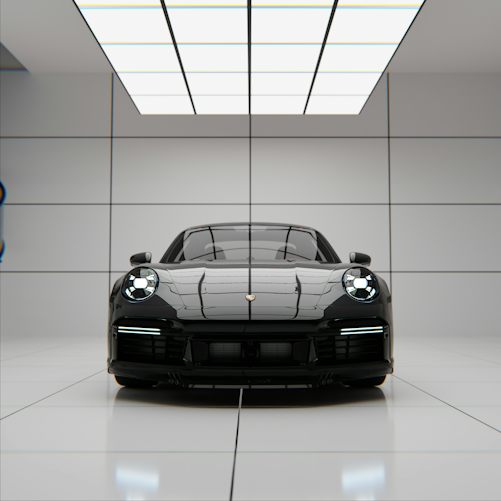
Porsche, one of the most recognizable names in global luxury motoring, is confronting a new round of restructuring pressure just as the economic logic that powered its extraordinary profitability is being rewritten. Handelsblatt reported on September 19 that documents connected to Volkswagen’s latest turnaround plan envisage roughly 4,100 additional positions being removed at Porsche to address an overhead gap of about €700 million. Reuters, which summarized the report, stressed two points that matter for understanding the story: the proposed cuts would come on top of existing agreements, and Volkswagen’s supervisory board can recommend such measures but cannot impose them on Porsche. Neither Volkswagen nor Porsche commented on the reported plan. That leaves the new figure unconfirmed by the company, but the report lands against a backdrop of measures that are already public and substantial.

A new warning sign for a luxury icon
The timing gives the story weight beyond a conventional cost-cutting headline. A day earlier, Volkswagen cut its 2026 operating-margin forecast to no more than 1%, down from a previous range of 4% to 5.5%, citing an impairment connected to Porsche AG, a difficult market environment led by China and additional restructuring expenses. Volkswagen said special effects would reduce operating profit by around €10 billion this year. Porsche itself had already agreed with labour representatives in July to eliminate a further 5,000 jobs by 2035 through measures designed to avoid compulsory redundancies, while earlier restructuring steps had pushed the scale of planned reductions to roughly one-fifth of the workforce, according to Reuters. For a brand that has long been treated inside the luxury sector as a benchmark for scarcity, pricing power and industrial discipline, the question is no longer whether change is necessary. It is how much of the old formula can survive.
Why Porsche matters far beyond Stuttgart
The latest pressure cannot be separated from Porsche’s unusual position inside the Volkswagen Group. It is simultaneously a high-margin prestige brand, a listed company with its own shareholders and governance, and an important economic pillar of a much larger automotive group. When Porsche is thriving, its pricing power and product mix can lift the wider group. When it falters, the financial effects are magnified through Volkswagen’s exposure to the company and through the symbolism attached to the marque. That helps explain why the September profit warning reverberated well beyond Stuttgart.
Volkswagen’s official September 18 update was stark. The group now expects 2026 sales revenue of around €315 billion, broadly consistent with the midpoint of its previous revenue guidance, but profitability has deteriorated sharply. Operating return on sales is now expected to reach at most 1%, compared with 2.8% in 2025 and a prior 2026 forecast of 4% to 5.5%. The group said special effects of around €10 billion would weigh on operating profit, with €0.9 billion already reported in the first half. Adjusted for those special effects, Volkswagen said the full-year operating return on sales would be about 4%.
This distinction matters. The group is not saying that the entire underlying car business has suddenly become loss-making. It is saying that restructuring, impairments and an adverse market environment are compressing reported performance at precisely the moment when enormous investment is still required for software, electrification, factories and product renewal. Porsche sits at the center of that tension. Luxury brands traditionally defend profitability through high transaction prices, limited discounting and rich personalization. But those strengths become less protective when a major sales region weakens, product transitions misfire and the cost of changing strategy is incurred faster than new revenue can replace the old.
China rewrites the luxury-car equation
China is the clearest pressure point. Porsche delivered 14,501 vehicles there in the first half of 2026, down 32% from 21,302 in the same period a year earlier, according to the company’s own July sales release. That decline came after an already severe contraction: first-half China deliveries in 2025 had fallen 28% from 2024. Put together, the data describe not a single weak quarter but a multi-year erosion in a market that once helped define the economics of European luxury.
Porsche attributes the current decline to a challenging market environment and its continued focus on what it calls value-oriented sales. That wording reflects an important strategic choice. Rather than chase volume through heavy discounting, the company is trying to protect brand equity and transaction prices even if that means selling fewer cars. In luxury, this is often the rational response. Discounting can clear inventory quickly, but it can also damage residual values, weaken exclusivity and train customers to wait for incentives.
The complication is that China’s automotive market has changed structurally. Domestic manufacturers have become stronger in electric vehicles, software, connected services and high-performance products. Chinese buyers who once equated imported German engineering with the technological frontier now have credible local alternatives, often with faster digital interfaces, aggressive specifications and lower prices. The pressure is particularly acute in electric cars, where the competition is not simply over acceleration, range or build quality but over the full digital experience.
Porsche therefore faces a dilemma familiar across European luxury. Protecting exclusivity is essential, but scarcity has value only if customers continue to desire what is scarce. The company’s answer has been to emphasize brand, driving character and profitability rather than raw volume. Yet the first-half numbers show how expensive that discipline can become when demand is falling quickly in a market that used to absorb a large share of high-margin vehicles.
The costly correction to the EV timetable
The electric-vehicle transition adds another layer of complexity. Porsche was an early premium-sector believer in battery-electric performance. The Taycan demonstrated that a fully electric car could carry the company’s design language and dynamic identity without simply imitating a combustion model. The all-electric Macan broadened that strategy into the crucial luxury-SUV segment. More recently, the company has begun deliveries of an electric Cayenne. But the market has not developed along the smooth, predictable adoption curve that many manufacturers once assumed.
In the first half of 2026, Porsche delivered 6,219 Taycans, down 25% year on year. Macan deliveries totaled 35,315, down 22%, with 15,620 of those being the electric version. The company said the slower-than-expected ramp-up of electromobility and the expiration of U.S. tax incentives were among the factors. At the same time, the traditional 911 moved in the opposite direction: deliveries rose 19% to 30,534. That contrast is revealing. It does not mean customers have rejected electrification altogether. It means the pace, economics and emotional appeal of the transition differ substantially by model and market.
Luxury carmakers cannot approach electrification exactly like mass-market producers. Their customers often buy for reasons that include sound, mechanical theatre, heritage, personalization and collector value, not simply transportation efficiency. An electric powertrain can offer extraordinary performance, but it changes the sensory and ownership proposition. Porsche has responded by broadening its powertrain options and slowing or revising parts of its earlier electric strategy. Those changes are costly because product plans, supplier contracts, battery investments and factory decisions are made years in advance.
This is why the Porsche story is becoming a case study for luxury industrial strategy. The challenge is not merely to choose between electric and combustion vehicles. It is to maintain desirability while technology, regulation and customer behavior are all moving at different speeds.
Profitability is recovering, but the reset is not finished
Porsche’s own financial disclosures show both the severity of the recent shock and the resilience that remains. For 2025, the company reported revenue of €36.27 billion, down 9.5% from a year earlier, while operating profit collapsed to €413 million from €5.64 billion. The operating return on sales fell to 1.1% from 14.1%. Those figures captured the cost of strategic adjustments and a much weaker operating environment.
The first half of 2026 looked better on the surface. Porsche reported sales revenue of €17.23 billion, down 5.1% from a year earlier, but operating profit rose 33.9% to €1.35 billion. Operating return on sales improved to 7.8% from 5.5%. Management credited tighter cost, price and product-mix management, together with its “value over volume” strategy. Yet that recovery came before the latest reported restructuring proposal and before Volkswagen’s September warning underscored the scale of group-level write-downs and special charges.
The contrast between improving half-year operating performance and renewed restructuring pressure is not necessarily contradictory. Turnarounds often produce exactly this pattern: underlying operations improve while the balance sheet and organization absorb the cost of exiting old plans. Porsche’s challenge is that it must do both at once. It needs to protect margins today while spending enough to remain technologically competitive tomorrow.
For luxury-sector investors, the crucial issue is quality of earnings rather than sales volume alone. A smaller Porsche can still be a highly valuable Porsche if pricing, mix and cash generation remain strong. But if volume declines are accompanied by repeated strategic reversals, large impairments and rising fixed-cost pressure, scarcity can no longer be treated as a simple virtue. The company has to prove that lower volume is intentional discipline rather than evidence of lost relevance.
Jobs, labour power and the limits of simple cost cutting
The workforce question illustrates how deeply the reset reaches. In July, Porsche’s executive board and general works council announced a “Future Package” negotiated with IG Metall and the Südwestmetall employers’ association. The agreement provides for a further 5,000 jobs to be reduced by 2035, largely through natural attrition, demographic effects, expanded partial-retirement programs and voluntary severance arrangements. In exchange, Porsche extended employment and site protections for Zuffenhausen and Weissach and committed to cumulative investment of €2.1 billion in the two locations through 2035.
That package was already significant. Reuters described the existing measures as bringing planned reductions to around one in five jobs by 2035. The new Handelsblatt report suggests Volkswagen’s supervisory board believes even more savings may be necessary, with approximately 4,100 additional positions proposed to address a €700 million overhead shortfall. Because Porsche has its own governance and powerful labour representation, however, the parent company cannot simply dictate those cuts. Any additional program would have to move through Porsche’s own decision-making and labour process.
This distinction is especially important in Germany, where large industrial restructurings are shaped by co-determination, works councils and negotiated site guarantees. For employees, the headline number does not automatically translate into immediate layoffs. Existing agreements emphasize socially managed reductions over a long horizon. For the company, that approach reduces disruption but also means savings arrive gradually.
In luxury, human capital is part of the product. Engineering knowledge, manufacturing craft, testing expertise and design capability cannot be cut indiscriminately without risking the qualities customers pay a premium for. The real test is therefore not how many positions Porsche removes, but whether it can simplify bureaucracy and overhead while preserving the capabilities that make a 911, a Cayenne or a bespoke configuration feel meaningfully different from a premium commodity.
Refocusing the company around the core
Porsche’s July agreement also shows that management is trying to pair reductions with investment rather than retreat. The €2.1 billion commitment to Zuffenhausen and Weissach through 2035 is designed to secure two of the company’s most important German sites. Zuffenhausen is the historic production home of the 911 and remains central to the brand’s identity. Weissach is a core research and development center, closely associated with engineering, motorsport and future-product work.
That matters because a luxury brand can damage itself by treating restructuring as an exercise in financial extraction. Customers may never read a restructuring plan, but they experience its consequences through product quality, innovation and service. If cost cuts weaken development cycles or manufacturing precision, the damage can surface years later in ways that are difficult to reverse.
Porsche has also been pruning activities outside its core. In August it announced plans to discontinue Cellforce Group, Porsche eBike Performance and Cetitec, affecting more than 500 employees. Management described the move as part of a sharper focus on the core business. Earlier in September, Porsche completed the sale of its holdings in Bugatti Rimac and Rimac Group, a transaction Reuters said would bring in around €1 billion and strengthen automotive cash flow. The company has also been reorganizing sales and marketing and simplifying executive responsibilities.
Taken together, these moves suggest a company trying to concentrate capital, management attention and brand energy. The logic is understandable: when the core franchise is under pressure, peripheral bets become harder to justify. But the broader strategic question remains unresolved. Porsche still needs access to battery technology, software capability and new forms of mobility even if it owns fewer adjacent businesses directly. Refocusing the portfolio reduces complexity; it does not eliminate technological dependence.
The 911 shows the brand is not broken
The strongest evidence that Porsche still possesses extraordinary brand power is the 911. In a first half when worldwide deliveries fell 16%, 911 deliveries rose 19%. In the United States, Porsche Cars North America reported an even stronger increase, with 8,478 retail deliveries of the model through June, up 56.3% from the prior year. Those figures highlight why the 911 is more than a product line: it is an economic anchor and a cultural asset.
The 911 benefits from a combination few products can replicate. Its silhouette is instantly recognizable, its lineage is continuous, and its customers span daily drivers, collectors, track enthusiasts and buyers seeking highly specified variants. The model also supports an ecosystem of personalization and special editions that can lift average transaction values without requiring mass-market scale.
That resilience complicates narratives of generalized luxury weakness. Porsche is not facing an across-the-board collapse in desirability. Certain products remain exceptionally strong. The problem is portfolio balance. The brand has expanded far beyond sports cars into SUVs and four-door models because those categories provide the volume and cash needed to fund development. If those larger-volume lines weaken while the 911 remains strong, Porsche can preserve prestige but still face an industrial cost problem.
This is one reason the phrase “value over volume” deserves careful interpretation. In a healthy luxury business, lower volume can be a sign of discipline if high-margin products are selling strongly and incentives remain controlled. In a stressed business, the same phrase can conceal a mismatch between capacity and demand. Porsche’s task is to show that its strongest models can pull the rest of the portfolio upward rather than merely mask weakness elsewhere.
A luxury-market lesson far beyond automobiles
The broader luxury market offers both reassurance and warning. High-end consumers have generally proved more resilient than mass-market buyers during inflationary periods, but the resilience is uneven. Luxury fashion groups have discovered that repeated price increases eventually meet resistance, especially when product novelty weakens. Premium airlines are finding strength at the top end, while watches and jewelry have become more polarized between iconic brands and weaker names. Cars follow a similar pattern: brand strength helps, but it does not eliminate cyclical or technological risk.
Automobiles also carry much higher fixed costs than handbags, watches or perfume. A fashion house can reduce production more quickly when demand softens. A carmaker must manage factories, tooling, homologation, software, batteries, regulatory requirements and dealer networks. That makes a luxury-car brand more exposed to strategic mistakes even when its customers remain affluent.
Porsche’s difficulties in China illustrate the point. Wealth has not disappeared from the market, but consumer preferences have shifted and local competitors have improved. A buyer who can afford a Porsche may also be attracted to a Chinese electric performance car with a more advanced digital cockpit or a different technology narrative. That is a different competitive problem from simply waiting for macroeconomic conditions to improve.
For the luxury industry, Porsche is therefore a reminder that heritage is an asset, not a shield. The badge can command attention, but the product must continue to justify the badge. As the sector becomes more technologically complex, the most valuable form of exclusivity may be the ability to combine heritage with innovation faster than competitors can imitate either.
Pricing power has to be rebuilt, not assumed
Pricing power remains central to Porsche’s strategy. The company has repeatedly emphasized “value-oriented sales,” a phrase that signals resistance to chasing market share at the expense of margins. In practice, this means managing supply, protecting residual values, emphasizing high-specification derivatives and allowing volume to fall rather than flooding markets with discounted inventory.
This model has worked spectacularly in the past, particularly when global demand was strong and China offered a deep pool of buyers seeking European prestige. But pricing power is not static. It is earned through product momentum, waiting lists, resale values, technical credibility and cultural relevance. When one or more of those weaken, price discipline becomes harder to maintain.
There is also a generational issue. Younger luxury consumers increasingly evaluate cars through a broader lens that includes software, sustainability, design, connectivity and social meaning. Some are less attached to combustion-engine heritage; others are newly fascinated by analog driving experiences precisely because digital products dominate the rest of their lives. Porsche must serve both groups without making its lineup incoherent.
The company’s evolving mix of combustion engines, hybrids and battery-electric vehicles can be seen as a hedge against that uncertainty. It gives customers choice and protects Porsche from betting the entire brand on a single adoption curve. The downside is complexity: multiple architectures and technologies cost more to develop and support. In a period of falling volume, every additional layer of complexity increases the burden on fixed costs. That is one reason the workforce and organizational restructuring is so closely linked to the product strategy.
The next luxury battleground is software and experience
The electric transition also exposes a more subtle luxury problem: differentiation. Combustion engines offer manufacturers many ways to create identity through sound, throttle response, transmission behavior and mechanical layout. Electric powertrains can deliver dramatic performance, but the underlying technology can feel more standardized unless the brand distinguishes itself through chassis tuning, software, design, charging, interfaces and the overall ownership experience.
Porsche has shown that an electric car can still feel brand-specific. The Taycan’s success in its early years established that point. Yet the more crowded the premium EV market becomes, the harder it is to charge a traditional luxury premium based on engineering alone. Competitors can buy advanced batteries, powerful motors and sophisticated semiconductors. The differentiator shifts toward integration and experience.
That makes software especially important. European carmakers have struggled at times with complex software programs, while Chinese manufacturers have often moved more quickly with in-car technology and update cycles. Porsche’s reorganization, including the integration of its Car-IT division into research and development, reflects an effort to simplify how digital work is managed. The strategic challenge is to reduce organizational friction without underinvesting in the very capability that customers increasingly use to judge modern premium cars.
[[STYLE_CHUNK_07]][[STYLE_CHUNK_08]][[STYLE_CHUNK_09]]