As Milan opens and Paris approaches, luxury houses are spending heavily on spectacle, stores and elite client experiences while weaker demand, inflation and changing consumer priorities test the industry’s fragile recovery.

The runway becomes a balance-sheet question
Milan Fashion Week opened on September 22 with the familiar architecture of global luxury: tightly controlled invitations, carefully engineered locations, celebrities, editors, buyers and clients moving through a city that has built a large part of its international identity around fashion. Yet this season the spectacle carries a more explicit commercial burden than usual. Reuters reported that luxury executives are entering the Milan and Paris shows against a backdrop of weakening confidence in the sector’s recovery, pressure on listed fashion groups and renewed inflationary strain linked to conflict in the Middle East. The question surrounding the collections is therefore not only which silhouette, bag or color will dominate Spring/Summer 2027. It is whether the industry can turn cultural attention back into durable demand after several years in which higher prices, narrower customer bases and changing spending priorities have made that conversion harder.
The runway has always been part theatre, part wholesale presentation and part brand advertising. In 2026 it has also become a test of capital allocation. Industry specialists cited by Reuters estimate that a major show can cost as much as €10 million to stage. That spending must now compete internally with flagship renovations, private salons for high-value clients, digital media, hospitality, clienteling technology, product development and the growing cost of maintaining a global retail network. In a buoyant market, a spectacular show can be defended as an investment in desirability whose value appears across categories for months. In a slower market, every expensive event is examined more closely for evidence that it can generate store traffic, social reach, editorial relevance and, ultimately, full-price sales.
That makes the next two weeks unusually revealing. Milan runs through September 28, according to the official Camera Nazionale della Moda Italiana calendar, while the Fédération de la Haute Couture et de la Mode lists Paris womenswear from September 28 to October 6. The schedule moves from Italy’s manufacturing and design capital to the symbolic center of the global luxury system without a pause. Prada opened the Milan calendar with its show on Tuesday, while Gucci, Dolce & Gabbana and Giorgio Armani are among the houses being watched in Italy. In Paris, attention will shift toward LVMH flagships Dior and Louis Vuitton, Saint Laurent, Chanel and a roster of labels whose performances can influence not only fashion coverage but investor expectations about the broader luxury cycle.
A recovery that exists in the data, but not evenly
The industry is not in a uniform collapse. In fact, the most recent corporate results contain signs of stabilization. LVMH reported €38.6 billion in first-half 2026 revenue, with organic growth of 2% over the half and 3% in the second quarter. Its Fashion and Leather Goods division returned to organic growth in the second quarter after a long period of weakness, while jewelry remained a stronger engine. Kering also reported a sequential improvement: first-half revenue of €7.22 billion was up 1% on a comparable basis, and second-quarter revenue rose 2% on the same measure. Kering said performance at Gucci improved during the quarter and that net debt had fallen sharply from the end of 2025. Those numbers matter because they show that the industry is capable of recovering even under difficult macroeconomic conditions.
But the recovery is not broad enough to remove anxiety. Reuters reported that LVMH shares were down 37% from the start of 2026 as of September 22, while Kering had surrendered the gains made since Luca de Meo took over as chief executive a year earlier. Stock prices are not the same as sales, and day-to-day market movements should not be confused with the health of individual brands. Still, investors are signaling skepticism about the speed and durability of the rebound. A luxury group can post improving quarterly figures and still face a lower valuation if markets believe growth will be slower, more expensive to produce, or concentrated in too few categories and regions.
Bain & Company’s mid-year assessment provides a useful bridge between those two realities. The consultancy estimated that personal luxury goods sales, worth €358 billion in 2025, could grow between 2% and 4% in 2026. That is a recovery, but a cautious one. Bain also noted that the industry has lost roughly 70 million consumers since 2022, after years of price increases and greater emphasis on top-spending clients. The result is a market that can expand in value while becoming less socially broad. For fashion houses, that distinction is critical. A smaller group of wealthy customers can support high average transaction values, but it also makes revenue more dependent on the spending decisions of people who have many alternative luxury experiences competing for their attention.
Why fashion week matters more when fewer customers are buying
The power of fashion week comes from concentration. In a few days, a brand can put a collection in front of editors, retailers, stylists, celebrities, content creators, investors and top clients simultaneously. The images then travel far beyond the room through social media, livestreams and entertainment coverage. In theory, that concentration makes a runway show more efficient than a dispersed advertising campaign. One show can generate months of secondary media and give stores a fresh narrative. The difficulty in 2026 is that attention itself is abundant. Consumers can see hundreds of looks within minutes, and the value of visibility depends on whether a house creates a clear reason to care.
That is why the strategic problem is not simply to create louder shows. Luxury brands are trying to restore the link between spectacle and product. The handbag, shoe, coat or dress must feel distinctive enough to justify prices that have risen substantially over the past decade. When products become familiar but prices continue to climb, consumers begin comparing them not only with rival brands but with travel, restaurants, wellness, jewelry, technology and other discretionary spending. Reuters quoted industry figures who said customers are increasingly directing money toward health, longevity, hotels and dining. This shift does not mean fashion has lost its cultural power. It means the category must compete harder for the same wallet.
A runway season therefore functions as a mass audition for relevance. The houses that perform best will not necessarily be those with the most expensive sets. They will be those that translate a creative idea into recognizable products, persuasive styling and a coherent retail proposition. The old model in which creative prestige could sit somewhat separately from commercial performance is harder to defend when shareholders, owners and management teams are scrutinizing every cost. A collection that excites critics but produces weak merchandise is no longer enough. Nor is a commercially safe collection that generates little cultural interest. The commercial advantage lies in doing both at once.
The €10 million question: what a show is really buying
A top-tier runway show is not a single marketing expense. It is an ecosystem of production costs: venue, staging, lighting, casting, music, security, travel, fittings, technical crews, communications, hospitality and the complex logistics required to produce a tightly timed global event. Reuters reported that industry experts put the cost of some major shows as high as €10 million. The figure is striking because it makes visible the scale of the bet. That money does not buy guaranteed sales. It buys an opportunity to compress attention around a brand and then monetize that attention through products and relationships.
For the largest groups, the calculation can still be rational. A global house may sell apparel, leather goods, shoes, accessories, beauty, fragrances and jewelry across hundreds of stores. A successful show can provide creative assets for campaigns, shop windows, celebrity dressing and digital content, helping many categories at once. The cost per impression can look attractive when the content travels worldwide. But the returns become much harder to measure as the market slows. Social engagement can be high while conversion remains weak. A show can trend for twenty-four hours without changing the sales trajectory of a key bag or footwear line.
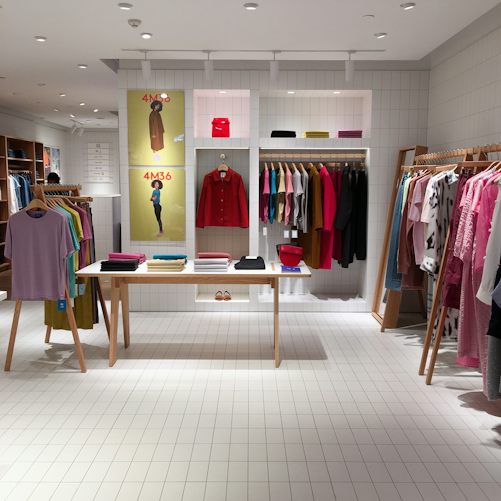
This explains why brands are combining fashion-week expenditure with large investments in physical retail. Reuters pointed to Prada’s revamped Milan flagship, which includes private areas aimed at top clients. That approach reflects a broader shift from retail as inventory display to retail as controlled experience. The store must communicate craftsmanship, status, hospitality and access. For the wealthiest customers, the product may be only one part of the value proposition. Priority appointments, private rooms, special orders, cultural events and a sense of personal recognition can matter nearly as much as the object. Fashion week creates the desire; the store is where the house tries to turn that desire into a relationship.
The middle-class luxury customer has become the missing link
One of the most important structural changes in luxury is the retreat of the aspirational buyer. This consumer may not purchase several handbags a year, but historically formed a large base through fragrances, small leather goods, shoes, entry-level accessories and occasional major purchases. Bain’s estimate that the industry has lost around 70 million consumers since 2022 captures the scale of the change. Some left because inflation reduced discretionary income. Others were alienated by price increases that outpaced perceived improvements in product or service. Still others shifted toward resale, travel or brands that offered clearer value.
The loss matters because aspirational buyers perform two functions. They contribute revenue directly, and they create the cultural breadth that makes a luxury brand feel socially important. A house that sells only to the very rich may remain profitable, but it risks becoming less visible in everyday culture. Conversely, lowering prices too aggressively can undermine exclusivity and margins. Luxury managers are therefore caught between protecting the aura of scarcity and rebuilding the consumer funnel that once fed future high spenders.
This is where fashion week can either help or make the problem worse. A show that appears remote, repetitive or designed only for celebrities may reinforce the impression that the industry has abandoned ordinary fashion enthusiasts. A show that produces a strong point of view and accessible cultural conversation can reopen the top of the funnel even if most viewers will never buy a runway piece. The challenge is to create aspiration without creating resentment. In a period of economic pressure, that balance is particularly delicate because luxury prices are more visible and more frequently debated on social platforms.
Price increases reached their strategic limit
For years, the easiest way for major luxury houses to expand revenue was to raise prices while keeping volume relatively constrained. The strategy worked particularly well when consumers had excess savings, travel rebounded after the pandemic and wealthy shoppers were willing to absorb repeated increases. But Reuters reported that even affluent clients are now more attentive to value for money. That is a profound warning for an industry whose economics depend on pricing power. When wealthy customers begin asking whether an object is worth its price, the brand can no longer rely on scarcity alone.
The industry’s dilemma is straightforward. Cutting prices can look like an admission that previous increases overshot the market and can damage gross margins. Reducing production protects scarcity but can limit revenue. Keeping both price and volume high risks markdowns, outlet exposure or unsold inventory, all of which can weaken prestige. That leaves innovation and service as the preferred route: create products that feel newly desirable, surround them with better experiences and persuade clients that the total proposition has improved enough to justify the ticket.
Runway collections are central to that strategy because they give creative directors a chance to reset the value equation. A convincing new silhouette, material, bag architecture or tailoring language can make price increases feel connected to genuine novelty rather than corporate extraction. The strongest houses understand that customers do not evaluate value only through cost of materials. They evaluate originality, craftsmanship, cultural status, emotional attachment, scarcity and the quality of the purchasing experience. In 2026, however, every one of those dimensions is being challenged by competitors who have learned to communicate them more effectively.
Experiences are stealing fashion’s growth story
Bain’s research suggests that luxury experiences are outperforming tangible goods, a trend echoed by executives who say consumers are prioritizing hotels, restaurants, wellness and longevity. This shift is one reason the luxury slowdown feels different from a conventional fashion cycle. The competition is not simply Gucci versus Louis Vuitton or Prada versus Chanel. It is a handbag versus a week in a resort, a coat versus a wellness retreat, or another pair of shoes versus an exceptional restaurant experience. Consumers are allocating discretionary spending across categories that promise memories and social value rather than ownership alone.
Luxury groups have already responded by expanding into hospitality, restaurants, branded residences and experiential retail. Even when those businesses are small relative to fashion, they strengthen the broader world around a brand. A flagship café or private client salon can extend the emotional life of a fashion house beyond the transaction. The logic is that if consumers prefer experiences, fashion must become more experiential rather than simply defending itself as a product business.
Fashion week is the purest expression of that approach. It turns a collection into an event, and an event into media. Yet there is a risk in confusing experience with spectacle. Consumers may enjoy watching an extravagant show without wanting anything from it. The commercial task is to create an experience that deepens interest in the objects, not one that becomes more memorable than the clothes. This is why the coming Milan and Paris shows will be judged not only by production value but by whether the collections produce identifiable items with the potential to enter wardrobes and stay there.
Milan’s role: manufacturing credibility meets global pressure
Milan enters this season with structural advantages. Italy remains central to global luxury manufacturing, from leather goods and footwear to textiles, tailoring and specialist suppliers. The city can therefore present fashion not only as image but as industrial competence. Camera Nazionale della Moda Italiana’s official Spring/Summer 2027 calendar runs from September 22 to 28, placing established houses alongside presentations, emerging labels and institutional events. That density reinforces Milan’s role as both creative stage and business marketplace.
Yet the city also concentrates many of the sector’s current tensions. Italian groups and French-owned Italian houses are navigating weaker discretionary demand, geopolitical uncertainty and questions about how much further prices can rise. Gucci’s performance is particularly important because of its weight within Kering and because the brand has been through a prolonged reset. Kering’s first-half results showed sequential improvement, but the market still wants evidence that brand momentum can be sustained. A strong collection can help narrative and desirability, but management must still convert that enthusiasm into revenue across regions and categories.
Prada occupies a different position. It has entered the season with stronger momentum than many peers and has invested in its historic Milan retail presence. That combination of product heat, cultural relevance and retail theater offers a template others are trying to replicate. But even a strong house cannot assume immunity. Luxury consumers move quickly, creative cycles shorten, and social media accelerates both enthusiasm and fatigue. Milan’s most successful brands will therefore be those that use local craftsmanship and heritage as active sources of innovation rather than static symbols of prestige.
Paris will test whether creative change can become commercial momentum
Paris Fashion Week begins on September 28 and runs through October 6, according to the official French fashion federation calendar. It will bring the market’s most closely watched houses onto one stage after Milan has established the first narrative of the season. For LVMH, Dior and Louis Vuitton will carry particular weight. LVMH’s first-half report described improving momentum in Fashion and Leather Goods, while the group’s jewelry businesses were stronger. The question is whether fashion can accelerate enough to reduce the gap between the most resilient categories and the more challenged ones.
Dior offers one of the clearest examples of how creative renewal can change investor and consumer perceptions. The house has been moving into a new design chapter, and LVMH reported improved fashion momentum in the second quarter. Paris gives the brand another opportunity to demonstrate whether that energy can become a broader commercial platform. Louis Vuitton, meanwhile, remains one of the industry’s largest and most visible engines. Its scale makes each collection strategically important: a small change in growth at a house of that size can matter more financially than dramatic growth at a smaller label.
Chanel, scheduled to show on October 5, enters from a position Reuters described as stronger than many rivals following the reception to Matthieu Blazy’s designs. That matters because the market is searching for proof that strong creative direction can still translate into relative outperformance. If Chanel can sustain momentum while peers struggle, it strengthens the argument that the luxury slowdown is not purely macroeconomic. It would suggest that product and creative clarity remain powerful differentiators even in a difficult demand environment.
The new geography of luxury demand
The recovery is also geographically uneven. Bain said the United States has performed better than expected, helped by younger consumers and native brands, while China has shown signs of improvement, particularly in ready-to-wear. Europe, by contrast, has been weighed down by weaker tourism, though stabilization emerged earlier in the year. The Middle East conflict has added another layer of uncertainty through travel disruption, regional demand and inflationary effects that reach far beyond the conflict zone.
For global fashion houses, this makes the same collection carry different commercial jobs in different markets. In the United States, brands may need to capture wealthy consumers created by technology, finance and entrepreneurship while also competing with strong domestic labels. In China, they must rebuild confidence without assuming that the pre-2020 growth model will return unchanged. In Europe, they need to stimulate local demand while coping with tourism patterns that are less dependable. In the Middle East, they must navigate a region that has become strategically important for luxury but is exposed to geopolitical shocks.
This geographical fragmentation increases the value of fashion week as a global communications platform. A Milan or Paris show can be watched simultaneously in Shanghai, New York, Dubai and Seoul. But global reach does not eliminate local differences. Products, ambassadors, store formats and client programs increasingly need to be adapted to specific markets. The winning brands will use a global creative message while allowing regional teams enough flexibility to translate it into local relevance.
Resale and AI are changing how luxury value is judged
The consumer now arrives at a luxury purchase with more information than ever. Bain reported that roughly half of luxury shoppers consult the second-hand market before buying new items, while artificial intelligence is increasingly being used for product discovery and comparison. These behaviors matter because they make pricing more transparent. A buyer considering a handbag can quickly see how similar models hold value on resale platforms, how prices have moved over time and which alternatives are available from competitors. The aura of the boutique no longer isolates the transaction from external comparison.
Resale can strengthen brands whose products retain value, but it can also expose weakness. A bag that trades close to retail price may reinforce perceptions of scarcity and desirability. A product that appears quickly at heavy discounts can signal oversupply or fading demand. Luxury houses cannot fully control those markets, yet consumers increasingly use them as unofficial scoreboards. That changes the meaning of a successful collection. It is not enough to sell an item at launch; brands increasingly want the object to remain desirable after the first wave of marketing.
AI adds another layer. Recommendation engines and generative assistants can compare materials, dimensions, price histories and customer reviews faster than traditional search. That may reduce some of the informational advantages once held by sales associates and fashion media. At the same time, AI can help brands personalize client outreach, predict demand and create more relevant digital experiences. The strategic danger is commoditization: if every product is reduced to a comparable list of features, luxury loses some of its emotional power. Fashion week is one of the few tools capable of restoring narrative around the object.
Stores are becoming private clubs with merchandise
As brands compete more intensely for the wealthiest customers, stores are evolving toward hospitality. Reuters highlighted Prada’s use of private spaces in its Milan flagship, but the broader direction is visible across the sector. Major houses are redesigning flagships with salons, appointment rooms, art, food, special services and areas that allow high-value customers to shop away from the public floor. These investments reflect a simple economic reality: if the customer base is narrower, each relationship becomes more valuable.
The model resembles private banking as much as conventional retail. Client advisers track preferences, birthdays, travel patterns and previous purchases, then propose products before they reach the public. Top clients may be invited to shows, dinners, previews or cultural events. The goal is not merely to increase transaction size but to reduce churn. A wealthy customer who feels recognized and included is less likely to move spending to a rival house. This is especially important when the market is no longer expanding fast enough to deliver growth simply through new customer acquisition.
The risk is that luxury becomes too dependent on a tiny group. Bain has argued that the industry needs to rebuild its broader consumer base rather than focus exclusively on the top one percent. That tension will define strategy for years. Brands need elite service without becoming culturally closed. Fashion week is one of the rare spaces where those objectives can coexist: the physical event can remain exclusive while the images are distributed globally. The challenge is to make the public audience feel invited into the story even when the front row remains inaccessible.
Creative directors are now operating under financial surveillance
The modern creative director has always faced commercial expectations, but the level of scrutiny has intensified. Leadership changes across the industry have made design appointments feel increasingly like turnaround strategies. Boards and investors expect a new creative voice to improve press coverage, social engagement, store traffic and eventually sales. That timetable can be unforgiving because fashion development operates months ahead while financial markets react every quarter.
The consequence is a shorter tolerance for ambiguity. A first collection is instantly interpreted as evidence about the future of the business, even though products may not reach stores for months. A second collection is judged against early sales of the first. This pressure can encourage clarity, but it can also produce risk aversion. Designers may feel pushed toward recognizable codes, commercially proven silhouettes or highly visible accessories that can generate quick returns.
The most successful houses historically balance continuity and surprise. They protect enough of the brand’s visual grammar to remain recognizable while introducing enough newness to create desire. That balance becomes harder when the customer is price-sensitive and the market is saturated with content. Milan and Paris will provide a real-time comparison of how dozens of houses solve the same problem. The results will not be known on the runway alone, but the runway is where the next commercial cycle begins.
What investors will watch after the applause
The first test will be qualitative: which collections dominate conversation and which products become immediately identifiable. The second will be operational: whether brands can deliver those products to stores in the right quantities and avoid overproduction. The third will be financial: whether stronger creative momentum appears in comparable sales, margins and cash generation during subsequent quarters. Fashion week may create the narrative, but earnings reports eventually determine whether the narrative was commercially accurate.
Investors will also watch the cost side. Luxury groups have spent heavily on stores, creative transitions and marketing even as growth slowed. If revenue improves, those fixed investments can provide operating leverage. If growth remains weak, the same spending can pressure margins. Kering’s first-half improvement and debt reduction show why balance-sheet discipline matters. LVMH’s ability to preserve a high operating margin while maintaining investment illustrates the advantage of scale. Smaller groups have less room for error.
Another indicator will be the mix between categories. Jewelry has been comparatively resilient, while fashion and leather goods have faced more uneven demand. If runway momentum helps apparel and leather goods recover, it would broaden the sector’s improvement. If jewelry and experiences continue to carry growth while fashion lags, the industry may need to rethink how much capital is devoted to traditional runway-driven expansion. In that sense, the coming shows are not just cultural events. They are experiments in whether fashion can reclaim a larger share of luxury spending.
A slower luxury market may reward better luxury
Periods of easy growth can hide weak products. When demand is rising rapidly and consumers accept repeated price increases, even average collections can perform reasonably well. A slower market is less forgiving. It forces brands to compete on design, quality, service and emotional relevance. That can be painful for companies accustomed to structural growth, but it can also improve the industry by making differentiation more important.
The current pressure may therefore produce a healthier form of competition. Houses that relied too heavily on logo visibility or price escalation will need stronger reasons for customers to return. Brands with genuine craftsmanship, coherent creative direction and disciplined distribution may gain share even if the overall market grows only modestly. The polarization described by industry advisers is likely to continue: strong brands can still grow in a weak market, while weaker brands can lose ground even during a recovery.
This is why Milan and Paris matter beyond the fashion calendar. They concentrate an industry-wide response to a structural challenge. The answer cannot be simply more marketing, more stores or higher prices. It has to combine product innovation, cultural relevance, retail excellence and a more realistic understanding of what customers now value. The houses that succeed will make luxury feel worth choosing again, not merely worth admiring.
The verdict will come after the cameras leave
For the next two weeks, luxury will look as glamorous as ever. Milan and Paris will produce choreographed spaces, famous guests, dramatic sets and thousands of images designed to travel instantly around the world. But the real story sits behind the spectacle. The sector is trying to prove that it can widen demand without diluting exclusivity, protect margins without exhausting pricing power and invest in experience without allowing experience to replace product.
The economic backdrop makes the task harder. Middle East conflict has added inflation and travel uncertainty. Europe remains uneven. China is recovering, but not in the same way as during the sector’s previous boom. The United States is stronger, yet competition for affluent consumers is intense. Resale makes value visible. AI makes comparison easier. Wellness and travel compete for the same discretionary money. Each of these forces reduces the ability of a fashion house to rely on habit.
That is why the runway has become a recovery test rather than a seasonal ritual. A €10 million show is defensible only if it strengthens a chain that runs from imagination to conversation, from conversation to desire, from desire to stores and from stores to long-term client relationships. The industry still has extraordinary cultural power and some of the world’s strongest consumer brands. What it no longer has is the luxury of assuming that attention will automatically become growth. Milan and Paris now have to prove the conversion works.