AMSTERDAM — Germany and the Netherlands begin the new UEFA Nations League on Thursday with more at stake than an opening group match normally carries. Jürgen Klopp will take charge of Germany for the first time, Xavi Hernández will do the same for the Netherlands, and both coaches are being asked to turn painful World Cup exits into the first stage of a credible rebuild toward Euro 2028. The setting is the Johan Cruijff Arena, the opponent on each side is a historic rival, and the timing leaves little room for a gentle introduction.

A double debut with unusually heavy baggage
Thursday’s meeting is unusual even by the standards of international football. The two neighbours are not merely opening a competition at the same time; they are launching new managerial eras against one another after summers that exposed familiar weaknesses. Germany were eliminated by Paraguay in the round of 32 of the 2026 World Cup after a 1-1 draw and a 4-3 penalty shootout defeat. The Netherlands also went out in the round of 32, losing on penalties to Morocco. Those results ended the tenures of Julian Nagelsmann and Ronald Koeman and accelerated debates that had been developing for years about identity, squad renewal and tournament reliability.
Reuters reported on Wednesday that Klopp, speaking on the eve of his debut, declined to set a trophy deadline for a team that has repeatedly fallen short since winning the World Cup in 2014. His message was more immediate: Germany must show visible signs of progress. That distinction matters. The expectation around one of Europe’s most successful football nations is permanently tied to titles, but the evidence of the past three World Cups makes a short-term promise difficult to defend. Germany exited in the group stage in 2018 and 2022, then reached only the first knockout round in 2026 before Paraguay eliminated them.
The Netherlands arrive at the same point from a different historical position but with comparable pressure. They have produced elite players, deep tournament runs and influential tactical ideas without winning a major senior men’s title since Euro 1988. Koeman’s second spell brought a semi-final appearance at Euro 2024, yet the early World Cup departure reopened questions about whether the side had become too cautious. Xavi has responded by emphasizing intensity, initiative and a stronger collective rhythm. The first chance to see what that means in practice comes against Germany.
Klopp enters international management without the luxury of time
Klopp’s club record makes him the most closely watched figure in the match. At Liverpool he built a team around aggressive pressing, rapid transitions, emotional intensity and an unusually strong connection between players and supporters. He also adapted over time, moving from the most extreme version of that approach toward a more controlled positional game as personnel and opponents changed. International football, however, offers a very different working environment. Coaches receive players in short bursts, often only a few days before matches, and they cannot rehearse complex structures with the repetition available at club level.
That constraint explains part of Klopp’s caution. He told reporters in Amsterdam that he did not want to promise silverware, even though his arrival naturally revived the memory of an early Liverpool remark in which he suggested that his team would probably have won a title if he remained in the job for four years. At Germany, the calendar is compressed. The Nations League begins immediately, the next European Championship is less than two years away, and each international window doubles as both competitive football and a limited training camp.
The German Football Association has responded to that problem with an unusually broad first look at the talent pool. Klopp named 44 players across two separate groups for four Nations League fixtures. The first 24-man squad is assigned to the matches away to the Netherlands on September 24 and at home to Greece on September 27. A second group will then take over for games against Serbia in Munich on October 1 and Greece in Thessaloniki on October 4, with most members of the first squad returning to their clubs.
The arrangement is not a conventional selection policy and should not be read as one. It is closer to a large-scale evaluation exercise conducted inside competitive matches. It gives Klopp and his staff the chance to examine a wider group while reducing the burden on players already facing demanding club schedules. It also creates risk: continuity is harder when the personnel change so sharply from one game to the next. In that sense, the Nations League will be both a results competition and a laboratory.
Germany’s 44-player experiment signals a wider rebuild
The first squad already shows how far Klopp is willing to look beyond the most familiar names. According to the DFB, Marc-André ter Stegen and Finn Dahmen return among the goalkeepers, while Yann Aurel Bisseck, Josha Vagnoman, Anton Stach, Chris Führich, Kevin Schade and Serge Gnabry are also back in the senior group. Six players in the first selection received maiden senior call-ups: Hennes Behrens, Max Rosenfelder, Philipp Treu, Yannik Engelhardt, Bambasé Conté and Younes Ebnoutalib.
The second group extends the experiment further. The DFB has listed returns for players including Noah Atubolu, Jonathan Burkardt, Maximilian Mittelstädt, Ridle Baku, Brajan Gruda, Saïd El Mala, Tom Bischof and Karim Adeyemi. It has also called up several players who had not previously been part of the senior team. The message is clear even before Klopp chooses his first starting eleven: status is being reassessed and the pathway into the national side is deliberately open.
That is important because Germany’s problem has not been a simple shortage of talent. The country continues to produce high-level players across Europe’s leading leagues. The recurring difficulty has been turning that talent into a balanced tournament team capable of controlling matches without becoming vulnerable when possession breaks down. The loss to Paraguay was a sharp example. Germany had long spells on the ball, equalized through Kai Havertz after Julio Enciso put Paraguay ahead, and pushed the match into extra time, but could not turn territorial dominance into separation. The shootout then ended a German World Cup tradition that had long been viewed as almost automatic.
Klopp’s first objective is therefore not to invent quality that does not exist. It is to build a hierarchy, define responsibilities and create a repeatable way of playing under international conditions. The broad squad gives him information. The harder task will be reducing that information into a core group by the time Euro 2028 planning reaches its decisive stage.
Ter Stegen becomes an early symbol of the transition
One of the most closely watched positions is goalkeeper. Marc-André ter Stegen has spent much of his international career in the shadow of Manuel Neuer, even while building an elite club reputation. The current transition gives him a chance to become a more central figure in the national team. The DFB confirmed his return to the squad, and Klopp’s first choices in goal will be interpreted as an early signal about whether Germany wants experience as a stabilizing force or intends to accelerate generational change immediately.
Goalkeeper is not merely a defensive position in a Klopp team. Distribution can determine whether the side plays through pressure or is forced into repeated long balls. The ability to defend space behind a high back line also matters if Germany press aggressively. Ter Stegen’s technical profile makes him a logical fit for a team expected to use the goalkeeper in buildup, but international football often creates tactical compromises. A coach may want a sophisticated possession structure while also prioritizing lower-risk decisions in a short tournament.
The Netherlands provide a useful first test because Xavi has promised an active, front-foot approach. If the Dutch press high, Germany’s first line of buildup will face immediate pressure. If Germany bypass that press, the match could quickly become a contest for second balls and transitional space. How Klopp instructs his goalkeeper and centre-backs to manage those moments will offer one of the clearest early clues about his priorities.
Xavi wants the Netherlands to reclaim initiative
On the opposite bench, Xavi begins his first job in international management after previously coaching Barcelona. Reuters reported that the former Spain midfielder has spent the opening days of camp emphasizing intensity, responsibility and the need for the Netherlands to take the initiative. He has been careful not to make the transition into an attack on Koeman, saying he respects his predecessor and prefers to focus on the present. But the footballing contrast he is trying to establish is unmistakable.
Xavi’s playing career was built around control of space and possession, and his coaching language has long reflected those principles. Yet his first Dutch assignment is not about imposing a theoretical model in isolation. The Netherlands will need to blend possession with the direct qualities of their current forwards and the physical profile of their defenders. UEFA’s Matchday 1 preview highlighted Brian Brobbey after a hat-trick for Sunderland at Manchester City and noted several players pushing for first senior caps. That mix gives Xavi power and youth around an established spine.
Virgil van Dijk remains captain. Xavi travelled to Liverpool before the international window to discuss the defender’s future and later described him as motivated and capable of continuing as the team’s leader. The decision provides continuity at a moment when almost everything else is being examined. For a new coach, an experienced captain can function as a bridge between an unfamiliar staff and a dressing room accustomed to different routines.
Xavi’s larger challenge is to make the promise of initiative meaningful rather than cosmetic. Possession statistics alone will not satisfy a Dutch audience steeped in attacking traditions. The team will be judged on where it wins the ball, how quickly it creates superiority around the penalty area and whether its defensive rest structure is strong enough to prevent Germany from counterattacking into open space.
A rivalry that still carries historical weight
Netherlands against Germany remains one of European international football’s most recognizable rivalries, even when the immediate tournament stakes are modest. The DFB lists Thursday’s game as the 49th meeting between the teams. Germany have won 18 of the previous 48 encounters, the Netherlands 12, and 18 have finished level. The latest competitive meeting before this week came in October 2024, when Germany won 1-0 in Munich through Jamie Leweling.
The rivalry’s significance is rooted in far more than recent form. Germany beat the Netherlands 2-1 in the 1974 World Cup final, a result that became part of both countries’ football mythology. Fourteen years later, the Netherlands gained one of their most celebrated victories when Marco van Basten scored late in a 2-1 win over West Germany in the Euro 1988 semi-final. The Dutch went on to win the tournament, still their only major senior men’s international title.
Those matches belong to another era, but they remain part of the emotional architecture of the fixture. Modern players are less likely to frame the rivalry in historical or political terms, and the relationship between the two football cultures is far less hostile than it was in previous generations. Even so, Germany versus the Netherlands still carries a level of scrutiny that can magnify the first signs of success or failure. That makes it a demanding debut for both coaches.
The Johan Cruijff Arena offers no neutral opening
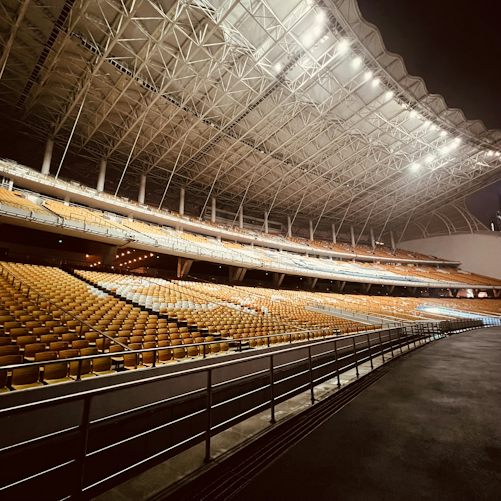
The venue reinforces that pressure. The Johan Cruijff Arena, home of Ajax, holds roughly 55,000 spectators and is the largest stadium in the Netherlands, according to the DFB’s match guide. Germany will not be able to treat the evening as an experimental friendly, even if the coaching staff are experimenting with personnel. The Nations League awards points, group position determines access to the knockout phase, and the atmosphere will be built around the first public view of Xavi’s national team.
For the Dutch, a home opener against Germany is an opportunity to reset the relationship between team and supporters after the World Cup disappointment. For Germany, it is a chance to test whether Klopp’s motivational force travels into international football without the long daily contact that underpinned his club teams. Both stories will be judged through the same ninety minutes, but they do not require the same performance.
The Netherlands need to show that “initiative” is more than a slogan. Germany need to show that their structure can survive the aggressive moments Klopp is likely to demand. A 1-0 win built on caution could be treated very differently in each country. So could a 2-2 draw full of attacking promise and defensive mistakes. The result matters, but the interpretation will be shaped by the rebuilding projects behind it.
What Klopp football can realistically look like after a few days
The temptation is to expect an immediate national-team version of Klopp’s best Liverpool sides: front-foot pressing, waves of counter-pressure, full-backs advancing aggressively and attackers sprinting into space as soon as possession is recovered. That is unlikely to appear in complete form after one camp. Pressing structures depend on synchronization. One player arriving a fraction late can open a passing lane that destroys the entire move.
The more realistic first-stage version is simpler. Germany can compress distances, defend on clear triggers and attack quickly when the Netherlands lose the ball in risky areas. Klopp can also simplify possession by giving midfielders and forwards repeatable reference points instead of a large catalogue of patterns. International teams often improve first through clarity rather than complexity.
That may be why his pre-match comments focused on steps and visible progress rather than outcomes alone. The short international cycle punishes coaches who overload players with information. The best early evidence for Germany may therefore be behavioural: how quickly the team reacts after losing possession, whether players support the ball carrier, whether defenders squeeze up together and whether the forward line presses as a unit rather than as individuals.
If those habits appear, Klopp will have a foundation. If Germany instead look stretched, retreat unevenly or rely heavily on isolated individual actions, the transition will require more time. None of those conclusions should be treated as permanent after one match, but they are useful indicators because they reflect coaching rather than finishing variance.
Xavi’s first tactical problem is Germany’s transition threat
The Netherlands face an equally delicate tactical balance. A coach who publicly promises initiative risks pushing his team into exactly the spaces an opponent wants to attack. Germany have quick forwards and midfielders capable of exploiting turnovers. If Dutch full-backs advance simultaneously and central midfielders position themselves too high, a single lost pass could expose the centre-backs to direct runs.
Xavi’s Barcelona teams frequently tried to protect against that problem through what coaches call rest defence: the positioning of players behind the attack so they can stop counters before those counters develop. At national-team level, the concept must be simplified. The Netherlands need enough numbers around the ball to sustain pressure, while keeping a stable platform behind it. Van Dijk’s reading of space should help, but no centre-back can repeatedly defend large open fields alone.
The Dutch attacking question is also about variety. Brobbey offers a physical reference point, while Cody Gakpo and other wide or hybrid attackers can threaten from different starting positions. Xavi will have to decide whether the team should use a fixed centre-forward to occupy Germany’s central defenders or rotate attackers to pull the defensive line out of shape. That choice will affect where the Netherlands create their overloads and how they defend transitions after losing the ball.
A Nations League group with little room for a slow start
The competitive context makes the opening result more important than a normal September international. Germany and the Netherlands are in League A Group A2 with Serbia and Greece. Under the current format, the top two teams in each League A group advance to two-leg quarter-finals. The group winner and runner-up therefore both preserve a route to the final tournament, while the third-placed team faces a relegation play-off and the fourth-placed team is relegated directly.
Germany’s immediate schedule is dense. After Amsterdam, they host Greece in Augsburg on September 27 and Serbia in Munich on October 1 before travelling to Thessaloniki to face Greece again on October 4. The Netherlands also face a concentrated set of fixtures. That means a poor opening result can create pressure quickly because there is little recovery time between matches and coaching staffs have limited opportunities to reset physically or tactically.
The Nations League has sometimes been treated by supporters as secondary to the World Cup and European Championship, but its competitive structure has made it increasingly relevant to elite teams. Germany reached the semi-finals of the previous edition for the first time. The Netherlands, two-time semi-finalists, were eliminated in the quarter-finals in 2024-25. Portugal begin the new campaign as defending champions after becoming the first nation to win the competition twice.
For teams in transition, the tournament is particularly useful because it replaces low-stakes friendlies with meaningful matches against comparable opposition. Coaches can test players, but they cannot escape consequences. That combination is exactly what Klopp and Xavi need, even if it makes their debuts less forgiving.
Europe’s international reset extends beyond Amsterdam
The Germany-Netherlands match is the most obvious double debut, but it sits inside a wider European reset after the World Cup. UEFA’s opening round also includes England against Spain, Italy against Belgium, Türkiye against France, Norway against Denmark and Portugal against Wales. Several leading nations are entering the 2028 cycle with new coaches, new personnel or both.
That makes this Nations League window more consequential than a typical post-tournament restart. France are beginning the Zinédine Zidane era, while Germany and the Netherlands are trying to restore authority after early World Cup exits. Italy and Belgium also meet with fresh leadership on the touchline. Even teams that kept their coaches are reassessing age profiles and tactical systems after the summer tournament.
International football often changes most sharply in the months immediately after a World Cup. Senior players retire, coaches leave, federations reassess development pathways and younger players receive opportunities that might have been considered too risky during qualification. The 2026-27 Nations League therefore functions as the first competitive map of the next European cycle.
Amsterdam is a particularly revealing place to begin because both teams are trying to reconcile tradition with modern tactical demands. Germany want to recover the authority associated with their tournament history without simply reproducing old methods. The Netherlands want to reconnect with an identity built around initiative and technique without turning style into nostalgia. Klopp and Xavi are different coaches, but both inherit national myths that can become burdens if they are treated as tactical instructions.
The World Cup exits still shape every decision
Germany’s defeat to Paraguay remains the clearest reference point for the new staff. FIFA’s match report recorded a 1-1 draw after extra time before Paraguay won the shootout 4-3. Julio Enciso put Paraguay ahead before Havertz equalized. Germany controlled long spells but struggled to create enough clear chances, and the shootout ended with three German misses. It was the country’s first World Cup shootout defeat and extended a run of tournament disappointment that would have been difficult for any coach to survive.
The Netherlands’ loss to Morocco produced a different but related frustration: another talented Dutch squad leaving a major tournament before it had created a defining run. Xavi’s appointment was therefore not only a coaching change but a stylistic intervention. Reuters described Koeman’s team as having faced criticism for a defensive approach, while Xavi has repeatedly stressed intensity and initiative in his first public comments.
Neither federation can undo the World Cup in September. The more useful question is whether they can learn the correct lessons from it. A common danger after a disappointing tournament is overcorrection: abandoning useful structures because the final result was poor, or promoting too many young players at once in the name of renewal. Klopp’s large squad and Xavi’s new emphasis will be judged partly on whether they produce evolution rather than reaction.
Selection decisions will matter as much as the formation
Pre-match discussion often focuses on whether a coach will use a 4-3-3, 4-2-3-1 or another nominal shape. For both teams, personnel decisions may be more informative. Klopp must decide how much experience to retain around his debutants and returning players. A starting team filled with established names would suggest that the broad 44-player plan is primarily an assessment mechanism. A more experimental selection in Amsterdam would indicate that he is willing to absorb short-term volatility in exchange for information.
Xavi faces a similar balance. Van Dijk’s captaincy provides one fixed point, but his attacking line and midfield relationships are less settled. UEFA has highlighted uncapped Dutch players Ruben van Bommel, Gjivai Zechiël and Mexx Meerdink among those pushing for opportunities. Introducing new players against Germany can energize a side, yet international debuts in a high-profile rivalry can also expose the lack of shared experience.
The first lineups will therefore serve as policy statements. Coaches often speak about long-term projects, but team sheets reveal how much risk they are prepared to accept immediately. In a competition where two group places lead to the quarter-finals, neither manager has unlimited freedom to experiment.
Leadership is changing, but not disappearing
Rebuilds are often described as generational changes, yet successful transitions usually depend on a smaller number of senior players carrying institutional memory. Van Dijk fills that role for the Netherlands. Germany captain Joshua Kimmich has similar importance on the other side. The DFB notes that Kimmich has faced the Netherlands seven times, more than any other player in the current German squad.
That experience matters because both coaches are asking players to absorb new language, new training priorities and potentially new positional responsibilities. Senior players can accelerate that process by translating ideas inside matches, particularly when coaches cannot stop play. They can also stabilize younger teammates when the emotional temperature rises.
The tension is that leadership cannot become immunity from selection. If Germany and the Netherlands genuinely want to build toward 2028, every senior player must remain subject to the same performance standards as newcomers. Klopp’s large selection pool suggests he understands that principle. Xavi’s decision to retain Van Dijk indicates that continuity can coexist with a new approach rather than contradict it.
The first match will be overinterpreted — and still matter
Whatever happens on Thursday, the temptation will be to declare a verdict too quickly. A strong German win would be presented as proof that Klopp has transferred his club methods instantly. A convincing Dutch performance would be treated as evidence that Xavi has restored attacking identity in a matter of days. A poor result for either side would invite the reverse conclusion. None of those readings would be reliable after one match.
International football is especially vulnerable to small-sample judgments. A set-piece goal, a deflection or a goalkeeper error can determine a result that bears little relationship to the long-term quality of a project. The more useful early indicators are repeatable patterns: chance creation, control of transitions, defensive distances, pressing cohesion and the ability to respond when the game changes.
Still, the opener matters precisely because credibility matters. New coaches need players to believe their ideas can work under pressure. They also need supporters and federations to give them enough time to develop those ideas. A positive first performance cannot guarantee a successful cycle, but it can buy patience. A chaotic one can create noise that complicates every subsequent decision.
What to watch in Amsterdam
The first question is where Germany choose to press. If Klopp’s forwards attack the Netherlands high from the opening minutes, the game could become stretched quickly. If Germany instead defend in a more compact middle block, it would suggest that the coach is prioritizing structural security before introducing a more aggressive press. Both approaches can fit his broader philosophy; the choice will show how he is adapting it to the national team.
The second is how the Netherlands create width. Xavi’s teams have generally wanted to stretch opponents horizontally so central players can receive between lines. Whether that width comes primarily from wingers or advancing full-backs will affect the risk profile behind the ball. Germany will look for the spaces left when Dutch players commit forward.
The third is how both teams use their experienced leaders. Van Dijk’s positioning against German movement, Kimmich’s role in controlling tempo and the goalkeeper decisions at the base of each buildup can determine whether the match becomes a tactical contest or a sequence of transitions. The fourth is how quickly debutants and returning players adjust to the speed of the occasion. International football offers fewer second chances than club football because the next match may arrive only days later.
The opening night also tests the value of the competition itself
For UEFA, matches such as Netherlands-Germany are also part of the argument for the Nations League as a meaningful competition rather than a repackaged series of friendlies. The format was created to place national teams into competitive groups of broadly comparable strength, and this edition again produces fixtures that would otherwise be difficult to arrange during a crowded calendar. On Thursday alone, Portugal begin the defence of their title against Wales while Norway host Denmark and Serbia meet Greece in the same group as Germany and the Netherlands.
The tournament has acquired additional importance because it sits between the World Cup and Euro 2028 at a moment when coaches have fewer traditional friendlies in which to experiment. That creates an unusual incentive structure. Managers need to learn about players and systems, but every experiment has standings consequences. For established nations, that can be uncomfortable. It can also be useful. Problems exposed now are cheaper than problems discovered in a European Championship knockout match.
For Klopp and Xavi, the competition therefore offers a controlled form of pressure. Both can test ideas against strong opposition without pretending that September form determines the entire cycle. At the same time, neither can hide behind the language of development if performances remain poor. The quarter-final places create a clear competitive target, while the short window forces decisions about which principles are essential and which can wait. That balance between experimentation and consequence is one reason Thursday’s opener has resonance beyond the rivalry itself.
A first step toward 2028, not a final judgment
Klopp said this week that he wants Germany to reach a level where the team has a chance to win every match. Xavi has made a parallel promise in different language: the Netherlands will work with intensity, passion and initiative. Both statements are deliberately about process rather than guaranteed trophies. That is appropriate for two teams beginning again after disappointing summers.
The Nations League opener will not answer whether Germany can become European champions in 2028 or whether the Netherlands can finally add another major title to the one won in 1988. It can answer smaller, more immediate questions. Are Germany more coordinated without the ball? Do the Netherlands play with greater initiative? Are new players ready for senior responsibility? Can experienced leaders support change without slowing it?
Those questions give Thursday’s match its importance. Amsterdam is not the destination for either project. It is the first competitive checkpoint. But after a World Cup that ended too early for both countries, the direction of travel matters. Germany and the Netherlands are beginning again on the same night, against each other, with two coaches whose reputations ensure that every decision will be examined. The result will take ninety minutes to produce. The rebuilds it begins will be judged over the next two years.