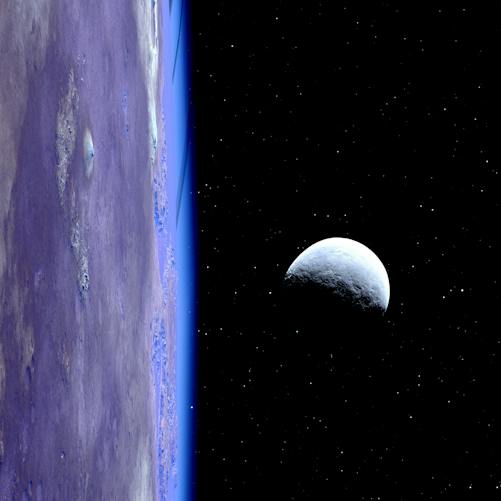
Enceladus has spent two decades moving from an obscure icy moon to one of the Solar System’s most compelling astrobiology targets. Two peer-reviewed studies published in Science Advances on September 25 now sharpen that case from different directions. One laboratory team showed that a methane-producing microorganism from Earth can grow under a chemical environment designed to mimic key features of Enceladus’s hidden ocean, including extreme alkalinity and severe carbon-dioxide limitation. A second team, combining nearly 1,000 Cassini ice-grain spectra with laboratory freezing experiments and thermodynamic modeling, found that ocean spray rising through the moon’s fractured ice shell may chemically sort itself before erupting into space. Taken together, the results do not show that Enceladus is inhabited. They do something more useful for science: they identify a plausible metabolism that can tolerate a demanding Enceladus-like environment and a physical process that may concentrate the chemical traces future spacecraft would search for.

Why Enceladus Has Become a Premier Astrobiology Target
Enceladus is only about 500 kilometers across, but its scientific importance is disproportionate to its size. NASA’s Cassini mission transformed the moon’s reputation after detecting enormous plumes of water vapor and ice particles erupting from fractures near the south pole. Repeated flybys showed that the jets are connected to a global subsurface ocean lying beneath an ice shell and above a rocky interior. Cassini instruments also detected salts, organics and evidence consistent with hydrothermal water-rock interactions. Those ingredients matter because the search for life is not simply a search for liquid water. Researchers also look for usable energy sources, chemical building blocks and geochemical environments in which metabolism could persist.
The moon is especially attractive because it may offer access to its ocean without drilling through kilometers of ice. The plumes effectively transport material from the hidden ocean into space, where a spacecraft can sample it during a fly-through. That distinguishes Enceladus from many other potentially habitable worlds. The scientific challenge is therefore partly one of interpretation: how faithfully do plume particles represent the ocean below, and what kinds of biological processes could function in the chemistry scientists think exists there?
The two new studies address those questions from opposite ends. One focuses on habitability and metabolism. The other focuses on sampling physics and the chemical history of the ice grains Cassini actually measured.
Two Studies That Solve Different Parts of the Same Problem
The first paper, led by Vanessa Helmbrecht and colleagues and titled “Enceladus-Like Geochemistry Fuels Methanogenesis under Extreme CO₂ Limitation”, asks whether a known Earth organism can remain metabolically active under an Enceladus-inspired chemical regime. The organism was Methanothermococcus okinawensis, an archaeon originally associated with deep-sea hydrothermal environments. It is a hydrogen-oxidizing methanogen: it can obtain energy by reacting hydrogen with carbon dioxide and producing methane.
That metabolic strategy has long interested astrobiologists because Cassini-era models and observations suggest Enceladus may have the raw ingredients needed to support it. Water-rock reactions at the ocean floor can generate molecular hydrogen. Carbon-bearing compounds are also present. But Enceladus’s ocean is expected to be highly alkaline, and at high pH much of the inorganic carbon is chemically shifted into bicarbonate and carbonate rather than existing as freely available dissolved carbon dioxide. That raises a serious biological question. A reaction may be thermodynamically favorable on paper, yet still be inaccessible to cells if the organism cannot acquire a key substrate efficiently enough.
The second paper, led by Frank Postberg and colleagues and titled “Cassini CDA Observes Compositional Segregation of Enceladus’ Ice Grains from Slow Freezing and Fragmentation of Oceanic Spray”, deals with how ocean droplets become the tiny grains detected in the plume and Saturn’s E ring. The study combines old spacecraft data with new experimental and theoretical work. It suggests that ocean spray may first freeze relatively slowly, allowing dissolved compounds to separate into different regions or mineral phases, and then fragment as the frozen droplets accelerate through narrow vents. The fragments can therefore be chemically very different from one another.
That is not a minor technical detail. If plume particles are chemically sorted rather than simple miniature samples of bulk ocean water, then the strategy for detecting biosignatures changes. Future instruments may need to analyze many individual grains and look for rare particles strongly enriched in particular compounds or cellular material.
Building a Laboratory Version of an Alien Ocean
The methanogenesis study did not recreate Enceladus in a bottle in any complete sense. No laboratory can reproduce every relevant pressure, temperature, geological timescale and fluid-rock interaction of a moon hundreds of millions of kilometers away. Instead, the researchers built a geochemical analogue designed to reproduce several conditions that matter for metabolism: alkaline chemistry, high dissolved inorganic carbon, extremely low free carbon dioxide and hydrogen generated through mineral-water reactions.
The experimental logic is important. Methanothermococcus okinawensis is not being presented as an organism likely to exist on Enceladus. It is a test organism with a metabolism that gives researchers a way to ask whether known biology can exploit the kinds of chemical gradients expected in the moon’s ocean. If an Earth microbe fails instantly, that would not prove Enceladus is sterile; alien biology could be different. But if a terrestrial methanogen can function under the analogue conditions, it shows that the environment is not automatically outside the operating range of all known cellular metabolism.
The researchers found that the archaeon grew in the Enceladus-like geochemical system at pH values reaching 11, substantially more alkaline than its previously known growth range. The cells used hydrogen generated abiotically by the simulated mineral-water reactions. They also continued fixing carbon under conditions in which freely available carbon dioxide was extremely scarce.
That is the central experimental result. The team demonstrated growth and metabolism in a controlled analogue, not life on Enceladus itself.
How the Microbe Coped With Extreme Carbon Limitation
At high pH, carbon chemistry becomes a bottleneck for organisms that rely on carbon dioxide fixation. In alkaline water, carbon dioxide is rapidly converted into bicarbonate and carbonate. A microbe can be surrounded by abundant total inorganic carbon and still experience physiological carbon dioxide scarcity. That is one reason Enceladus’s ocean has posed an intriguing paradox: its chemistry may support the overall energetics of methanogenesis while making the immediate carbon source difficult for cells to obtain.
Transcriptomic measurements gave the researchers a window into how Methanothermococcus okinawensis responded. The cells increased expression of genes involved in the reductive acetyl-CoA pathway, an ancient and energy-efficient route used by some microbes to fix carbon dioxide. In the experiment, that response appears to have helped the organism scavenge carbon under extreme limitation.
This is scientifically interesting for two reasons. First, it links a whole-ocean geochemical model to cellular physiology. Habitability is not simply a matter of asking whether water, hydrogen and carbon exist somewhere in the same system. Organisms must be able to access those resources at biologically useful rates. Second, it shows that adaptation at the level of gene expression can expand the conditions under which a known metabolism remains functional.
The result should still be kept in proportion. The experiment ran on laboratory timescales. It did not test whether a population could remain viable for years, geological epochs or repeated environmental disruptions. It also does not establish that early life could originate under those conditions. Survival and growth of an existing Earth organism are different questions from the origin of life.
Methanogenesis Matters, but Methane Is Not Proof of Life
Methanogenesis is one of the oldest known metabolic strategies on Earth and is particularly important in environments without oxygen. Methanogens do not perform photosynthesis and do not require sunlight. That makes them conceptually relevant to subsurface oceans sealed beneath thick ice, where solar energy cannot reach the water directly.
On Earth, hydrogen can be produced when water reacts with certain rocks in processes related to serpentinization and hydrothermal alteration. If analogous reactions occur on Enceladus’s rocky seafloor, they could provide a persistent chemical energy source. Methanogens could, in principle, exploit that energy by reducing carbon compounds and releasing methane.
But methane is also readily produced without biology. Water-rock chemistry, thermal processes and other abiotic reactions can generate it. A spacecraft detecting methane would therefore not be entitled to declare life. The new work reinforces why astrobiology increasingly relies on combinations of evidence rather than single molecules. A convincing biosignature would likely require a pattern of chemical abundances, isotopic ratios, molecular structures or complex organics that is difficult to explain through geology alone.
The laboratory result narrows one piece of the possibility space. It shows that, under the tested conditions, the geochemistry can support active methane-producing biology as we know it. It does not say that biology is the best explanation for methane that may be present on Enceladus.
The Cassini Data Still Have New Science to Give
The second study highlights another remarkable feature of the Enceladus story: Cassini ended its mission in 2017, but its measurements continue to yield new results. The spacecraft carried a Cosmic Dust Analyzer, or CDA, that recorded mass spectra from individual ice grains encountered in the plume and Saturn’s E ring. These spectra contain information about the salts and other compounds embedded in the grains.
Postberg’s team analyzed roughly 1,000 spectra from a salt-rich class of particles often referred to as Type 3 grains. Instead of behaving like chemically uniform droplets from a single ocean mixture, the grains showed strong compositional diversity. Different particles were dominated by different chemical families, including sodium chloride, sodium bicarbonate and carbonate, phosphates, sodium hydroxide and potassium-bearing compounds.
The diversity required an explanation. If tiny droplets were atomized from the ocean and froze almost instantaneously, researchers would expect the salts within them to remain mixed in proportions closer to the original water. The team instead found that the Cassini patterns are better explained if larger ocean droplets have time to cool and partially crystallize before they are broken into smaller pieces.
That interpretation turns the physical journey from ocean to space into part of the chemistry.
Slow Freezing Can Chemically Sort Ocean Spray
The researchers combined Cassini measurements with laboratory experiments and thermodynamic calculations to test how salty droplets freeze. Their results indicate that compositional separation consistent with the spacecraft data occurs when droplets are larger than about 10 micrometers and cool at rates below roughly 20 kelvins per minute. Under those conditions, different salts precipitate at different stages of freezing instead of becoming locked together instantly in a chemically homogeneous particle.
The paper proposes that the initial ocean spray may contain droplets hundreds of micrometers across. These droplets could be carried upward in relatively slow gas flow within fractures in the ice. As they cool, salts crystallize in distinct regions or phases. Later, when the droplets or frozen particles are accelerated through narrower parts of the vent system, repeated collisions with ice walls can shatter them into much smaller fragments. Cassini typically detected plume particles around the micrometer scale.
A fragment created after chemical segregation can be dominated by one component that was only a minor fraction of the original ocean water. In effect, Enceladus’s vent system may act as a natural fractionation device.
This mechanism remains a model grounded in spacecraft data, experiments and thermodynamics. Researchers have not watched a droplet travel from the ocean surface through an Enceladus vent. But the model offers a coherent explanation for the unexpectedly distinct grain chemistries Cassini observed.
Why Natural Fractionation Could Help the Search for Life
Chemical fractionation can complicate efforts to reconstruct the composition of the bulk ocean. A single ice grain may not be representative. But the same process could be advantageous for life detection.
Imagine an ocean containing a very dilute organic compound, cellular fragment or other material associated with biology. If every plume grain were an identical miniature sample of the whole ocean, the target might remain below an instrument’s detection threshold. If freezing and fragmentation concentrate certain materials into a small subset of grains, some particles could carry much stronger signals.
That means the right strategy is not necessarily to average every grain together. Future spacecraft may benefit from measuring large numbers of individual particles at high sensitivity, then searching the population for rare chemical outliers. A few enriched grains could carry far more diagnostic information than the mean composition.
The idea also raises a statistical challenge. A mission would need enough particle encounters to avoid missing rare enriched grains. Instrument designers would have to balance mass resolution, detection sensitivity, impact speed, collection geometry and data volume. The new paper therefore connects fundamental planetary physics directly to engineering choices.
Postberg and colleagues argue that individual-particle analysis should be central to future Enceladus investigations. Earlier laboratory work from the same research community has already explored whether mass spectrometers could recognize microbial cellular material in ice grains. The new fractionation model makes that question more urgent because it suggests nature may do some of the concentration work before the spacecraft arrives.
The Most Important Caveat: These Papers Do Not Detect Life
The excitement around Enceladus can easily outrun the evidence, especially because “conditions for life” and “evidence of life” sound similar in headlines but represent very different scientific claims.
The microbial experiment demonstrates that one Earth archaeon can grow in a carefully designed Enceladus-like geochemical system. That is a habitability result. It does not establish that the actual ocean has precisely the same chemistry everywhere or at all times. It does not show that life originated there, migrated there or currently exists there. The organism used in the experiment evolved on Earth under Earth’s history and may possess adaptations unavailable to hypothetical alien organisms.
The plume study, meanwhile, demonstrates that Cassini grain diversity can be explained by slow freezing, salt precipitation and later fragmentation. It improves scientists’ ability to interpret what individual grains may represent. It does not identify cells, genes, biomolecules or a uniquely biological chemical pattern.
The strength of the two papers comes from this restraint. One makes a biological process more plausible under relevant geochemistry. The other makes certain biosignatures potentially easier to sample. Neither crosses the line from habitability to inhabited.
What Future Spacecraft Would Need to Measure
A serious life-detection mission to Enceladus would need to build on Cassini while going substantially beyond it. Cassini was designed decades before the full importance of the moon’s plume was understood. Its instruments were not optimized for detecting life.
A next-generation mission could target higher mass resolution, better sensitivity to complex organic molecules, stronger control over contamination and the ability to characterize many individual grains. Depending on mission architecture, researchers could also measure gases in the plume, isotopic ratios, mineral composition and possibly molecular structures that encode information about chemical pathways.
The velocity of collection matters. When a spacecraft strikes tiny grains at several kilometers per second, the impact itself can fragment molecules or alter the signatures being measured. Instrument designers therefore have to understand not only what is inside the grains but what survives detection. Laboratory firing systems, ice-grain analogues and calibration experiments are already important tools for evaluating this problem.
The new fractionation model adds another requirement: preserve the individuality of the grains. If rare particles are chemically enriched, combining signals too early could erase the very anomalies a mission hopes to find.
Future spacecraft would also need rigorous criteria for claiming a biosignature. A detection strategy should be designed around multiple independent lines of evidence and explicit abiotic alternatives. The history of planetary science is filled with cases in which an initially exciting chemical signature later received a geological explanation. Enceladus will require a standard of evidence proportionate to the importance of the claim.
Europe and NASA Are Already Thinking About the Next Enceladus Era
No dedicated Enceladus life-detection mission is currently returning data, but the moon is a high-priority target in long-range planetary planning. European studies have examined ambitious mission concepts that could revisit the south polar region, while scientists in the United States have repeatedly proposed plume-sampling and orbiter concepts.
The attraction is obvious: compared with a mission that must land and drill through thick ice, a plume fly-through can sample ocean-derived material directly. But “easier” is relative. Saturn is far from Earth, mission transit times are long, power and communications are difficult, and a spacecraft optimized for biosignature science would require extremely clean hardware and carefully designed instruments.
The new papers can influence these mission studies in practical ways. If individual grains preserve sharply different chemical histories, then the number of particles sampled becomes a key mission parameter. If methanogenic metabolism can persist under realistic alkaline chemistry, then methane, hydrogen, carbon chemistry and related isotopic signatures become more informative when interpreted together. Neither result dictates a particular spacecraft design, but both help define what measurements would be scientifically valuable.
Cassini’s Legacy Was to Turn a Moon Into an Accessible Ocean
Before Cassini, the idea that a small moon such as Enceladus might host a global ocean with active hydrothermal chemistry would have sounded speculative. The mission established the broad framework that now makes laboratory experiments like these meaningful.
Cassini found a plume, mapped the warm south polar terrain, detected salty particles and measured molecular hydrogen. Researchers have also reported increasingly complex organic chemistry in material linked to the moon’s ocean. Each result strengthened the idea that Enceladus offers the three broad ingredients often associated with habitability: liquid water, chemical energy and organic chemistry.
The current studies extend that framework by adding process. The methanogenesis paper asks what an organism can do with the chemistry. The grain paper asks what happens to that chemistry on the path to a detector.
That shift is characteristic of a maturing field. Early discoveries ask whether an environment exists. Later work asks how it functions, how stable it is, how biological systems might interact with it and how measurements can distinguish one explanation from another.
Enceladus Is Also a Test Case for How Astrobiology Should Work
Astrobiology faces an unusual methodological problem: the most important target may offer only tiny amounts of data collected under difficult conditions, yet the consequences of over-interpreting those data are enormous. The discipline therefore has to combine planetary geology, chemistry, microbiology, instrumentation and statistical reasoning.
The two Science Advances papers illustrate that interdisciplinary structure. One study uses microbiology, geochemistry and transcriptomics to examine whether a metabolism can operate under a modeled alien environment. The other uses spacecraft mass spectrometry, freezing experiments, thermodynamics and vent physics to explain what a future detector may encounter.
Neither approach is sufficient alone. A biological experiment that ignores plume physics could target the wrong signatures. A spacecraft model that ignores microbial metabolism could miss the most informative chemistry. By linking the hidden ocean to the particles that reach space, researchers can design hypotheses that are actually testable.
That is why the new work matters beyond Enceladus. Similar reasoning will be needed for Europa, Mars, Titan and eventually exoplanets. Scientists must understand how an environment creates, modifies, transports and sometimes destroys potential biosignatures before those signatures reach an instrument.
What Scientists Still Do Not Know About the Ocean Below
Major uncertainties remain. Researchers do not know the exact temperature structure of the ocean, the distribution and longevity of hydrothermal activity, the rate at which ocean water circulates through the rocky core or how stable the chemistry has been over geological time.
The pH is constrained indirectly and may vary from place to place. Concentrations of carbon species, phosphates, salts and organics are estimated from plume measurements and chemical models. The connection between the ocean and the surface fractures is also complex. A particle measured in space may have experienced cooling, evaporation, freezing, wall collisions, chemical precipitation and radiation exposure before reaching a detector.
The new grain model helps with one piece of that chain but also underlines how much processing can occur between source and sample. A strong signal in one particle might represent natural concentration in the vent rather than unusually high abundance in the ocean. Conversely, the absence of a compound in a small number of grains may not mean the compound is absent from the ocean.
Future missions will therefore need both breadth and context: many grains, multiple chemical channels and physical models that reconstruct how the sampled material traveled.
The Result Changes the Question From “Could Life Survive?” to “How Would We Recognize It?”
For years, Enceladus science has been dominated by a sequence of habitability milestones: liquid water, salts, organics, hydrogen and evidence compatible with seafloor chemistry. The new methanogenesis experiment adds another layer by demonstrating that known biology can remain active under a demanding analogue of that environment. The new plume work adds a complementary insight by suggesting that the moon’s eruptive system may concentrate some ocean constituents into particles that are easier to analyze.
That combination moves the scientific conversation forward. The most productive question is no longer simply whether Enceladus has a plausible environment for life. It is increasingly about what life, if present, would do to that environment and what measurable fingerprints could survive the journey from ocean to spacecraft.
The answer may depend on subtle combinations rather than a single dramatic molecule: methane paired with hydrogen and carbon chemistry; unusual isotopic patterns; complex organics present in specific grain classes; or multiple signals that converge on a biological interpretation.
The challenge is to design instruments and analysis pipelines capable of distinguishing those patterns from the rich chemistry a lifeless ocean can also produce.
Why Rare Grains May Matter More Than Averages
One of the most consequential implications of the plume study is statistical rather than spectacular. Planetary missions often summarize a sampled environment through averages: average elemental abundance, average salt content, average organic concentration. That approach is powerful when the sampled material is well mixed. It can be misleading when a physical process separates the sample into chemically distinct populations before measurement.
If the Postberg team’s interpretation is correct, Enceladus may deliver an ensemble in which different grains carry different parts of the ocean’s chemical inventory. A particle rich in phosphates could sit beside another dominated by chloride, while organic compounds or cellular debris could preferentially end up in still rarer fragments. The scientifically valuable information would then be in the distribution, not merely the mean.
For mission planners, that has immediate consequences. A detector capable of exquisite measurements on ten particles may be less informative than one that can characterize thousands if the sought-after material occurs only in a small fraction of grains. Conversely, a high-throughput instrument that records only crude composition may fail to distinguish a biologically interesting molecule from a common abiotic background. The optimal design must therefore combine statistical reach with chemical precision.
This also changes how null results should be interpreted. If a spacecraft samples a limited number of grains and finds no compelling biosignature, the result could mean either that the ocean lacks the target material or that the mission simply missed the rare grain population in which it was concentrated. Researchers will need explicit sampling models to quantify that uncertainty rather than treating nondetection as a simple absence.
The same principle applies to positive findings. A single unusual particle could be scientifically important, but it would also demand replication. Investigators would want to know whether similar grains recur, whether their chemistry correlates with particular particle sizes or plume regions, and whether instrument artifacts or contamination can be excluded. In life-detection science, rarity can make a signal interesting, but reproducibility is what makes it credible.
From Chemical Possibility to a Testable Search Strategy
The broader achievement of the new studies is that they turn abstract habitability arguments into testable experimental questions. For the microbiology team, the question becomes whether other anaerobic organisms and metabolic pathways can function under still more realistic combinations of Enceladus pressure, temperature, mineralogy and carbon availability. Researchers can vary the chemistry, run longer experiments, compare different methanogens and measure isotopic products that a spacecraft might later search for.
For the plume team, the next questions concern the mechanics of transport. Laboratory systems can test larger droplets, different salt mixtures, organics, cell fragments and freezing histories. Researchers can examine how impact and fragmentation alter the final particle population and determine which molecular signatures survive at spacecraft encounter speeds. Those experiments can be linked directly to instrument calibration.
A mature life-search program would connect these lines of evidence in a chain. Geochemistry predicts available energy. Microbiology predicts possible metabolic products. Vent physics predicts how those products are partitioned into grains. Instrument tests predict which signatures survive collection. Statistical models predict how many measurements are needed. Only after those steps are integrated can mission scientists define the combinations of observations that would justify a biological interpretation.
That framework is slower and less dramatic than announcing a single “life molecule,” but it is also much more robust. The possibility of life on Enceladus is compelling precisely because the moon allows such a chain to be tested. Its ocean is hidden, yet the plume continuously exports material from that inaccessible environment into space.
There is also an important planetary-protection dimension. A mission built to detect biology must be able to demonstrate that any organic or cellular-looking signal did not come from Earth. That means documenting spacecraft cleanliness, characterizing background contaminants before launch, monitoring instrument blanks and designing analytical procedures that can distinguish terrestrial residues from indigenous chemistry. Because a dramatic result could rest on only a handful of unusual grains, contamination control is not a secondary engineering concern; it is part of the scientific argument itself. The stronger the claim, the more complete the chain of custody must be from spacecraft assembly to particle impact to data analysis.
A More Compelling Target, Not a Solved Mystery
The latest work makes Enceladus more interesting without making it less mysterious. In the laboratory, Methanothermococcus okinawensis demonstrated that an Earth-style hydrogen-fueled metabolism can overcome severe carbon dioxide limitation in an alkaline Enceladus-like geochemical system. In a separate analysis, Cassini’s old dust measurements, supported by experiments and modeling, suggest that slowly freezing ocean spray becomes chemically separated before shattering into the tiny grains that escape into space.
The implications reinforce each other. If biology existed in the ocean, its chemical products or cellular material might not be uniformly diluted across every plume particle. Natural freezing and fragmentation could concentrate them into rare grains. A future spacecraft that measures enough particles individually could therefore have a better chance of finding a diagnostic signal than scientists once assumed.
But the standard of proof remains high. A laboratory analogue is not an alien ocean. A survivable environment is not evidence of inhabitants. Chemical enrichment is not a biosignature by itself.
What the two studies provide is a clearer experimental roadmap. Enceladus remains one of the few places beyond Earth where a spacecraft may be able to sample material from a potentially habitable ocean without drilling into it. The new research suggests that the ocean’s chemistry can support at least one familiar energy strategy and that the moon’s own geology may package clues into analyzable particles.
The next decisive step will require returning with instruments built specifically for the question Cassini unexpectedly opened: not merely whether an ocean exists beneath the ice, but whether anything has ever lived in it.