Romanian rescuers recovered survivors from a commercial vessel, while the circumstances of the reported strike remain distinct from the confirmed rescue and casualty figures.

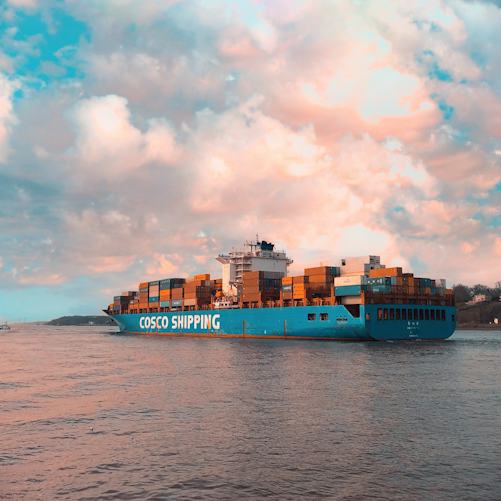
Two people died and 11 were rescued after a fire aboard the Royad Mammadov in the Black Sea on October 5, Romanian authorities said. Reuters reported that the St Kitts and Nevis-flagged ship was carrying corn from Izmail, Ukraine, toward Ravenna, Italy.
Ukrainian President Volodymyr Zelenskyy attributed the incident to two Russian drones. The Associated Press placed the incident in Romania’s exclusive economic zone, around 30 nautical miles south of Sfantu Gheorghe. Its report identified Azerbaijani and Indian nationals among the crew. Ukraine’s account of responsibility is an attributed claim, not an independent finding made by this publication.
Rescue evidence and attribution need separate treatment
Reuters said Russia’s defence ministry had discussed other cargo-ship strikes without specifically addressing this incident. That is not a confirmation of responsibility for the Royad Mammadov.
The available accounts establish a human emergency and a rescue response. Identifying what caused the fire requires a different evidential chain. Survivor testimony, any recovered fragments, recordings and official investigative findings could help clarify that question. None should be assumed to exist, or to prove a particular explanation, before it is made available and assessed.
The distinction also applies to geography. A location outside a country’s territorial waters is not, by itself, evidence about the origin of an attack. Nor does a ship’s flag establish the nationality of its crew, the ownership of its cargo or the identity of anyone responsible for damaging it. Those are separate facts, even when they appear together in a single account.
Why rescue coordination matters beyond the coastline
The International Maritime Organization’s explanation of the Search and Rescue Convention describes a framework for coordinating assistance wherever a maritime emergency occurs. It provides for rescue regions, cooperation between neighbouring organisations, communications arrangements and continuously staffed coordination centres.
That framework helps explain why an offshore incident can require a response from a coastal state without resolving the question of who caused it. Rescue coordination concerns the immediate protection of people. A subsequent investigation addresses causation and responsibility. The performance of one function does not predetermine the conclusions of the other.
The IMO also sets out arrangements for coordinating maritime and aeronautical services and for delivering rescued people to a place of safety. The objective is an organised response to distress, rather than leaving assistance dependent on whichever vessel happens to be nearby.
A commercial route with a human cost
For ship operators, an incident involving a laden vessel raises several questions at once: crew welfare, the condition of the ship, the cargo and the reliability of the voyage. Those questions can be examined without asserting that freight rates, insurance prices or regional traffic volumes have already changed as a result of this particular event. No such quantified effect is established in the reporting cited here.
The next substantive development would be additional evidence about the cause, together with authoritative information on the survivors and the vessel. Until then, the confirmed rescue figures and the attributed allegations remain the clearest boundary of what can responsibly be reported. The deaths are established; the full sequence that produced them still requires clarification.