Tuesday’s Champions League meeting pairs two unbeaten league-phase records, while Barcelona must adjust without Eric García and Jules Koundé.

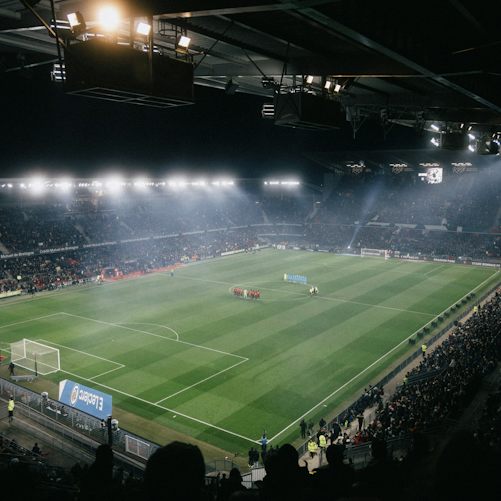
Paris Saint-Germain and Barcelona meet at the Parc des Princes on Tuesday, October 20, with kick-off scheduled for 21:00 CEST, the same local time in Paris and Rome. PSG’s official match page lists the fixture as Champions League league-phase matchday three. This is a pre-match assessment: neither the starting line-ups nor the result is being presented as known.
Both clubs have won their first two European matches this season, according to UEFA’s match facts. A third win would extend an excellent opening sequence, but the significance of the evening is not confined to points. It offers a direct comparison between opponents whose early records have supplied confidence without settling how they will respond to each other.
Barcelona’s selection problem is already concrete
Barcelona’s October 19 squad announcement confirms that Eric García and Jules Koundé are absent after injuries against Real Betis. The club also notes eleven wins from eleven matches across the season. That is a strong foundation for the trip, but it does not remove the need to adapt the available side.
The absence of two players should not be used to invent a formation or a replacement partnership before the team sheet is released. It does, however, make coordination an obvious subject to watch. When personnel change, the important questions include who provides cover, how distances between players are managed and whether the side can maintain its intended approach without exposing avoidable space.
Those are analytical questions rather than inside knowledge of the coaching plan. A familiar pattern can be reproduced by different players, but it may require adjustments to timing or responsibility. The clearest evidence will come from the opening phases and the ways Barcelona respond when the initial plan is tested.
Paris arrive with a substantial European sequence
UEFA records PSG’s 4–2 win at Manchester City in their previous league-phase match and a twelve-game unbeaten run in the competition. Its preview also notes that Ousmane Dembélé has scored in six successive Champions League appearances. These are records entering Tuesday’s match, not predictions of what will happen once it begins.
A productive run supplies options and confidence, but it can also encourage an overly simple preview. A scorer’s sequence does not make the next goal inevitable, and a team’s recent attacking success does not guarantee that it can control every period of a match. The useful task is to identify which parts of the performance are repeatable and which depend on circumstances that may change.
For Paris, one question is how effectively attacking ambition is supported by protection against a quick response. The value of pressure is not measured only by the number of players committed forward. It also depends on whether the side is positioned to deal with the moment possession changes. That balance is likely to be more revealing than a possession percentage considered alone.
Barcelona’s attacking returns come with a defensive question
UEFA’s figures show Barcelona without a clean sheet in seventeen Champions League matches. The same account records a 4–1 victory over Galatasaray in their most recent European outing. Together, those facts describe a side that can win emphatically while still allowing opponents a route into the game.
Conceding does not automatically mean that an attacking approach has failed. A team can accept some exposure as part of its way of creating chances. The issue is whether the opportunities it allows are proportionate to the advantages it gains. A good result can conceal a risky balance; a difficult passage can also be survived without requiring a complete change of identity.
For viewers, the quality of the chances created and conceded will therefore tell more than the score at a single point in the evening. An early goal can change incentives, but it does not explain every subsequent decision. A side protecting a lead and a side chasing the match may appear very different from the teams that started, even with the same players on the pitch.
Familiar opponents, a new set of decisions
The historical record offers context rather than a template. UEFA lists sixteen previous meetings, with six wins each and four draws. That balance is a reminder that the pairing has produced different outcomes, not evidence that the next encounter must be close or follow the same pattern.
The relevant comparison is between the current teams and the conditions they face now. Previous meetings can illuminate recurring tactical questions, but personnel, fitness and the competitive setting change. A preview becomes less useful when it treats an old result as a script for a new match.
The first substitutions may be particularly revealing. They can show whether a coach believes the original approach needs more energy, a different balance or a more substantial alteration. That judgement should be assessed against the state of the game, not against an assumption that a change is automatically defensive or an admission of error.
What Tuesday can establish
A league-phase meeting is not a knockout verdict. Winning would strengthen an already promising start; losing would require a response without necessarily defining the remainder of the competition. The performance can still provide important evidence about how each side handles an opponent capable of punishing mistakes.
Before kick-off, the confirmed facts are clear: two perfect European starts, a strong recent PSG sequence and specific Barcelona absences. The unanswered questions concern execution, adjustment and control. Paris will supply those answers on the pitch. Until then, the proper conclusion is not a predicted winner, but a match with enough genuine sporting tension that it needs no invented certainty.