Hermès reported 4.3% third-quarter revenue growth on October 22, with leather goods up 10.8% but ready-to-wear and accessories down 2% as Chinese spending weakened.

A flagship house encounters a more selective customer
The sharpest contrast in Hermès’ latest trading figures is not between luxury and mass-market retail, but within the French house itself. On 22 October, Hermès reported that revenue in the third quarter reached approximately €4.1 billion, up 4.3% at constant exchange rates. Its leather-goods and saddlery business grew 10.8%, yet ready-to-wear and accessories declined 2%. The combination challenges the idea that one highly desirable handbag franchise can tell investors everything they need to know about a diversified luxury brand.
The report landed against a difficult backdrop for European luxury companies and an increasingly cautious consumer in parts of Asia. According to Reuters’ 22 October account, the 4.3% growth rate missed a 5.2% analyst expectation and represented the house’s slowest quarterly progress since early 2020. That comparison reflects the pace of sales, not a claim that Hermès has stopped growing or that demand has collapsed across all categories.
Leather goods remain the centre of gravity
The leather-goods division, home to Birkin and Kelly handbags, remained resilient. Its 10.8% increase stood out against the negative performance of clothing and accessories and weaker watch demand. In the company’s own quarterly update, Hermès described nine-month revenue of approximately €12.3 billion, an increase of 6% at constant currencies and 3% at current exchange rates. The broader year-to-date figures point to continued strength, even as the latest quarter has become less comfortable.
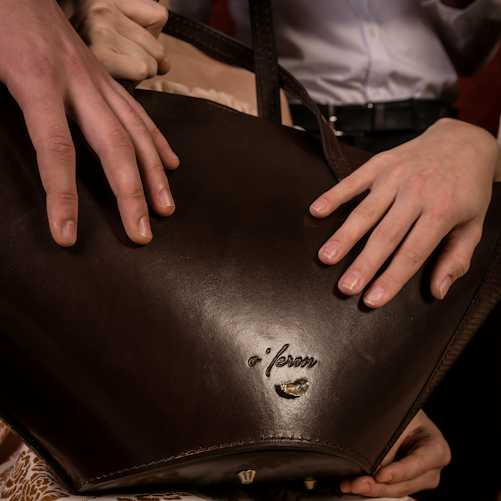
Leather craftsmanship is not merely a marketing story for the company. Manufacturing capacity, trained artisans and a highly controlled distribution model influence how many pieces can reach customers without changing their perceived exclusivity. A disciplined approach can support demand and pricing when other fashion categories fluctuate, but it does not make the company immune to shifts in confidence, tourist traffic or local purchasing power. The result illustrates resilience in a specific line of business, not an exemption from economic conditions.
Clothing and accessories reveal a different market
The 2% contraction in ready-to-wear and accessories is consequential because the category extends the Hermès relationship beyond leather accessories into regular wardrobe decisions. A client may remain willing to purchase a coveted handbag while delaying an additional jacket, shoe or accessory. The second type of purchase is often more exposed to the fashion cycle, local conditions and competition from other designers. The two behaviours should not be confused with a blanket rejection of luxury.
Watches also struggled, with Vogue’s reporting describing a decline of approximately 6%; silk and textiles advanced only modestly. Perfume and beauty offered a brighter point, with reported growth of 7.5%. Taken together, these movements show why a luxury house with a powerful core product must still manage a portfolio of categories with very different buying rhythms, margins and customer expectations.
Geography divides the recovery
Hermès finance chief Eric du Halgouet called the Chinese market particularly difficult while expressing confidence in its long-term prospects. China remains crucial to luxury demand, but the latest quarter suggests some consumers there are buying more selectively. The problem is not necessarily a wholesale absence of affluent clients; it may be an uneven willingness to spend across categories at a time when the broader economic outlook feels uncertain.
Other regions offered a counterweight. Contemporary reporting showed continued growth in the Americas, Japan and Europe outside France. The Hermès investor materials describe the Americas, Japan and European operations outside France as especially dynamic over the first nine months. The Middle East, meanwhile, was affected by deteriorating geopolitical conditions. A group-wide percentage therefore conceals operating environments that may require different inventory, staffing and investment decisions.
New collections must carry more than attention
Executive chairman Axel Dumas has emphasised continued faith in the artisanal model and future creative work. The company referred to a first men’s ready-to-wear collection under Grace Wales Bonner and a planned couture initiative under Nadège Vanhée. Those projects can broaden the way a customer encounters the house, but their commercial effects cannot be measured before customers actually see and buy the products.
For a brand whose leather objects hold an unusually important place in public imagination, the challenge is to make clothing and other accessories feel equally distinctive rather than simply supplementary. That is a difficult balance: aggressive volume growth could weaken the carefully managed image, while insufficient variation leaves the wider business too dependent on a narrow set of celebrated products. Creative continuity, store experience and selective production are therefore part of the same operating question.
A slower quarter is not the end of the model
A 4.3% increase is still growth. The significance of the result lies in what has become less dependable beneath it: shoppers outside the leather-goods division are responding differently to price, geography and confidence. Investors who once treated Hermès as insulated from the luxury cycle are being asked to evaluate the separate resilience of its lines of business rather than the reputation of the whole house.
The next test will be whether weakness in ready-to-wear proves temporary and whether China resumes a broader pattern of discretionary spending. Leather craftsmanship continues to anchor Hermès’ performance, but a convincing long-term recovery requires the wider wardrobe to earn its place. The latest quarterly update makes the distinction visible, while leaving the answer to subsequent sales rather than to reassurance alone.
Sources and reporting basis
Primary company reporting: Hermès, Third Quarter 2026 Revenue, released 22 October 2026. Independent reporting: Reuters, syndicated by Asharq Al-Awsat, 22 October 2026 and Vogue, 22 October 2026. Growth rates are at constant exchange rates unless a reported-currency comparison is expressly identified.