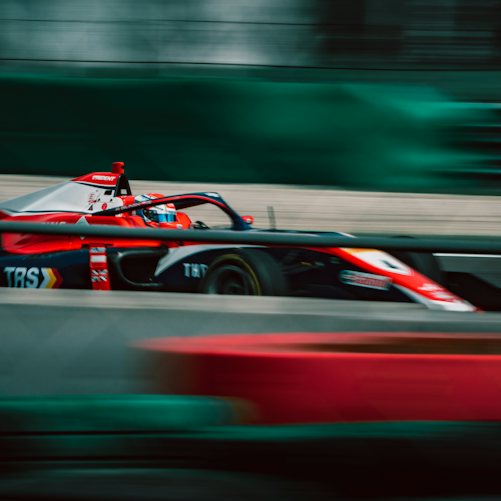
Charles Leclerc led both Friday practice sessions for the United States Grand Prix on 23 October, with Kimi Antonelli just 0.042 seconds behind in the afternoon before a pivotal qualifying session.

Ferrari starts a consequential weekend on top
Charles Leclerc gave Ferrari the strongest opening-day headline at the United States Grand Prix on Friday, 23 October, topping both free-practice sessions at Austin’s Circuit of the Americas. His fastest lap of 1 minute 35.291 seconds in the second session put him only 0.042 seconds ahead of Mercedes driver Kimi Antonelli. The narrow margin sets up an intriguing Saturday but settles neither pole position nor race pace. Practice sessions are tests in which fuel loads, tyres, run plans and traffic can differ materially between teams.
Leclerc had already led the first hour in 1:36.052, ahead of Max Verstappen and Lando Norris. Formula 1’s official event results place the Monegasque first again in practice two, ahead of Antonelli, Verstappen, Lewis Hamilton and George Russell. Ferrari’s Friday speed therefore has a direct factual basis, not merely a favourable impression from television coverage. The question is whether the team can reproduce that form when every driver uses a more comparable competitive programme.
Antonelli has a championship equation to solve
Antonelli arrived in Texas leading the championship, with a chance under the points permutations to become the youngest Formula One world champion if Sunday’s results align. Reuters’ Friday report said the 20-year-old must win the race for that possibility to arise at Austin. That is a conditional opportunity, not a title already secured. A narrow practice deficit demonstrates competitive potential but cannot substitute for Saturday qualifying, race reliability or the results of his championship rivals.
His day was not entirely straightforward: Antonelli complained that his seat was moving during the running, yet improved from fifth in the opening session to second in the later one. That progression underlines the value of practice in diagnosing problems rather than only posting a headline lap. Engineers must evaluate whether the car is stable under braking and acceleration, how tyres respond over a sequence of laps and whether driver confidence improves with setup changes. A title contender needs both a quick car and predictable behaviour across the distance.
Verstappen remains close enough to shape the contest
Max Verstappen, pursuing a third consecutive victory after wins in Singapore and Malaysia, was third in second practice, 0.189 seconds behind Leclerc. Those gaps are small in the context of a lap of more than 90 seconds. A minor difference in track evolution, wind, tyre preparation or traffic can reorder the top group. The reigning expectation that one particular driver will dominate should therefore not displace the measurements recorded on the circuit.
Ferrari also placed Hamilton fourth in the later session, offering a second data point for the team’s apparent speed. Mercedes had Russell fifth, while McLaren’s Lando Norris slipped from third in the first session to seventh in the second. McLaren chief Zak Brown told broadcasters that Norris’s lap did not reflect the car’s full potential. That assessment may prove correct, but the evidence from Friday is limited: practice shows what was achieved during particular runs, not a definitive ranking of maximum performance.
Traffic, limits and warnings have already mattered
Leclerc’s later session included an off-track moment following an incident with Russell, who received a black-and-white warning flag. Stewards took no further action, according to Reuters. The distinction between a warning and a penalty is important when a competitive session is analysed. A disputed manoeuvre can disrupt data collection without changing the formal starting order, and a driver’s account of an incident cannot replace the stewards’ documented decision.
Circuit of the Americas is demanding because rapid direction changes, elevation and bumpy sections can expose weaknesses in mechanical grip and car balance. A lap deleted for track limits is not a usable benchmark, even if it briefly appears near the top of a timing screen. Teams will spend Friday evening assessing which laps were representative, which were compromised and which setup changes can be tested in Saturday’s final practice. That process explains why published times require context before they are promoted into forecasts.
Grid penalties complicate the qualifying picture
Several drivers will carry penalties into the grid formation regardless of how quickly they qualify. Reuters reported power-unit-related drops of five places for Arvid Lindblad, ten for Franco Colapinto and twenty for Gabriel Bortoleto. Those positions matter beyond the affected cars: when penalties are applied, other drivers can move on the final grid, and teams may adjust risk in qualifying or race strategy. The starting order is therefore more than a simple transcription of the Saturday timing sheet.
Williams was another team facing a difficult Friday. Carlos Sainz and Alex Albon were at the back of the later session, with Sainz publicly unhappy about confidence in the car’s rear end. Practice difficulties can sometimes be corrected overnight, but there is no basis to presume that every weak Friday becomes a strong Saturday. Progress requires identifying a specific setup problem and testing a change, not simply counting on track conditions to improve.
What qualifying can reveal that practice cannot
In qualifying, rivals converge on the same immediate objective: the fastest permitted lap within the available time. Fuel loads are lower and tyre preparation becomes crucial, making the session a clearer measure of one-lap pace. It still does not settle Sunday strategy. The speed required to preserve tyres over a stint can differ from the peak performance needed to claim pole, and a good grid position does not protect a team from mechanical issues, safety-car timing or mistakes.
The official weekend schedule puts final practice and qualifying on Saturday, 24 October, with the race on Sunday, 25 October. The Austin round is scheduled for 56 laps of the 5.513-kilometre course. Those details define the next tests; they do not justify reporting any future session as completed. At the end of Friday, what can be said is that Ferrari has genuine opening speed, Mercedes is very close and the championship leader faces a weekend requiring execution rather than predictions.
A promising Friday is only the first part of the evidence
Leclerc’s double practice lead changes the tone of Ferrari’s weekend, especially with Hamilton also near the front. It does not make victory inevitable. Antonelli’s tiny deficit raises the competitive stakes while leaving the championship unresolved. Verstappen and Norris retain reasons to believe their teams can improve. That uncertainty is a feature of a closely contested Grand Prix, not a defect in the data.
The meaningful story after Friday is therefore one of narrow margins and incomplete information. The lap times establish a factual order at two testing sessions. Saturday will show which teams convert preparation into qualifying speed, and Sunday will test whether those decisions work across a race distance. Anything more definitive would confuse an early advantage with the result itself.
Sources and reporting basis
Primary sporting record: Formula 1, United States Grand Prix 2026 event page and official practice results and the official event schedule. Independent reporting: Reuters, 23 October 2026. Qualifying, the race and the title outcome are described only as future possibilities.