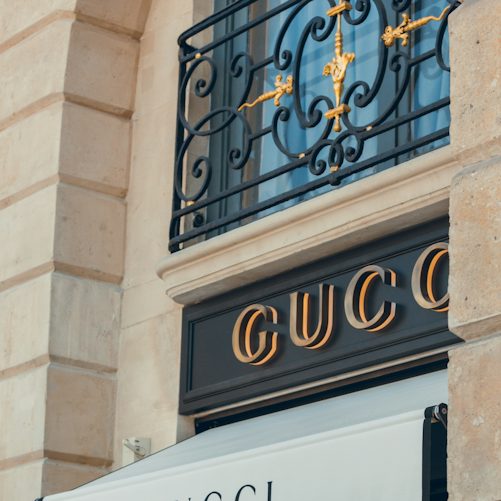
Luxury shops in Paris boarded windows or closed for 24 October demonstrations, highlighting how security precautions and unsettled visitor confidence affect retail trading.

Paris’s most recognisable luxury-shopping districts presented an unusual spectacle on Saturday, 24 October: boutiques protected by boards, metal screens and additional guards rather than the open displays designed to attract international visitors. Retailers took precautions as France prepared for another day of demonstrations over living costs and public services following disorder and shop damage earlier in the week. The choice to close or reduce trading shows how quickly a fashion capital’s commercial atmosphere can be reshaped by public uncertainty.
The disruption does not mean demonstrators and people who damage shops are the same group. Peaceful protest is a central democratic right, while theft and attacks on premises are distinct acts. For fashion houses and the people who work for them, however, the immediate operating question is narrower: whether staff and customers can move safely, whether shops can open and whether an already cautious luxury buyer will choose to visit at all.
Protection becomes part of the storefront
In a 24 October report from Paris, Reuters described protective barriers outside stores on the Champs-Élysées and near Place Vendôme. Staff at a Rolex retailer and a De Beers shop near the square said they would remain closed; employees at other retailers described contingency plans to shut early if conditions deteriorated. Adidas and Boss stores displayed closure notices, while a Lacoste location that had been damaged in earlier unrest was protected by metal cages.
Employees at Louis Vuitton, Dior and Bulgari locations said security had been increased, while the nearby Printemps department store had reinforced entrances and carried out repairs. These measures were not all responses to an incident at the same location on Saturday. Some followed damage during earlier unrest in Paris and other French cities; others were preventive steps taken in expectation of large crowds. Keeping that chronology clear avoids portraying every shuttered boutique as a freshly damaged one.
The cost of a day without ordinary shopping
A flagship boutique is more than the place where a transaction happens. Brands invest in staff, architecture, product presentation and the continuity of an experience that helps justify premium prices. Closing for a day can defer appointments, interrupt personalised service and shift purchases online or to another city. It does not automatically mean a sale is lost permanently: a client may return when streets reopen. But repeated disruption can undermine the predictability on which destination shopping relies.
There are also costs for businesses that do not sell luxury handbags or jewellery. Security crews, cleaners, cafés, hotels, transport providers and small shops depend on visitors moving freely through the same districts. A security perimeter may protect a storefront while reducing the surrounding flow of customers. Employees can lose scheduled hours or spend a normal working day managing closures rather than serving clients. The aggregate economic consequence is wider than the sales counter inside any one fashion house.
A test of confidence, not only physical security
Tourists near the Arc de Triomphe were photographed beside boarded-up stores, while hotel staff advised some guests about demonstration routes, according to Reuters. For international visitors, the question is not simply whether a particular boutique has secured its windows. The shopping trip involves walking, dining, travelling by taxi or public transport and feeling comfortable with a city’s public spaces. Even a small perceived risk can cause a visitor to change plans when alternative attractions or shopping destinations are available.
Luxury purchases can be especially exposed to mood and confidence. These are often discretionary decisions, and a person who has travelled to Paris for an enjoyable experience may defer an expensive purchase when the neighbourhood feels tense. That mechanism is distinct from a measurable fall in the national number of wealthy consumers. It concerns the setting in which demand is exercised. A brand can hold pricing power and still experience weaker conversion on a day when the surrounding environment discourages browsing.
The protest and the security response
Saturday’s mobilisation was linked to anger over the cost of living and public-service cuts. Organisers included student and anti-establishment movements, while the French government announced an unusually large policing deployment after violence the previous week. The Interior Ministry’s public statement set out measures intended to protect demonstrators, residents and businesses. A separate Reuters account of the day’s security operation reported that most demonstrations remained peaceful even as some clashes occurred.
Retailers have a legitimate interest in protecting people and property; protesters have a legitimate interest in being heard. Those interests do not always conflict. The practical challenge for city authorities is to allow lawful assembly and normal urban life to coexist without rewarding violence or treating every large gathering as a commercial emergency. The fashion industry has reason to support that distinction because the reputation of Paris depends on an open and accessible public realm, not merely guarded private interiors.
Weak luxury demand adds pressure
The closures have come amid uncertainty for the world’s major luxury groups. Recent quarterly reporting from European companies has shown uneven demand by category and region, and executives are scrutinising tourist spending more closely. Hermès finance chief Eric du Halgouet said the company had strengthened security at its French locations but cautioned that it was too early to quantify the commercial impact. That is an important qualification: photographs of boarded storefronts are compelling, but they do not establish a precise lost-sales figure for an entire quarter.
Large groups can redirect appointments or rely on networks of boutiques and digital channels. Independent designers, small retailers and suppliers often have fewer alternatives. Damage to one premises, higher insurance or security costs, and several missed trading days can produce a disproportionate financial strain. A city seeking to sustain its creative economy therefore needs to consider smaller enterprises alongside global luxury brands whose names dominate the images.
Why visible precautions can have mixed effects
Boards and shutters signal that a business has assessed a real operational risk. They can deter opportunistic damage and give employees confidence that management is protecting them. Yet they also tell passers-by that something is wrong. A row of protected windows can become a powerful symbol of tension even when the streets around it remain peaceful. This reputational effect is hard to measure and should not be confused with a finding that the security precautions were unnecessary.
For management, sensible preparation means distinguishing clear intelligence about routes and prior incidents from conjecture; communicating closure plans to staff and clients; keeping access and evacuation procedures workable; and reopening promptly when conditions permit. Long-term confidence also depends on transparent information about the condition of public transport, business districts and local services. Neither a blanket closure policy nor an insistence on opening at any cost would be an adequate response to changing conditions.
The meaning of the Paris weekend
The significance of 24 October extends beyond whether a luxury shopper completed a purchase. A global style capital functions through a network of public streets, visitors, retail employees and smaller service businesses. When ordinary activity is interrupted, the costs fall unevenly and the after-effects may extend beyond the visible security barriers.
Paris’s leading labels are unlikely to lose their identity because of one weekend, and a shop that remains shut on a protest day is not evidence of long-term decline. The more useful questions concern how quickly safe access returns, whether foot traffic recovers, whether staff and local businesses receive practical support and whether demonstrations can proceed without renewed attacks on premises. Fashion’s visible storefronts have become an unusually clear indicator of a broader urban test: protecting both civic freedoms and the confidence required for everyday commerce.
Sources and reporting
The account is based on Reuters reporting on luxury-store precautions, 24 October 2026, the French Interior Ministry’s security statement, and Reuters reporting on the broader demonstrations. Commercial effects discussed here are analytical possibilities, not independently established sales losses.