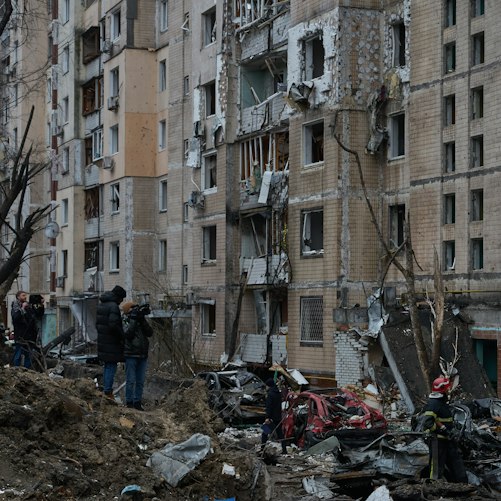
Ukraine reported moving 167 people from threatened areas on the Dnipro’s right bank, a separate operation from the evacuation of residents of Russian-held Oleshky.

Ukraine’s armed forces reported evacuating 167 civilians from threatened areas of the Kherson region on 1 November as the local ceasefire around Oleshky came to an end. The movement included 22 children and 21 people with limited mobility, according to the General Staff’s account reported by the Kyiv Independent.
The operation illustrates a concrete civilian benefit from a limited humanitarian pause. It also needs to be described accurately: these evacuees came from the right bank of the Dnipro in Ukrainian-controlled territory, rather than forming the reported total for people leaving Russian-held Oleshky on the opposite side.
Two evacuation movements, with different populations
The Kyiv Independent, citing the General Staff’s original announcement, said units of the South task force worked with local authorities to move residents to safer locations. The account describes mined and damaged roads and routes obstructed by destroyed vehicles and military equipment. Those conditions complicated access for people who had previously been unable to leave.
Separately, Reuters reported that nearly 800 people had been evacuated from Oleshky, travelling through Crimea and Russia, with some continuing through Belarus to Ukraine. The agency linked the six-day pause to mediation involving US First Lady Melania Trump and Pope Leo. These figures concern different groups and should not be presented as alternative estimates of the same operation.
Local authorities describe commitments being honoured
UNN reported the Kherson regional administration saying that the ceasefire had ended after enabling aid deliveries and voluntary departures from Oleshky. According to that account, the parties had honoured their commitments during the operation. The administration described continuing work on possible further humanitarian measures.
That statement did not provide a complete count of Oleshky evacuees or the volume of supplies delivered. It supports the authorities’ assessment that the mechanism enabled assistance, while leaving important operational totals unspecified. Discussions about continuing cooperation also do not, by themselves, establish that an extension or another pause has been agreed.
Protection after departure remains part of the task
The reported presence of children and people with limited mobility underlines the demands of an evacuation beyond arranging a vehicle. Assistance has to account for boarding, movement along hazardous routes and arrival somewhere accessible. Those are practical requirements implied by the needs of the people involved, rather than evidence that every later need has already been met.
A completed journey is an immediate gain for the people moved. Sustaining that gain depends on what follows, including accommodation, care and support for families separated by the route. The available announcements establish the reported departures; they are not a full assessment of the evacuees’ circumstances after arrival.
The expiry of the local pause therefore leaves two questions: whether another agreement can permit further assistance, and how the people already evacuated will be supported. The reported operations show that narrow arrangements can produce tangible humanitarian results even while the wider war continues. Their continuation requires a further agreement, dependable access and implementation.
Sources
Kyiv Independent: Right-bank evacuations and General Staff statement; Reuters: Ceasefire expiry and separate Oleshky evacuation; UNN: Regional administration’s account after the pause; Ukraine’s General Staff: Original announcement linked by the Kyiv Independent.


