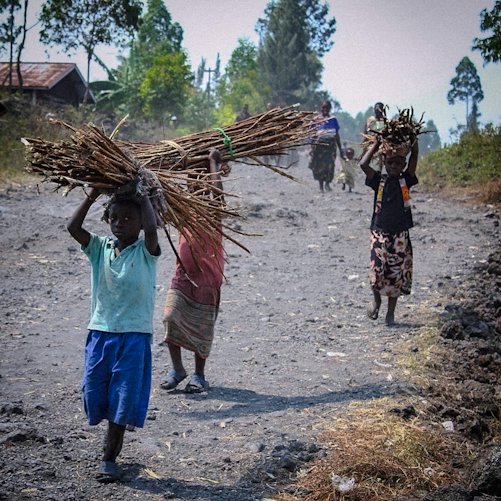
A joint UN appeal warns that conflict, displacement and disease are pushing more Congolese households into acute food insecurity. The forecast for early 2027 makes access to food, health services and the next planting season urgent priorities.

Four United Nations agencies warned on 13 November that the Democratic Republic of the Congo’s food emergency is set to deepen, with 30.3 million people projected to face Crisis levels of acute food insecurity or worse between January and June 2027. The joint appeal by FAO, WFP, UNICEF and WHO links the deterioration to conflict, displacement, higher prices and overlapping disease outbreaks.
The warning describes an expected future situation, rather than a count of people already experiencing those conditions today. It also identifies a narrowing opportunity to act: households need immediate help to eat, but farmers need access to land and timely assistance if future harvests are to reduce reliance on emergency supplies.
What the figures do and do not mean
The underlying Integrated Food Security Phase Classification analysis, released on 30 October, estimates that 28.8 million people face Crisis conditions or worse during September–December 2026. That includes 3.6 million in the more severe Emergency category. The projection raises those totals to 30.3 million and 4.2 million respectively for the first half of 2027.
The Emergency figure is contained within the broader total; it should not be added to it. Comparing the two periods suggests roughly 1.5 million more people could enter Crisis or worse and about 600,000 more could face Emergency outcomes. These are conditional forecasts describing the outlook assessed by the analysts, not a measurement of an inevitable result.
North Kivu, South Kivu and Ituri account for a large concentration of need. The IPC identifies 10.4 million people in Crisis or worse across those provinces in the current period. Its recommendations combine civilian protection and humanitarian access with livelihood recovery, social protection and preparedness for disease and climate shocks.
Nor does the headline constitute a famine classification. The IPC’s explanatory guidance distinguishes Emergency from Catastrophe and area-level Famine, with the latter requiring specific evidence on food deprivation, malnutrition and mortality. Emergency conditions are already extremely serious and require action to protect lives and livelihoods.
War damages the means to obtain food
UNHCR’s overview of displacement says agreements reached in Washington and Doha in 2025 have yet to produce tangible improvements for civilians in eastern Congo. It describes continuing displacement during 2026, including people forced to move again. The gap between diplomatic commitments and daily security is central to whether families can return to work and farming.
FAO’s country overview puts agriculture at the centre of that vulnerability, reporting that the sector employs about 70% of the working population. It identifies high food and fuel costs, currency pressures and structural poverty alongside insecurity and climate shocks. The agency’s 2026 appeal seeks $173.5 million to assist 2.5 million people.
This explains why emergency food deliveries and support for production serve different, complementary purposes. A household with no income needs help now. A household able to return to farming also needs the means to produce its next crop. Providing one form of assistance does not automatically remove the need for the other.
Timing matters because a missed planting opportunity cannot simply be recovered by delivering the same inputs several months later. Agricultural assistance is most useful when it reaches people while they can still use it. Security and access therefore influence the value of aid as well as the number of people it reaches.
Disease adds another layer of disruption
At a UN briefing on 13 November, WHO emergencies director Chikwe Ihekweazu said the Ebola outbreak had produced more than 11,000 registered infections and 5,400 deaths. He reported progress in earlier epicentres but continuing transmission elsewhere. The figures describe the position reported at that briefing, rather than a live count.
A separate UNICEF update issued the same day described a wider impact on children: loss of parents and caregivers, interrupted schooling and reduced access to protection and healthcare. The agency placed those losses within communities already affected by conflict and displacement. Illness therefore adds to pressures that extend beyond the immediate clinical emergency.
For households, these pressures can reinforce one another. When illness interrupts work or care becomes difficult to reach, a family’s ability to secure food can weaken further. When food, safe water and essential services are all insecure, an emergency response needs to consider them together rather than treating each shortage as a separate administrative problem.
Access determines what funding can achieve
FAO, WFP, UNICEF and WHO are calling for coordinated financing, protection of civilians and essential infrastructure, and safe, unimpeded access for humanitarian work. Their appeal covers food assistance, agricultural livelihoods, treatment and prevention of acute malnutrition, and health, water and sanitation services.
Money alone cannot ensure that a delivery reaches a community cut off by violence. At the same time, access without supplies, personnel and sustained funding cannot deliver an adequate response. The projected increase in hunger therefore places a joint test on diplomacy, humanitarian operations and the continuity of basic services.
The forecast’s value is that it identifies deterioration before the entire projected increase has occurred. The practical measure of a response will be whether households retain or recover the ability to eat, earn and obtain care through the coming months. Preventing another lost agricultural season is part of that task, alongside meeting needs that cannot wait.
Sources
FAO / WFP / UNICEF / WHO: Joint appeal on DRC hunger
IPC: September–December 2026 situation and January–June 2027 projection
IPC: Classification frequently asked questions
FAO: Democratic Republic of the Congo country overview
UNHCR: Forced displacement crises