The festival’s eighteenth edition connected emerging designers with textile repair, cinema and performance. Its programme offered several ways to consider clothing beyond a finished collection, from personal memory to the future of discarded garments.

FASHIONCLASH’s eighteenth edition brought a three-day programme of exhibitions, performances, films and workshops to Maastricht from 13 to 15 November, with emerging participants from more than 25 countries. The festival’s published programme connected fashion with questions that extend beyond a new collection: how clothes carry memories, how materials can be repaired, and how designers use movement and images to communicate ideas.
The range of venues was part of that approach. Galleries, a cinema, a cultural centre and The Social Hub each supplied a different setting for the work. Taken together, the programme suggests an understanding of fashion in which making, wearing, discussing and reworking an object all deserve attention. The mix placed practical workshops beside gallery projects, offering different ways to approach contemporary design through everyday clothing and more speculative work.
An exhibition built around unstable forms
At Bureau Europa, New Fashion Narratives was curated by Jamal Nxedlana, Karmen Samson, Welmoed Bosch and Agatha Prieto Jeanty. Its title, Fleshy, slimy, wobbly, signalled an interest in work that crosses familiar boundaries between clothing, materials and other disciplines. The organisers trace the concept to a residency week held in April.
The accompanying programme included a conversation with designer and artist Marga Weimans, whose practice connects fashion, architecture and digital technology, and a lecture by Studio Paul & Haiko using collage and personal archives. These examples placed interpretation alongside display: an object’s meaning can depend on the memories, cultural references and bodily experiences brought to it.
Such a format also changes the questions a visitor can ask. Alongside whether a garment is attractive or wearable, an exhibition can invite attention to how it was constructed, who it represents and what happens when its materials or proportions resist expectations. Those questions provide a useful way to approach experimental work without requiring every piece to function as a retail product.
Repair as a design practice
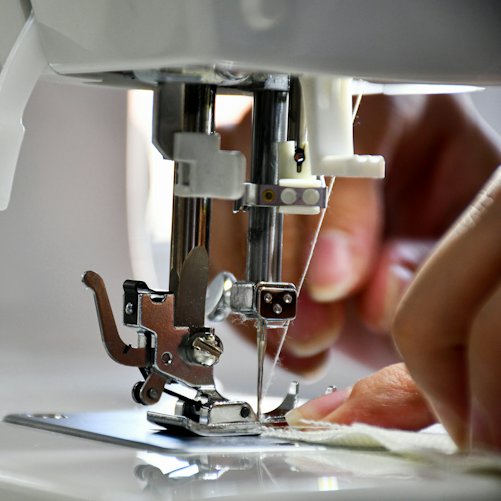
A more practical strand appeared in Chiron Floris’s Repair as Resilience workshop, scheduled at Centre Céramique on Sunday. The designer’s practice draws on research in Sardinia and textile techniques including embroidery and lace-making. The workshop used patchwork, embroidery and smocking to consider how damage can become part of a garment’s design.
The emphasis was also personal. The workshop description treated clothes as objects with relationships and memories attached to them, making repair a way of preserving something beyond fabric. That approach gives visible mending a different purpose from simply disguising a fault: the intervention can record the garment’s history while allowing it to remain in use.
The wider Fashion Makes Sense programme linked professionals with non-professionals, particularly young people, through collaborative projects. Its Sunday schedule combined an exhibition, an upcycling workshop and a discussion moderated by Jonas Zitter. Participation therefore appeared alongside presentation, giving the programme a role in sharing skills as well as showing finished work.
Fashion moves onto the screen
At Lumière Cinema, the Fashion Film Program listed 44 short films from an international selection of makers. Participating countries included Italy, China, Lebanon, Japan and South Korea. The organisers described a field concerned with identity, transformation, gender and the relationship between physical and digital experience.
Film offers tools that a static garment display cannot supply in the same way: duration, sound, editing and a controlled sequence of images. A designer can use those elements to direct attention towards a gesture or a material, or to place clothing inside a fictional situation. The format can also travel beyond the venue, although festival selection alone does not establish how widely a film will ultimately be seen.
Collaboration and a new generation
The Amarte collaboration at Jan van Eyck paired artists with fashion designers following an open call. The listed partnerships included Hsin Min Chan and Pauline Blind, Arian Soltan and Peishan Xu, Anto López Espinosa and Berend Brus, and ULTRA-ORA with RADVLAD. Mira Verhoeve also appeared in the performance programme.
Elsewhere, The Social Hub’s Class of 2026 exhibition presented recent graduates, with another display in the building’s lobby. The combination gave emerging work more than one presentation format. For a young designer, the distinction matters: a collection can communicate through its construction, but also through the setting and explanation that help another person understand it.
Saturday’s programme added a screening of Kantamanto: Upcycling Culture and a panel discussion about textile waste and creative reuse. Placing that discussion near graduate work connected the beginning of a garment’s life with questions about what happens after ownership changes or the item is discarded.
A programme with several entry points
The festival campaign supplied another perspective through Sudanese visual artist and photographer Hashim Nasr. According to the organisers, his imagery brought African and Middle Eastern cultural traditions into staged, surreal settings, using clothing, symbols and objects to explore memory and identity.
Across these strands, the clearest connection was attention to process. Repair workshops examined how clothing survives; film explored how it communicates; collaborations questioned who can shape its meaning. The programme’s value as a snapshot of emerging practice lies in those specific approaches, rather than in treating experimentation as a single aesthetic or assuming every proposal offers the same answer.
Sources
FASHIONCLASH Festival 2026 official overview and campaign
Bureau Europa: New Fashion Narratives
Repair as Resilience — workshop by Chiron Floris