Heating oil nearly doubled in price at the producer level in a year. A closer look at Germany’s October figures shows how differently that shock reached metal buyers, machinery makers and households.

German industrial producers charged 8.1% more for goods sold at home in October than a year earlier, the fastest annual increase since February 2023. Energy accounted for much of the rise. For a German company buying copper or heating oil, however, even that headline figure considerably understates the change in its purchasing bill.
The October report, released on Friday, follows a 6.7% annual rise in September. Prices also rose between the two months, by 1.4%. For a purchasing manager, the difference between the two depends on when the last order was priced.
Heating oil is an extreme example. Its producer price was 97.2% above October last year, close to double. Motor fuels were up 38.4%. Naphtha, a petroleum product used as a chemical feedstock, was 76.7% more expensive. Oil therefore reached German industry through the raw material going into a product as well as the fuel used to move it.
Even within petroleum there was a change of pace. Mineral oil products as a group fell 0.6% from September, although they still cost 51.9% more than a year before. A buyer could negotiate a slightly cheaper October delivery than the previous month and still have a substantially larger bill than the one in last year’s accounts.
Other sources of energy followed different paths. The price of natural gas supplied through distribution networks rose 21.9% across customer groups and electricity rose 12.6% over the year. District heating was flat. Taken together, energy prices were 18.7% higher than a year earlier and climbed 3.8% in October alone.
What a manufacturer pays for copper
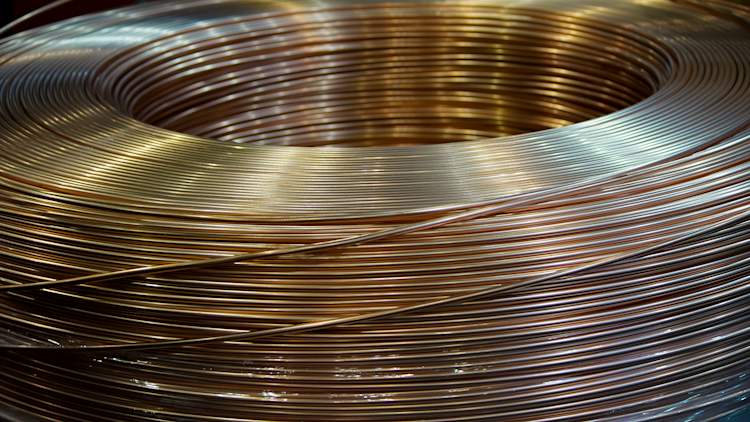
Copper brought its own shock to buyers. German producers charged 29.4% more for copper and semi-finished copper products than in October last year. A cable maker buys metal before selling a finished length of wire. How painful an increase that large proves depends partly on when it agreed the selling price of its next order.
Further down the supply chain, price increases were smaller. Machinery sold by German producers cost 2.3% more than a year earlier. The category covering vehicles, trailers and semi-trailers rose 1.9%. Each finished machine contains a mix of components, labour and other costs. Even a large price movement in one metal affects only part of the bill.
Steel buyers also saw increases. Basic iron, steel and ferro-alloys rose 9.7% on the year, and reinforcing steel rose 11.9%. For a construction firm, the steel quote is one element in the price of a tender. The price it can charge for the whole job depends in part on whether the contract was signed before or after that quote arrived.
The figures for chemicals show another route from industry into everyday purchases. Basic chemicals were 12.5% more expensive and fertilisers rose 11.3%. A farmer buying fertiliser this autumn and a grocer selling food grown earlier in the year are at different points in the production cycle. Their prices can move in opposite directions in the same month.
Removing energy from the producer index leaves an annual rise of 3.6% and a monthly rise of 0.3%. That calculation strips out the sale of energy itself. A manufacturer buying gas to fire a furnace still has that expense, and any portion recovered in its selling price remains in the figure for the goods it makes.
There were limits even to the increase in industrial materials. The average price of glass and glass products was unchanged from October last year. Glass production requires heat, yet a high energy bill tells a buyer little about the price of a particular order without knowing the type of glass and the terms agreed with the supplier.
A different price at the supermarket
Food was one of the clearest exceptions to industrial inflation. Prices for domestically produced food leaving German producers fell 3.1% over the year. Butter was a quarter cheaper, pork fell 12.5% and beef fell 9.4%. Vegetable oils moved in the other direction, rising 14.2%, while sugar was 3.9% more expensive.
Butter offers a rare chance to follow one familiar product through both sets of figures. Households paid 18.9% less for it than in October last year. The reduction was smaller on the shelf. Packing, distribution and retailing all sit between a dairy’s sale and the price a shopper sees.
Across the entire household basket, Germany’s annual inflation rate actually slowed to 2.8% in October from 3.3% in September. The basket includes purchases such as rent and services that have no direct counterpart in the industrial figures. The producer index covers industrial goods made and sold in Germany, including sales between businesses, and excludes value-added tax.
Electricity shows how far the two readings can diverge even for something with the same name. Germany’s consumer electricity price was 5.2% lower than a year earlier while the producer measure was higher. Households buy under retail tariffs. Government measures in force since the beginning of the year also helped bring down the consumer price.
Tax policy matters at the pump as well. A renewed German fuel discount took effect on October 1, reducing pressure on retail fuel prices. Drivers could still pay considerably more than a year earlier. The relief changes the price relative to what it otherwise would have been, regardless of whether a forecourt shows a lower figure than last autumn.
In its November assessment, Germany’s central bank saw little sign yet that more expensive energy had worked its way broadly into other consumer prices. A tank of heating oil is priced when it is bought. A change to a gas tariff can take effect on a later date.
What the Rhine can tell a driver
Along the Rhine, geography adds another layer to the price of fuel. Low water limits the amount a barge can carry on each trip, making it harder to deliver the same quantity of petroleum products inland. This autumn brought a chance to see how much of that pressure was visible on forecourt price boards near the river.
The Bundesbank compared filling stations within 25 kilometres of the Rhine with those more than 100 kilometres from it. In the first ten days of July, diesel near the river cost slightly less on average. From July 11 through September, when water was low, it cost almost two cents a litre more than in the comparison areas.
For petrol, the change in the gap between the two regions was about 2.9 cents a litre. For diesel it was about 2.1 cents. Local supply constraints and differences in refining margins could also have contributed, so the comparison identifies a change near the river without assigning every cent of it to the level of the water.
A driver could see the difference at each fill-up. Spread across the national consumer basket, it barely registered. The bank estimated that the regional fuel mark-ups added roughly one hundredth of a percentage point to the harmonised national inflation rate in August.
Moving a tanker inland, buying a reel of copper and stocking a supermarket refrigerator all expose businesses to different prices and different dates. October’s figures identify where the pressure was already reaching invoices. They give much less guidance about the timing of the next price change in a showroom or on a household bill.
The next producer and consumer releases will show whether the gap between factory invoices and household bills persists. Whether producers of finished goods can secure higher selling prices, and when households see their tariffs change, will determine how much further October’s shock travels.