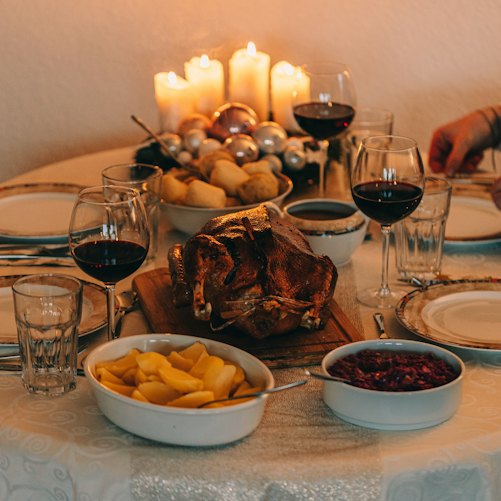
A 16-pound frozen turkey will take about 40 cents of every dollar in a classic American Thanksgiving dinner this year. The American Farm Bureau Federation puts the ingredients for ten people at $58.63, up from $55.18 last November. The bird alone comes to $23.68 before anyone has bought a potato or rolled out a pie crust.

Across ten place settings, the increase works out to about 35 cents a guest. The person buying everything sees a different number at the checkout, an extra $3.45 for the same list. It is the first annual increase since 2022, when the survey reached its record of $64.05.
Place makes an even bigger difference. Volunteers priced the meal at $61.57 on average in the Northeast and $54.33 in the South. The gap between those two tables, $7.24, is more than twice the increase in the national average over the past year.
There is a reason grocers advertise a price per pound for turkey in type large enough to read across a parking lot. On a bird this size, a difference of 25 cents a pound amounts to $4. That one difference is enough to wipe out the entire annual increase in the survey.
The bird at the centre of the bill
Federal agriculture figures offer a clue to a puzzle behind this year’s prices. US producers turned out 2.50 billion pounds of turkey meat in the first half of 2026, up 7.4% from a year earlier. A shopper looking at a higher price for a whole bird might reasonably have expected production to have fallen.
A pound of turkey is counted the same way in that production total whether it ends up in a packet of sliced breast or in a whole bird for roasting. For a host who wants a turkey large enough to carve at the table, those are quite different purchases.
The distinction showed up in wholesale trading. Agricultural economist Dennis Brothers reported on November 17 that turkey breast prices had dropped about 58% from the unusually high levels of a year earlier. Whole birds, meanwhile, were fetching prices roughly 40% above their historical average. A processor selling breast meat faced a different market from a buyer stocking holiday freezers.
The US Department of Agriculture raised its turkey production outlook again on November 18, citing hatchery indicators and the average weight of birds. It also raised its wholesale price projections in light of recent trading. The department could see more meat coming to market and higher prices in the same set of figures.
The Thanksgiving survey has a separate clock. Volunteers checked prices in stores and online during the first week of November, well before the last grocery run ahead of Thursday’s dinner. Some had already found turkey at 69 cents a pound. The national average for the frozen bird worked out to $1.48.
A $35 menu and a $58.63 shopping list
Aldi built its holiday promotion around the familiar survey menu. Its advertised price of under $39 includes a 16-pound turkey, rolls, sweet potatoes, vegetables and ingredients for pumpkin pie. The offer runs through November 25 and requires no membership or minimum purchase. The company says location and availability can affect the total.
Walmart advertises dinner for ten at $35. Its calculation assumes a 13½-pound turkey at 97 cents a pound. A customer picking up a 16-pound bird at that price would add about $2.43 to the estimate on the turkey alone, even before choosing among the side dishes.
Those side dishes explain another part of the gap. Walmart includes corn muffin mix, marshmallows for sweet potato casserole and cranberry sauce. The farm group’s list calls for fresh cranberries and includes carrots and celery. Both tables have room for ten, but a guest looking for exactly the same plate at both would need to switch a few ingredients.
Walmart’s basket price also excludes Alaska, Hawaii, Oklahoma, Puerto Rico and Wisconsin. The Farm Bureau draws on volunteers from all 50 states and Puerto Rico. Treating one company’s promotion as the amount anyone in the country can spend would lose a significant part of the picture.
The survey’s biggest price drops were on relatively inexpensive items. A tray of carrots and celery had the largest percentage decline, 3.7%. Frozen pie crusts recorded the largest cash saving, nine cents. Fresh cranberries, milk and dinner rolls all rose. A lower price on the crust could help pay for dessert without doing much for the total.
At $58.74 in the West, the regional average came within 11 cents of the national figure. The Midwest was lower at $56.89. Those broad averages leave plenty of room for the choice between two shops a few minutes apart to matter more than the choice between regions.
Three stores on one Ohio road
In Grove City, just outside Columbus, the Center for Responsible Food Business tested that proposition with three stores on Stringtown Road. On November 18 it checked online prices for 18 items at Kroger, Walmart and Aldi. The researchers matched brands where they could and counted the full price of the package a shopper would take home.
The group assembled a more extensive basket than the classic survey, including a four-pound ham alongside the turkey. At regular prices the list added up to $87.29 at Kroger, $75.69 at Walmart and $71.10 at Aldi. That is a spread of $16.19 on one road on the same day.
Promotions widened the spread. With advertised sale prices, the three totals were $83.52, $66.50 and $62.32 respectively. The researchers left out digital coupons that had to be clipped. They also recorded that Walmart’s website showed its turkey as unavailable, an obstacle a price comparison on its own can easily miss.
Even frozen peas complicated the exercise. Kroger’s store brand came in a 12-ounce bag at $1.29. The other two stores listed 16-ounce bags at 98 cents and 95 cents. The smaller bag had both the highest sticker price and the highest price per ounce.
Pie ingredients presented a different problem. The researchers priced the same brand of pumpkin pie mix at Kroger and Walmart, and used Aldi’s own brand there. A shopper loyal to one particular recipe might make a different choice. A comparison that allows substitutions reflects how many families shop, at the cost of some precision.
The Ohio team left out sweet potatoes because it could find none to price at Aldi. It bought a full quart of cream and counted a three-pound bag of onions. Both decisions help explain how a list meant to reproduce a meal can yield a different bill from the ingredients actually used.
What a holiday basket measures
The Farm Bureau has tracked a standard menu since 1986. Keeping the dishes familiar gives the series an advantage over a comparison based on whatever shoppers happen to serve each year. A switch from turkey to ham could bring a family’s bill down even if both meats had risen in price.
For the weekly shop, the federal Consumer Price Index covers a much broader range of food. Its grocery measure rose 0.4% in October from September, after seasonal adjustment. That one-month movement and the 6% year-over-year Thanksgiving increase answer different questions about the cost of feeding a household.
They also leave out the division of work around a holiday table. A guest bringing dessert has more reason to notice the cheaper crust and whipping cream. The host has to finance the bird in one purchase. An average price per guest conceals who actually has to find the cash.
There is still $5.42 between the cost of this year’s survey meal and the high reached in 2022. For someone remembering last year’s bill, however, the relevant comparison is the $3.45 increase. A family remembering the peak and a family budgeting from last November can read the same receipt quite differently.
At Thursday’s table, the difference may be visible in something as ordinary as the platter. Trading a 16-pound bird for a 13½-pound one at the same price per pound leaves less turkey for Friday’s sandwiches. Both birds can headline a dinner for ten. Only the checkout receipt shows what the extra leftovers cost.