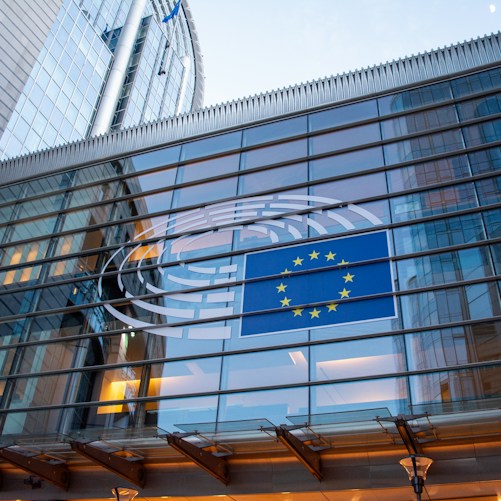
The European Parliament has urged the Czech government to protect the independence and financial stability of Czech Television and Czech Radio as it pursues a change to their funding. The resolution adopted on November 25 passed by 442 votes to 158, with 47 abstentions, adding European pressure to a sharply contested domestic reform.

The proposal would replace broadcast licence fees with allocations from the state budget. MEPs want the legislation revised to protect broadcasters from political interference and to provide funding they can plan around. Their intervention focuses both on how much money the institutions receive and how decisions about that money are made.
A funding decision with consequences for independence
Parliament said the proposed change would reduce the combined resources of the two broadcasters by around 15%. It called for an impact assessment and meaningful consultation, including with staff and trade unions. That estimate is Parliament’s assessment of the proposal, rather than a confirmed reduction already implemented in the broadcasters’ budgets.
MEPs also criticised the procedure used to advance the measure through its first reading in the Czech Chamber of Deputies on October 24. They objected to the early-morning vote proceeding while lawmakers were still waiting to speak. The dispute therefore extends beyond financing to the opportunities for parliamentary scrutiny.
For a broadcaster, predictable funding affects decisions that stretch beyond a single budget year: commissioning programmes, maintaining production capacity and retaining specialist journalists. The political question is whether a funding arrangement gives editors enough certainty to make those decisions without anticipating how critical coverage might influence the next allocation.
The debate has already brought workers and the public into the streets. Public media employees held a one-day strike on November 3, and a large demonstration followed at Prague’s Letná Park on November 15. Organisers demanded the proposal’s withdrawal. Prime Minister Andrej Babiš said he would continue with the reform and denied that it would undermine media freedom.
Broadcasting and journalists’ organisations had also raised concerns before the first-reading vote. In an October statement, the European Broadcasting Union and other signatories estimated that the proposal would remove about 1.4 billion Czech crowns annually, leaving combined funding near 7.8 billion. They argued that the reduction could compromise journalism and investment in services, while acknowledging that national governments choose their funding model.
The government rejects the political criticism
Culture Minister Oto Klempíř dismissed the resolution as a political initiative by Czech opposition representatives and said it imposed no obligation on the government. At the same time, he said the governing coalition would respect the European Media Freedom Act, the EU legislation that establishes safeguards for public-service media.
Klempíř set out a sequence for the next stage of debate. He said the Chamber would begin considering the domestic measures connected with the European act at an extraordinary session before the end of the year. Detailed second-reading consideration of the broadcasting funding proposal would then follow in January.
The minister also said his recent discussions with European Commissioner Michael McGrath confirmed that a reform complying with European requirements for transparent and sustainable financing would not justify EU intervention. That was Klempíř’s account of their discussion. The Commission separately reiterated that any reform must preserve adequate and predictable resources.
The resolution itself is non-binding. Its adoption does not repeal the Czech proposal, settle a court case or automatically trigger a financial penalty. The next practical questions concern the text Czech lawmakers advance and whether its safeguards satisfy the European rules that already apply.
European rules leave a substantive test
Article 5 of the European Media Freedom Act requires public-service broadcasters to be editorially and functionally independent. It also requires funding procedures to rely on objective, transparent criteria established in advance, with resources sufficient and predictable enough to fulfil the institutions’ public-service responsibilities and support their development.
The funding provisions do not prescribe a single licence-fee model for every member state. Their focus is whether the arrangements protect independence in practice. Replacing a fee with public-budget financing therefore leaves the central issue unresolved until the rules governing allocations, continuity and political discretion are examined.
The act also requires independent monitoring, through authorities, bodies or mechanisms protected from government influence, and makes the results of that monitoring public. That creates a further test beyond ministers’ assurances: how the system will be checked and how evidence about its operation becomes available.
Czech representatives split over the intervention
The Czech delegation divided nine in favour, eleven against and one abstention. Support came from representatives elected for ODS, STAN, TOP 09, KDU-ČSL and the Pirates. Opponents included ANO, the Motorists, SPD and representatives elected for Stačilo!, illustrating how the domestic dispute carried into the European chamber.
ANO delegation leader Ondřej Knotek argued that the resolution was politically motivated and based on misleading claims. ODS representative Veronika Vrecionová defended the existing fee arrangement and warned against government control through financing. Her colleague Alexandr Vondra supported the resolution while acknowledging reservations about parts of its wording.
With the next detailed parliamentary stage now expected in January, both sides will have to address the design of the funding mechanism. The decisive provisions will be those that determine the broadcasters’ financial security and editorial freedom over time, including when political leadership changes and coverage becomes uncomfortable for those controlling public money.