Autumn–winter 2026 is moving away from the quiet uniformity that defined several recent seasons. Designers are returning to expressive colour, dramatic proportions and tactile materials, while retaining the practical foundations of tailoring, knitwear and outerwear. The result is a wardrobe built around contrast rather than a single dominant silhouette.

The collections shown across the major fashion capitals suggest that minimalism has not disappeared, but it is no longer the only language of contemporary style. Clean lines are being combined with rich textures, unexpected detailing and shapes that deliberately change the proportions of familiar garments. The emphasis is on giving everyday pieces a more distinctive character.
Tailoring becomes more individual
Traditional suiting has been reworked rather than abandoned. Jackets appear with mismatched trousers and skirts, exposed lapel linings and shirts worn with collars turned up or left casually undone. Some blazers are cropped, while others extend into long, narrow shapes or adopt sculptural construction. The variety suggests that tailoring is increasingly defined by styling choices rather than by one standard cut.
This approach gives the suit a more flexible role. A structured jacket can be paired with an unexpected skirt or relaxed trousers, allowing a formal piece to work in a less conventional setting. The same principle applies to shirts and coats: small changes in proportion or layering can transform an otherwise familiar outfit.
The updated approach to dressing also reflects a broader interest in personal expression. Instead of relying on a single trend, consumers can select one element—a cropped jacket, an exaggerated shoulder or an unusual fabric—and incorporate it into an existing wardrobe.
Colour and texture challenge the winter uniform
The season’s colour story moves beyond the familiar dominance of black, grey and navy. Vivid monochrome looks, saturated accessories and colourful leather pieces offer alternatives to the restrained palette traditionally associated with colder months. Green and brown remain important, particularly when combined with darker floral patterns and earthy materials.
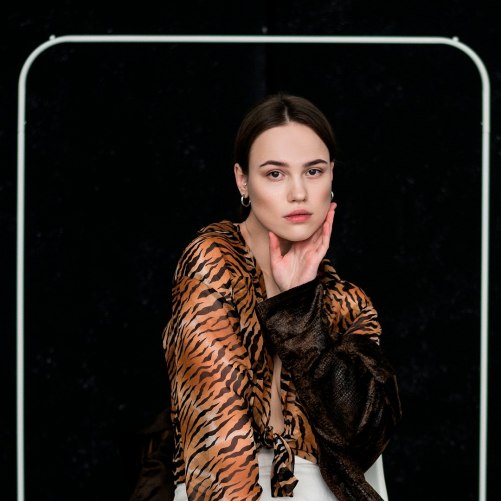
Texture is equally important. Mohair, velvet, lace, sheer fabrics and layered knitwear create visual depth even when a look uses a limited range of colours. Designers have used these materials to make classic silhouettes feel more expressive without necessarily changing their basic function.
The contrast between softness and structure is one of the season’s defining features. A sharply tailored coat can be worn over a delicate dress, while a voluminous knit can balance a narrow skirt. These combinations make winter dressing more adaptable and allow individual pieces to be reused in different ways.
Art Deco returns in a modern form
A renewed interest in the visual language of the 1920s is visible in eveningwear. Geometric details, fringe, gloves, velvet and richly worked surfaces recall Art Deco glamour, but the references are being streamlined for contemporary use. The intention is not to reproduce historical dress literally; it is to borrow its sense of ornament and proportion.
Romantic detailing provides another route away from strict minimalism. Cascading layers, ruffles, lace and sheer fabrics appear in designs that are deliberately dramatic rather than delicate. The effect can be softened through simple accessories or made more formal through a complete evening look.
At the opposite end of the spectrum, second-skin silhouettes and close-fitting maxi dresses continue to offer a streamlined option. Their presence alongside oversized garments shows that the season is not prescribing one ideal body shape or proportion. Instead, it is making room for sharply different interpretations of femininity and form.
Practical pieces remain central
The structured coat remains a key investment because it can anchor more experimental styling. Foundational layers, pencil skirts and versatile knitwear provide a practical base, while cropped cuts and oversized shapes introduce a more contemporary profile. The most wearable collections are those that allow these elements to work together rather than requiring an entirely new wardrobe.
For consumers, the season’s message is less about purchasing a complete look and more about choosing pieces that create contrast. A colourful accessory can change a dark winter outfit; a textured jacket can make simple trousers feel more considered; a flowing layer can soften a structured silhouette.
A season built around choice
The autumn–winter collections point to a fashion landscape that is more open to experimentation. Minimalism remains available, but it now shares space with ornament, volume, colour and historical references. The shift reflects a desire for clothes that communicate personality while remaining useful in everyday life.
The strongest looks are not necessarily the most extravagant. They are the ones in which proportion, texture and colour work together with a clear sense of purpose. That balance—between practicality and individuality—is likely to define how the season’s runway ideas translate into everyday wardrobes.