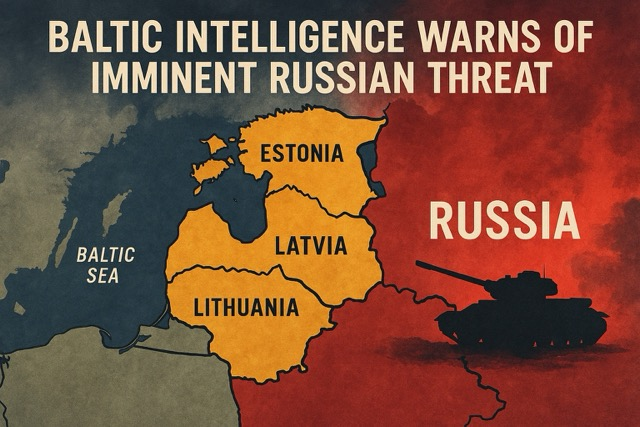
Heightened Alert in Estonia, Latvia, and Lithuania Amid Escalating Tensions

In recent months, intelligence agencies from the Baltic states—Estonia, Latvia, and Lithuania—have raised alarms over a tangible threat of Russian aggression. These warnings come amidst escalating tensions and increased military activities in the region, prompting concerns over the security and sovereignty of these NATO member countries.
Rising Concerns and Intelligence Reports
The Estonian Internal Security Service (Kaitsepolitseiamet), Latvia’s Constitution Protection Bureau (SAB), and Lithuania’s State Security Department (VSD) have all reported heightened Russian military posturing near their borders. These agencies cite increased troop movements, military exercises, and aggressive rhetoric from Moscow as indicators of potential hostile actions.
A recent report from Latvia’s SAB highlighted that a cessation of hostilities in Ukraine could allow Russia to reallocate its military resources, posing a renewed threat to NATO’s eastern flank, particularly the Baltic states. Similarly, Lithuania’s VSD emphasized the need for vigilance, noting that Russian intelligence activities have intensified, targeting critical infrastructure and attempting to sow discord within these societies.
Hybrid Warfare and Cyber Threats
Beyond conventional military threats, the Baltic states are also contending with Russia’s hybrid warfare tactics. These include cyberattacks, disinformation campaigns, and economic coercion. Estonia, in particular, has been a frequent target of cyber operations aimed at disrupting government services and undermining public trust.
A comprehensive analysis by the Center for Strategic and International Studies (CSIS) underscores the multifaceted nature of Russia’s hybrid warfare strategy, which seeks to exploit vulnerabilities across political, economic, and social domains. The report emphasizes the importance of resilience and coordinated defense mechanisms among NATO allies to counter these threats effectively.
Military Preparedness and NATO’s Role
In response to these escalating threats, the Baltic states have bolstered their defense capabilities. Estonia, Latvia, and Lithuania have increased defense spending, enhanced military readiness, and sought greater NATO presence in the region. Joint military exercises with NATO forces have become more frequent, aiming to improve interoperability and readiness.
NATO has reaffirmed its commitment to the defense of its eastern members. The alliance’s Enhanced Forward Presence (eFP) battlegroups stationed in the Baltic states serve as a deterrent against potential aggression. Additionally, the recent NATO summit resulted in plans to further strengthen the alliance’s posture in Eastern Europe, including the deployment of additional troops and advanced weaponry.
Public Sentiment and Civil Preparedness
Public awareness and concern over the potential threat have grown within the Baltic states. Governments have initiated civil defense programs, encouraging citizens to participate in national defense efforts. Educational campaigns on emergency preparedness and resilience have been launched to ensure societal readiness in the face of potential crises.
Surveys indicate a significant portion of the population supports increased defense measures and NATO’s involvement in ensuring regional security. This public backing provides governments with the mandate to pursue robust defense policies and international cooperation.
Conclusion
The intelligence assessments from Estonia, Latvia, and Lithuania underscore a pressing need for vigilance and preparedness in the face of potential Russian aggression. As frontline states, their security is not only vital for their sovereignty but also for the stability of the broader European region. Continued collaboration with NATO and proactive defense measures remain essential in deterring and responding to any threats that may arise.