Between Frontline Solidarity and Strategic Caution
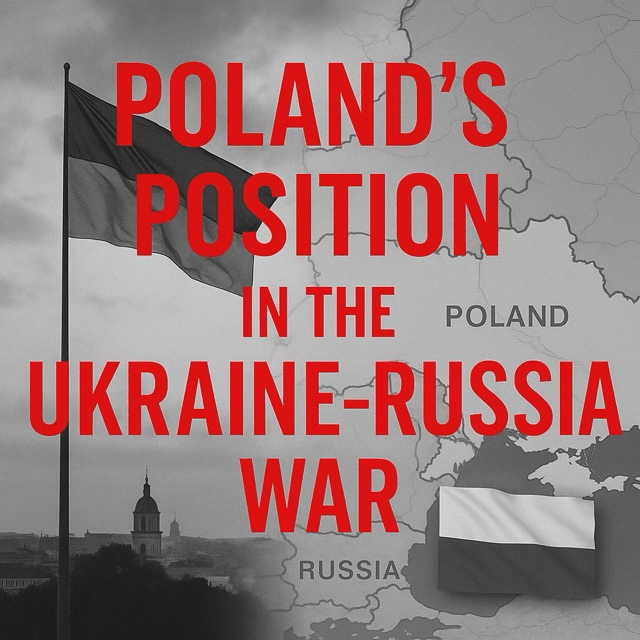
Poland has emerged as one of the most vocal and proactive supporters of Ukraine since the Russian invasion began in February 2022. Situated on NATO’s eastern flank, sharing a long border with Ukraine, and with a historical memory shaped by Russian imperialism and Soviet domination, Poland’s position in the Ukraine-Russia war is defined by geography, history, and strategic calculation.
From the very start of the conflict, Poland opened its borders to millions of Ukrainian refugees, providing shelter, humanitarian aid, and logistical support. The Polish government also became a critical hub for Western military assistance, allowing weapons and supplies from NATO allies to pass through its territory en route to Ukraine. Warsaw has consistently pushed for tougher sanctions against Russia and for increased military aid to Kyiv, earning a reputation as one of Ukraine’s staunchest allies in Europe.
The war has also reinforced Poland’s demand for greater defense spending and NATO’s increased presence in Eastern Europe. Poland has committed to raising its military budget to over 4% of GDP, making it one of the highest among NATO members. The country is rapidly modernizing its armed forces, acquiring tanks, aircraft, and missile systems from the United States and South Korea, among others. These efforts reflect both a fear of Russian aggression and a desire to position Poland as a leading military power within the alliance.
However, Poland’s role is not without complications. Domestically, the strain of supporting millions of refugees has created political tension, particularly ahead of national elections. Additionally, disputes with the European Union over judicial reforms and democratic standards have at times isolated Poland diplomatically, complicating its efforts to lead within the EU.
Tensions have also arisen between Poland and Ukraine, particularly over agricultural exports. Polish farmers have protested the influx of cheap Ukrainian grain, which they say undermines domestic prices. These disputes have tested the unity of the two countries, but their governments have generally worked to contain the damage and maintain their alliance against Russia.
Strategically, Poland views a Ukrainian victory as essential to regional stability. A Russian-dominated Ukraine would bring Moscow’s military to Poland’s border, heightening the threat of future aggression. Poland’s leadership, therefore, sees its support not as mere charity but as an investment in its own security.
Poland has also taken a leadership role in shaping NATO’s future posture. It advocates for permanent U.S. military bases on its soil and more robust deterrence in the region. Poland’s assertiveness has helped shift the center of gravity in European security toward the east, reflecting a growing recognition that threats emanate from Russia and require a strong response from NATO’s eastern members.
In summary, Poland’s position in the Ukraine-Russia war is that of a frontline state deeply committed to Ukraine’s defense, driven by historical memory and national interest. While challenges remain, Poland’s actions have made it an indispensable part of the Western response to Russian aggression. Its influence is growing—not only as a military player but also as a moral voice advocating for Ukrainian sovereignty and European security.
 The Tower Post