A Strategic Withdrawal Amid Escalating Conflict and Humanitarian Crisis

Introduction
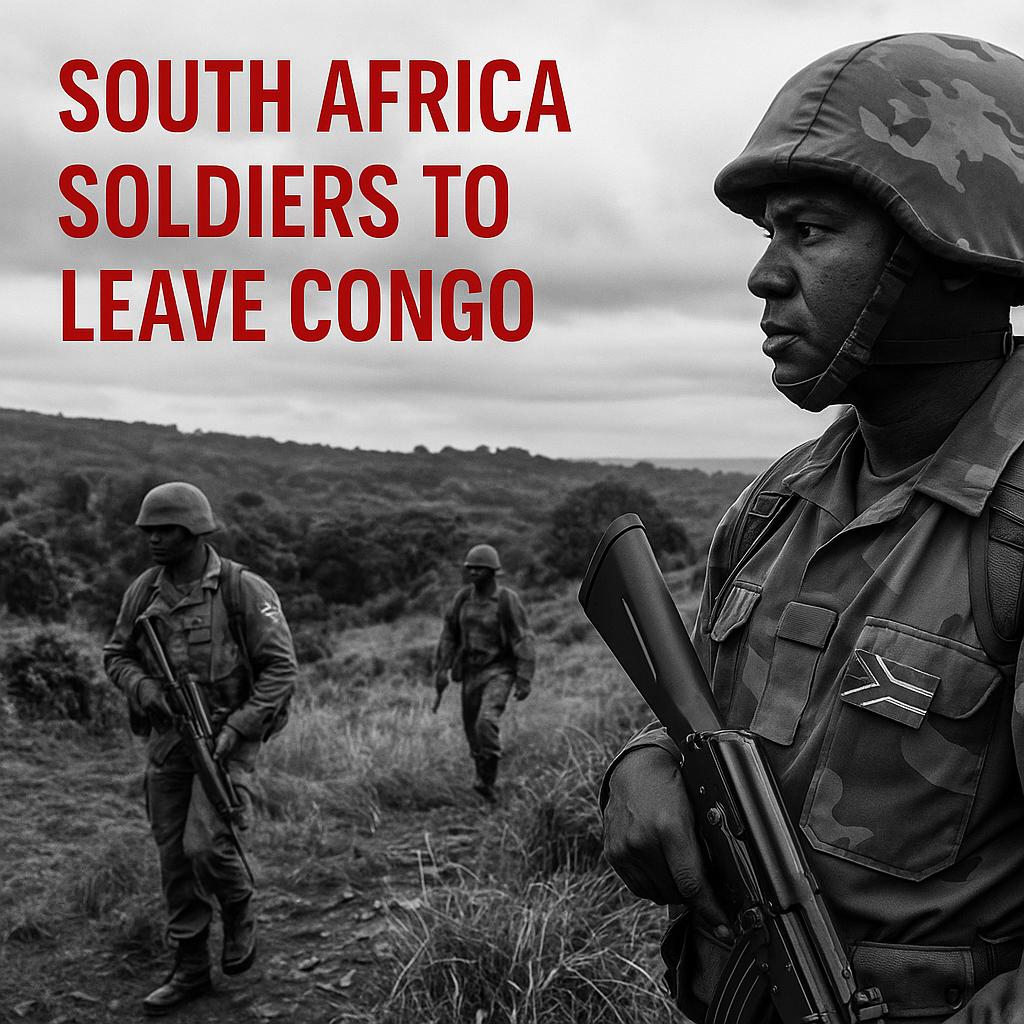
In a significant development, South Africa has commenced the withdrawal of its peacekeeping troops from the eastern region of the Democratic Republic of Congo (DRC). This move comes in the wake of escalating violence, mounting casualties, and a complex humanitarian crisis that has gripped the region. The decision marks a pivotal shift in South Africa’s involvement in the DRC and has far-reaching implications for regional stability and international peacekeeping efforts.
Background
The South African National Defence Force (SANDF) deployed troops to the DRC in December 2023 as part of the Southern African Development Community (SADC) Mission in the Democratic Republic of Congo (SAMIDRC). The mission aimed to support the Congolese government in combating armed groups, particularly the M23 rebels, in the mineral-rich eastern region.
However, the mission faced significant challenges. In January 2025, the M23 rebels launched a major offensive, capturing key cities including Goma and Bukavu. The offensive resulted in the deaths of 14 South African soldiers and at least three from Malawi, prompting widespread criticism and calls for a reassessment of the mission’s objectives and effectiveness.
The Withdrawal Process
Following a directive from the SADC Summit of Heads of State and Government on March 13, 2025, a phased withdrawal of SAMIDRC troops was initiated. The withdrawal process, which began on April 29, involves troops from South Africa, Malawi, and Tanzania transiting through Rwanda en route to Tanzania, from where they will return to their respective countries.
The withdrawal is being conducted overland, with convoys of military personnel and equipment moving through Rwanda’s Rusumo border post to a designated area in Tanzania. Rwanda has agreed to provide safe passage and escort for the withdrawing troops, a move seen as a positive step toward de-escalating tensions in the region.
Challenges and Criticisms
The withdrawal has not been without its challenges. Reports indicate that the process has been marred by logistical issues, poor planning, and a lack of transparency. South African opposition parties have criticized the government’s handling of the mission, citing vague objectives and inadequate communication with both Parliament and the public.
Furthermore, there have been concerns about the safety of the withdrawing troops, with accounts suggesting that M23 rebels have been inspecting military equipment as convoys pass through. Members of the elite Quick Reaction Force (QRF) described the experience as “frustrating and humiliating,” highlighting the complexities of conducting a withdrawal in a volatile conflict zone.
Humanitarian Implications
The conflict in eastern DRC has resulted in one of the world’s largest humanitarian crises, with more than 7 million people displaced. The withdrawal of SAMIDRC troops raises concerns about the potential for increased violence and further displacement of civilians.
Efforts are underway to facilitate peace talks between the Congolese government and the M23 rebels, with mediation by Qatar and support from the United States. A preliminary agreement has been reached, with both parties working toward a draft peace deal by May 2, 2025. However, the success of these negotiations remains uncertain, and the situation on the ground continues to be precarious.
Conclusion
South Africa’s decision to withdraw its troops from the DRC marks a significant moment in the region’s ongoing conflict. While the move reflects a strategic reassessment of the mission’s viability, it also underscores the complexities of international peacekeeping efforts in volatile environments. As the region grapples with the aftermath of the withdrawal, the international community must remain engaged to support peace initiatives and address the pressing humanitarian needs of the affected populations.