Strategic agreements raise questions about sovereignty, energy independence, and geopolitical influence
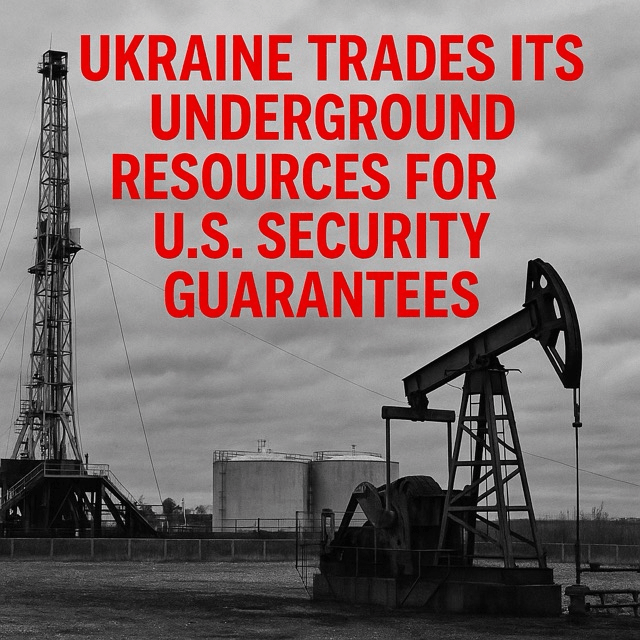
In a bold move aimed at securing its future amid ongoing conflict, Ukraine has reportedly entered into strategic agreements granting U.S.-based corporations extensive access to its mineral and energy-rich subsoil in exchange for long-term security assurances. The arrangement, though not officially confirmed in all its details, reflects a broader pattern of geopolitical trade-offs driven by war and insecurity.
Ukraine’s subsoil is rich in critical raw materials such as lithium, titanium, rare earth elements, and natural gas—resources that have become increasingly vital to modern technologies and defense systems. U.S. companies, backed by political support from Washington, are said to have obtained exploration and extraction rights in several eastern and central regions of the country. These contracts reportedly align with Ukraine’s efforts to attract foreign investment while shielding itself from the continuous threat posed by Russia.
Critics argue that this exchange resembles a modern form of resource diplomacy, where sovereignty over national assets is traded for protection. While Ukrainian officials frame the deals as necessary partnerships for reconstruction and security, others warn that they risk making the country overly dependent on American interests and undermining its ability to make autonomous policy decisions in the future.
This development occurs against the backdrop of Ukraine’s aspirations to join NATO and deepen its ties with the West. In this context, granting resource concessions could be seen as a strategic sacrifice to accelerate security integration and ensure military backing. However, such steps are likely to provoke further tension with Moscow, which views U.S. influence in Ukraine as a direct threat to Russian national interests.
Economically, the deals offer potential benefits. Ukraine stands to gain significant foreign investment, job creation, and technological transfer. Yet the terms of the contracts remain opaque, raising concerns about environmental impacts, labor rights, and the equitable distribution of profits among Ukrainian citizens.
For the U.S., the agreement enhances access to critical resources needed to reduce dependency on Chinese supply chains. It also strengthens America’s strategic presence in Eastern Europe at a time when global power competition is intensifying.
Whether this trade-off proves beneficial or detrimental in the long term will depend on transparency, oversight, and the genuine partnership between Kyiv and Washington. What is clear, however, is that in the crucible of war, Ukraine is making decisions that will shape its sovereignty and economic structure for generations to come.


 The Tower Post