Absence Sparks Diplomatic Questions Amid Growing Cultural Tensions in Europe

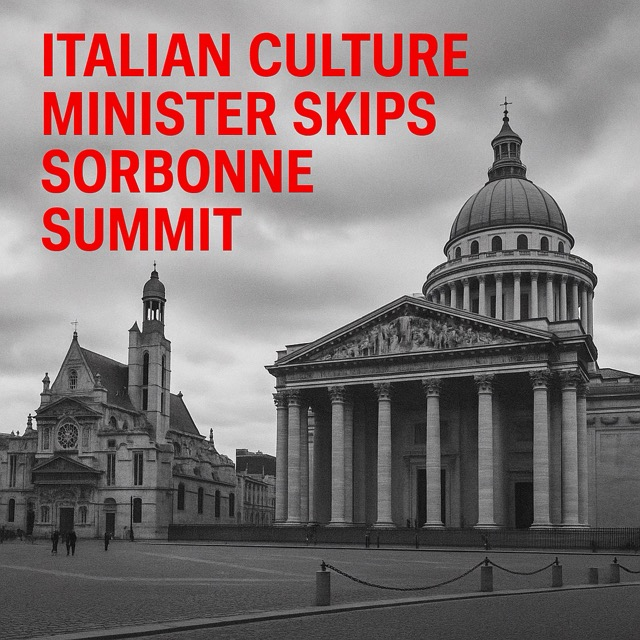
In a surprising move that has caught the attention of European cultural leaders, Italy’s Minister of Culture declined to attend the prestigious cultural summit held at the Sorbonne University in Paris this week. The absence, which was not formally explained by Rome, has led to speculation about growing tensions between Italy and other EU member states over cultural policy, funding, and ideological direction.
The Sorbonne Summit, often regarded as the Davos of European arts and heritage policy, gathered ministers, academics, curators, and artists from across the continent to discuss issues ranging from cultural digitization to repatriation of artifacts and support for creative industries post-COVID. Italy, long a cornerstone of European cultural identity, was notably the only G7 nation absent from the high-level ministerial panel.
French officials expressed disappointment privately, while some EU delegates voiced concern over what they perceive as Italy’s recent retreat from traditional cultural diplomacy. “Italy is a cultural superpower,” said one German delegate. “Their absence sends the wrong signal at a time when Europe needs cohesion and shared vision.”
Speculation is rife about the reasons behind the no-show. Some analysts suggest political disagreements may be to blame. Italy’s current cultural leadership has increasingly emphasized national sovereignty, control over cultural narratives, and the defense of Italian identity, often clashing with more progressive, pan-European approaches promoted by institutions like UNESCO or the European Commission.
Others point to recent funding disputes, particularly around EU cultural programs and digital archiving initiatives, where Italy has voiced frustration over allocation mechanisms and perceived favoritism toward Northern European countries. A statement released by the Italian Ministry offered no comment on the minister’s absence but reaffirmed “Italy’s unwavering commitment to safeguarding its cultural heritage on its own terms.”
Critics in Italy have also weighed in. Opposition lawmakers and several prominent Italian intellectuals described the absence as “a diplomatic misstep” and “a missed opportunity to shape the European debate on culture.” They argue that, by not attending, Italy has ceded influence at a critical juncture when questions around restitution, AI in the arts, and cultural education reform are being hotly debated.
Despite the controversy, the summit proceeded with a series of panel discussions, workshops, and bilateral meetings, many of which addressed Italy’s influential but absent role. Organizers hope that Rome will reengage in future discussions, especially as new cultural treaties and collaborative projects take shape across Europe.
In conclusion, the Italian Culture Minister’s decision not to attend the Sorbonne Summit has reignited conversations about Italy’s role in shaping the future of European cultural policy. While the reasons remain opaque, the political and symbolic consequences are already rippling across the continent.