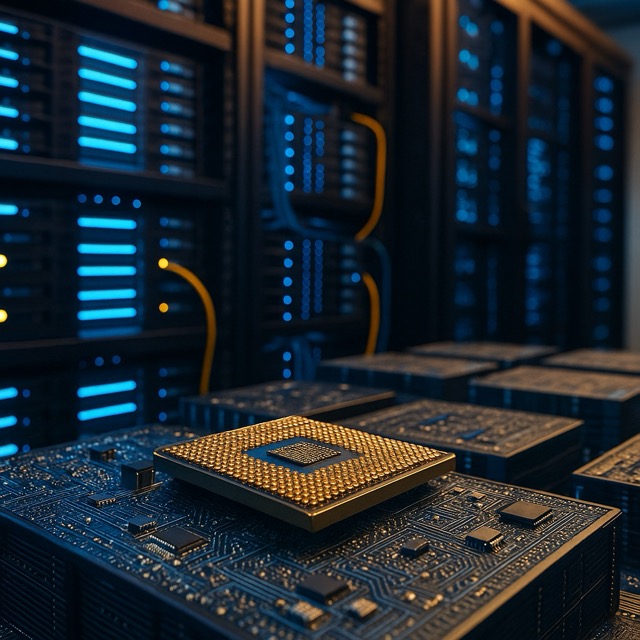
After a brief January scare over DeepSeek’s efficient AI model, tech firms double down on data center build-outs

What began as a tremor in tech investment circles on January 3, when China’s DeepSeek unveiled its hyper-efficient AI model, has evolved into a full-throated race for capacity. Early in the year, Wall Street speculators wondered whether mammoth data centers—once the backbone of corporate AI ambitions—had become an obsolete expense. Six months later, capacity constraints and surging demand have evaporated those doubts, fueling a relentless scramble to expand computational infrastructures.
At the January launch event in Shenzhen, DeepSeek’s research chief, Dr. Lan Wei, demonstrated a language-understanding model that matched the performance of leading Western systems while using 60 percent fewer GPU hours. The revelation sent tech stocks sliding: companies with sprawling data center portfolios saw valuations dip as investors fretted over stranded capital. Equities tracking hyperscale providers fell by as much as 12 percent in a single trading session.
“DeepSeek forced us to ask whether we really needed all these facilities,” recalled Marissa Chin, a portfolio manager at Horizon Ventures. “The market quickly recalibrated, questioning the ROI on the next wave of data center builds.”
Indeed, several major cloud providers publicly paused expansion plans in February, citing model efficiency gains. But by March, real-world usage told a different story. Demand for AI-powered services—from real-time translation to autonomous vehicle simulations—grew at a blistering pace, outstripping even optimistic forecasts.
“The moment of reckless efficiency has passed,” said Dr. Omar Nasser, head of infrastructure at DataScale Inc. “It’s not just about flops per watt anymore; it’s about flops per second, and that means more hardware.”
DataScale’s latest report shows global data center energy usage climbing by 8 percent between April and July. Behind the numbers lies a frenzy of construction: new campuses are breaking ground in Virginia, Singapore, and São Paulo, while existing sites undergo aggressive retrofits to accommodate liquid cooling and next-gen AI accelerators.
Investors have warmed to the narrative. Shares of companies supplying specialized AI hardware—chipmakers, high-density cooling vendors, and wafer fabs—have rebounded strongly. Even real estate investment trusts (REITs) focused on data centers are trading near all-time highs.
“The January jitters were a classic misread,” said financial analyst Priya Singh of Meridian Capital. “What looked like a threat turned out to be a complementary story: model efficiency buys time, but growth in application deployments guarantees that capacity will still be king.”
On the ground, executives grapple with logistics. Semiconductor shortages linger, pushing procurement lead times from six months to nearly a year. Ports in key shipping hubs are congested, and electrification projects to supply reliable power face regulatory hurdles. Yet, industry insiders say the urgency is unrelenting.
“We’re seeing five-year build-out cycles compressed into 18 months,” noted Carla Ruiz, COO of HyperNode Infrastructure. “Companies that don’t keep pace risk falling behind in the AI stakes.”
As autumn approaches, the focus shifts to sustainability. Environmental groups warn that unchecked expansion could spike carbon footprints, calling for stringent efficiency standards. In response, several consortiums are exploring carbon-neutral data center designs, blending renewable energy procurement with direct air capture partnerships.
Back in June, DeepSeek unveiled its second-generation model—30 percent more efficient still—but this time framed it as a companion to capacity growth rather than a replacement. By combining lean algorithms with robust hardware ecosystems, the company cemented the industry’s realization that efficiency and scale are two sides of the same coin.
For tech investors, what began as panic has matured into a strategic redirection. The lesson: in the age of AI, adaptability outweighs austerity. And as long as demand for intelligence continues its upward march, the race for capacity shows no sign of slowing.