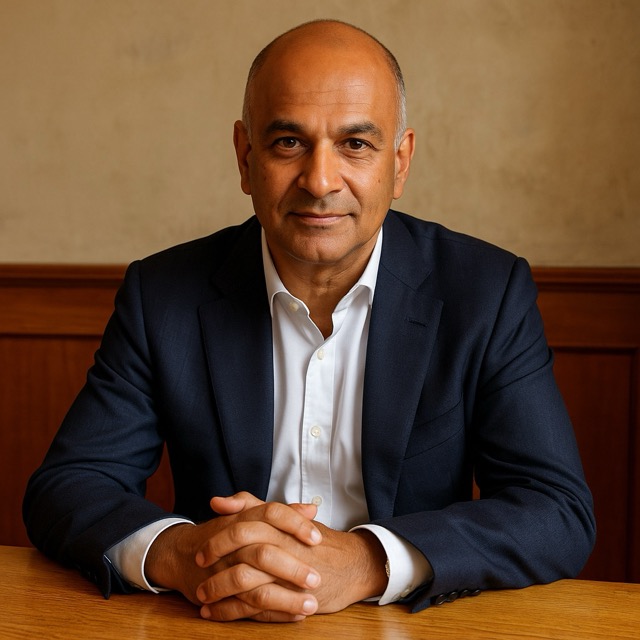
From banker to political strategist, Yusuf shapes Reform UK’s future while grappling with his immigrant roots and migration stance

Over the past year, Zia Yusuf, a multi-millionaire former investment banker, has quietly spearheaded a radical overhaul of Nigel Farage’s Reform UK party, determined to turn it from a protest movement into a disciplined electoral machine poised to vie for power in the next general election. Siddiq “Zia” Yusuf’s ascent within the right-wing populist outfit has been as swift as it has been controversial, reflecting his ambition to influence British politics at its highest levels.
Yusuf, 44, born in Birmingham to Pakistani immigrant parents, joined Reform UK in mid-2024 after departing his role as a director at a global bank. He brought with him both financial acumen and a vision of a lean, data-driven campaign architecture. Under his stewardship, the party has professionalised its candidate vetting, introduced rigorous internal training programmes, and centralised communications—moves long resisted by Reform’s grassroots faction.
“Politics is a team sport, not a series of sound bites,” Yusuf told the Financial Times over a leisurely lunch at a private members’ club near Westminster. “We need to be organised, disciplined, and strategically focused. Otherwise, we’ll never break the blue wall of Tory support.”
His efforts have already yielded tangible results: membership has surged by 20 percent since January, fundraising targets are being met, and Reform UK has registered a slew of new candidates in formerly unwinnable constituencies. Yusuf credits these gains to modernising the party’s operations, employing targeted social media analytics and professional campaign managers, rather than relying solely on populist rallies.
Yet Yusuf’s personal narrative adds complexity to Reform UK’s anti-immigration platform. Despite opposing “mass migration,” Yusuf speaks fondly of his parents’ journey and the “entrepreneurial spirit” they instilled. “My parents came here for opportunity,” he recalled. “They contributed to their community and worked hard. That’s not the kind of immigration we’re concerned about. We want to manage numbers, not turn away fellow human beings.”
His nuanced stance has sparked debate within Reform’s ranks, where hardliners demand stricter rhetoric. Yusuf argues that moderation is key to electoral success, warning that extreme positions will alienate mainstream voters. “Being authentic doesn’t mean being extreme,” he insisted. “We must respect our heritage while building a pragmatic policy framework.”
On policy, Yusuf advocates a comprehensive points-based immigration system, greater investment in border enforcement, and conditional residency tied to employment. He also emphasises economic renewal in neglected regions, proposing incentives for domestic industries and radical labour-market reforms to boost productivity.
Opponents denounce Yusuf’s reforms as mere window dressing. Labour MP Aisha Shah questioned whether a party steeped in protest politics could truly transform. “Professionalism alone won’t mask xenophobia at the core of their ideology,” she said. But Yusuf remains unbowed, confident that a polished brand and coherent platform will transcend past controversies.
Looking ahead, Reform UK’s next major test lies in select local elections this autumn. Yusuf has bet the party’s future on proving its newfound organisational muscle. Should the results exceed expectations, he could find himself in Downing Street’s antechambers, shaping policy for a government that once seemed implausible.
As he finishes his espresso, Yusuf reflects on his journey from son of immigrants to power broker. “I want to leave a legacy beyond finance,” he muses. “If we can offer practical solutions and win trust, we’ll show that politics can be a force for renewal—even in an era of division.”
For now, all eyes are on whether his strategy can translate into seats—and whether the party he’s reconfigured can truly govern.