Backed by Prime Minister Pedro Sánchez’s renewable push and an abundance of sunshine, Spain raced to the top tier of solar nations. Now midday oversupply, negative prices and curtailments are eroding profits and testing grids—forcing a pivot to storage, interconnections and smarter market design.
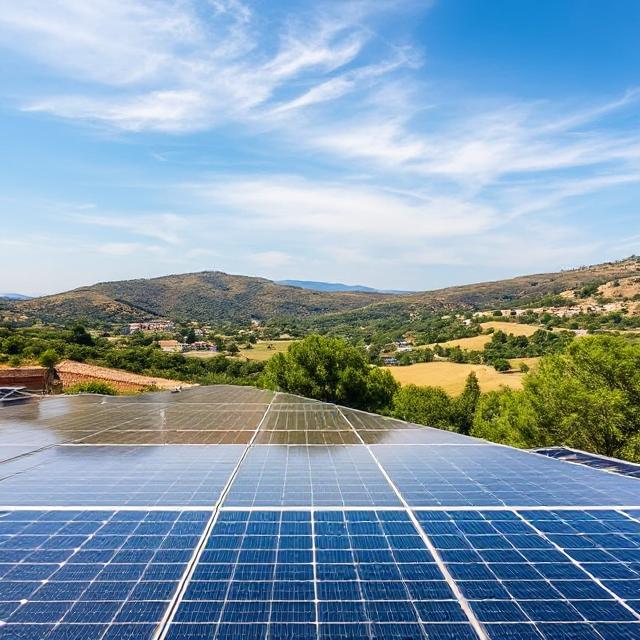
Madrid – Spain has been the poster child of Europe’s solar surge. Generous sun, streamlined permitting in the post‑pandemic recovery, and political backing from Prime Minister Pedro Sánchez’s government combined to unleash a wave of photovoltaic (PV) build‑out. By early summer 2025, installed PV capacity had climbed into the mid‑30‑gigawatt range and, in several months, solar briefly led the generation mix. Investors, equipment suppliers and developers hailed a virtuous story of cheaper power and rapid decarbonisation.
But the sunlit uplands have begun to overheat. On bright, breezy days this spring, wholesale electricity prices at times collapsed to zero or below for midday hours. The very success of PV has depressed the price that solar generators can capture for their output. Meanwhile, grid bottlenecks and operational limits forced system operators to curtail output, wasting clean generation. The combination—weak capture prices and rising curtailment risk—has rippled through balance sheets and boardrooms across the sector.
A policy story sits behind the power story. Since taking office, Sánchez has cast Spain as a renewables leader, channeling EU recovery funds into green projects, accelerating auctions and promoting electrification. The focus helped to crowd in private capital and pull forward a pipeline of utility‑scale PV and self‑consumption installations across the peninsula. It also nudged Spain’s system operator to confront a near‑term reality: generation was growing faster than the ability to move and store it.
The limits showed up in real time. In late April, a rare, hours‑long blackout swept across the Iberian Peninsula—an extraordinary event for a highly developed grid. While investigators pointed to technical faults and planning errors rather than any single solar plant as the trigger, the episode sharpened a pre‑existing debate: how quickly can Spain integrate ever‑larger volumes of variable renewables without upgrading its transmission spine and cross‑border links?
Price cannibalisation—when abundant solar depresses its own revenues—has been most acute around noon. Developers accustomed to merchant models and short‑dated power purchase agreements (PPAs) watched capture rates slide, squeezing projects with higher debt costs. Several sponsors delayed final investment decisions or re‑sequenced pipelines to favour hybrid sites with batteries or co‑located wind. Traders say daily shapes have become more extreme: long valleys of negative or near‑zero prices across midday, followed by steeper evening ramps as the sun sets and gas‑fired plants kick back in.
Curtailment, once a footnote, is now a headline metric. At the height of spring, Spain shed gigawatts of potential solar output on multiple days as transmission limits and operational constraints bit, particularly in inland regions where new farms arrived faster than grid reinforcements. The technical losses most often eased when heat raised air‑conditioning demand in June and July, but the signal was clear: storage and stronger networks are no longer optional extras—they are prerequisites for maintaining returns.
The government has begun to respond. A June package of ‘urgent measures’ set out to bolster grid resilience, streamline repowering and permitting, and—crucially—promote energy storage and flexibility resources. Funding calls this summer are earmarking hundreds of megawatts of batteries, while the European Investment Bank signed off financing for the long‑planned Bay of Biscay interconnector to France, a project whose upgraded capacity promises to ease Iberia’s isolation from the rest of the EU power market.
At the same time, regulators face a delicate balancing act. Spain’s success in driving down wholesale prices has delivered savings to households and industry, and strengthened the country’s competitiveness for new electrified manufacturing. Yet if prices remain chronically depressed at midday, merchant solar will struggle to raise capital, especially with higher interest rates. Officials are therefore exploring tools—from locational signals and congestion pricing to enhanced balancing markets and longer‑tenor contracts—that can better reward flexibility and steer projects to where they are most valuable.
For developers and owners, the playbook is shifting fast. Hybridisation is moving from buzzword to default: pairing PV with two‑ to four‑hour batteries to soak up cheap midday electrons and resell them into evening peaks. Asset managers are re‑cutting hedges, re‑negotiating offtake and reevaluating layouts to minimise curtailment risk. Some are dusting off plans for pumped‑hydro upgrades and demand‑response partnerships with data centres and industrials now eyeing Spain for low‑cost power.
Grid strategy is the other pillar. Spain’s interconnection with France remains among the thinnest in Europe relative to capacity, a constraint that leaves Iberia semi‑islanded. The Bay of Biscay link is a milestone, but a single project cannot solve structural bottlenecks. Redoubled efforts on north‑south transmission reinforcements, digital controls and dynamic line ratings will be needed to move solar from where it is generated to where it is consumed—at home and across borders.
Meanwhile, the rooftop revolution continues. Self‑consumption has surged in sun‑soaked regions from Andalusia to Valencia, slashing retail bills and buffering consumers from volatility. Yet even here, the midday glut is shaping behaviour: aggregators are bundling behind‑the‑meter batteries and smart‑appliance controls to arbitrage time‑of‑use tariffs and cut pressure on the distribution grid.
Utilities and independents alike say 2025 is a transition year—painful for earnings, but necessary to build the next phase. The prize is a system that can host far more renewable energy without giving it away for free at noon. That means accelerating storage, smoothing permits for grid upgrades, and giving clear value to flexibility. The alternative is a stop‑start cycle of booms and bottlenecks that chills investment just when Europe needs clean power most.
Spain’s solar success is real and, on balance, a strategic advantage. It has pulled wholesale prices lower, cut fossil‑fuel imports and pushed renewables to record shares of generation. The paradox is that success, left unmanaged, can undermine itself. If the next wave of policy—on storage, grids and market design—lands as intended, the country can turn today’s oversupply into a springboard for electrified industry and resilient growth. If not, the sunlight that powered Spain’s rise will keep scorching the very business models that built it.


 The Tower Post