Jensen Huang says demand outpaces projections as TSMC expands wafer commitments

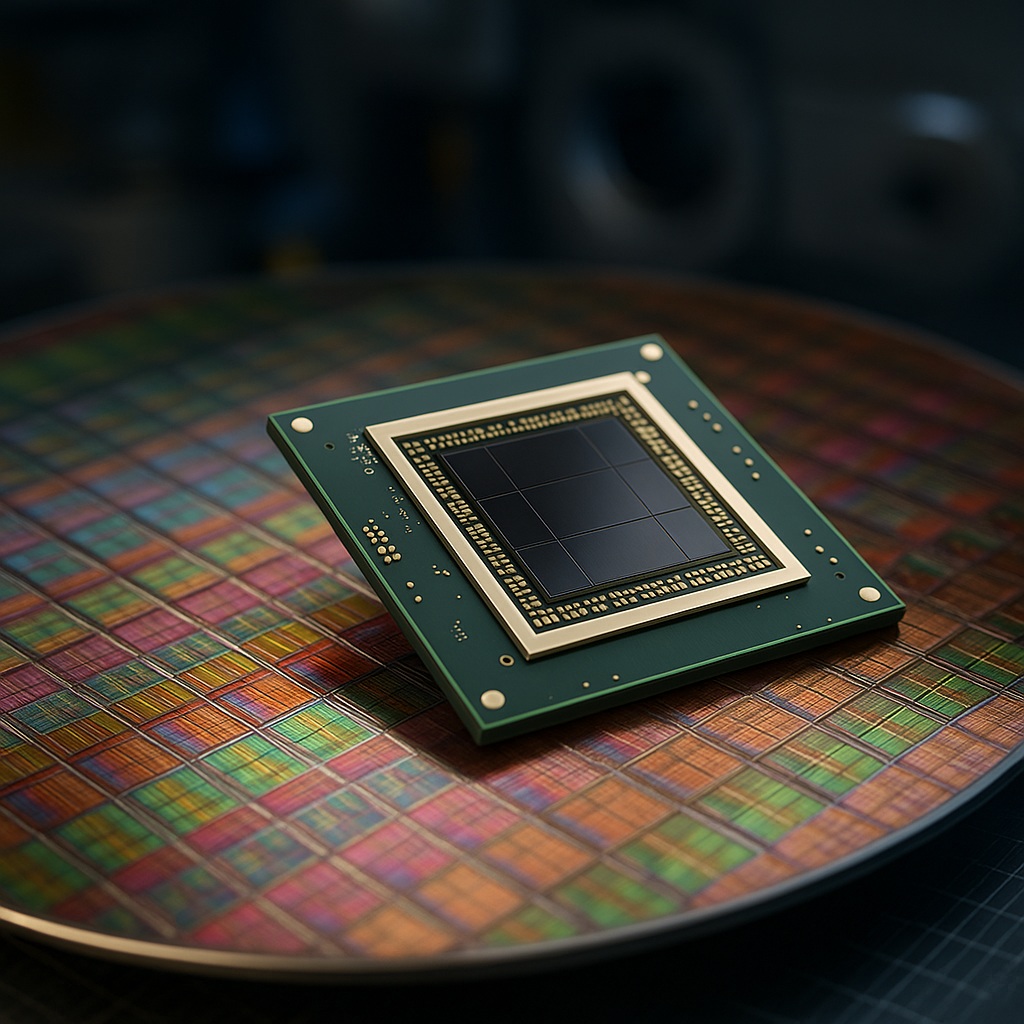
Nvidia’s latest generation of AI processors, built on the new Blackwell architecture, is rapidly reshaping supply dynamics across the global semiconductor ecosystem. During a media briefing this week, Chief Executive Jensen Huang reported that demand for Blackwell-class accelerators has exceeded the company’s internal forecasts, prompting Nvidia’s manufacturing partner Taiwan Semiconductor Manufacturing Company (TSMC) to ramp wafer allocations more aggressively.
Huang described the appetite for Blackwell as “extraordinary,” noting that hyperscalers, sovereign AI initiatives, and enterprise platforms continue to accelerate GPU procurement plans. Executives across the
sector say the Blackwell architecture’s improved energy efficiency, expanded memory bandwidth, and advanced interconnect capabilities are driving a new wave of cluster‑level deployments.
Industry analysts indicate that demand for AI compute has moved from tactical experimentation to long‑horizon infrastructure investment. Nvidia’s supply agreements have reflected that shift, with customers locking in multi‑quarter volume commitments tied to broader data‑center buildouts.
TSMC sources say that wafer starts dedicated to advanced‑node GPUs are increasing steadily, aligning with Nvidia’s forward guidance. While neither company disclosed exact volume figures, representatives confirmed that procurement cycles have grown in complexity, involving multi‑stakeholder coordination across packaging, substrate supply, and logistics.
Market strategists suggest that Blackwell’s surge is indicative of a broader structural transformation in digital infrastructure. As enterprises integrate foundation models deeper into operations, demand for high‑end accelerators is expected to remain elevated. Several major cloud platforms plan to debut expanded AI regions built specifically around Blackwell clusters, reflecting a shift toward more specialized compute zones.
Huang emphasized that Nvidia is working closely with suppliers to manage lead times and stabilize availability. The company continues to prioritize large‑scale platform providers but has reiterated support for enterprise customers aiming to deploy smaller, domain‑specific AI environments.
Despite intensifying competition from AMD, Intel, and a growing cohort of custom-silicon initiatives, Nvidia’s position remains strong heading into the final quarter of the year. Analysts note that the Blackwell architecture is arriving at a strategically advantageous moment, with organizations across sectors reevaluating digital infrastructure roadmaps. The alignment of next‑generation silicon, maturing AI frameworks, and sustained investment cycles appears to be reinforcing Nvidia’s leadership in accelerated computing.
For now, Huang’s message is clear: demand is robust, supply is scaling, and Blackwell is shaping the competitive contours of the AI infrastructure market for the coming year and beyond.