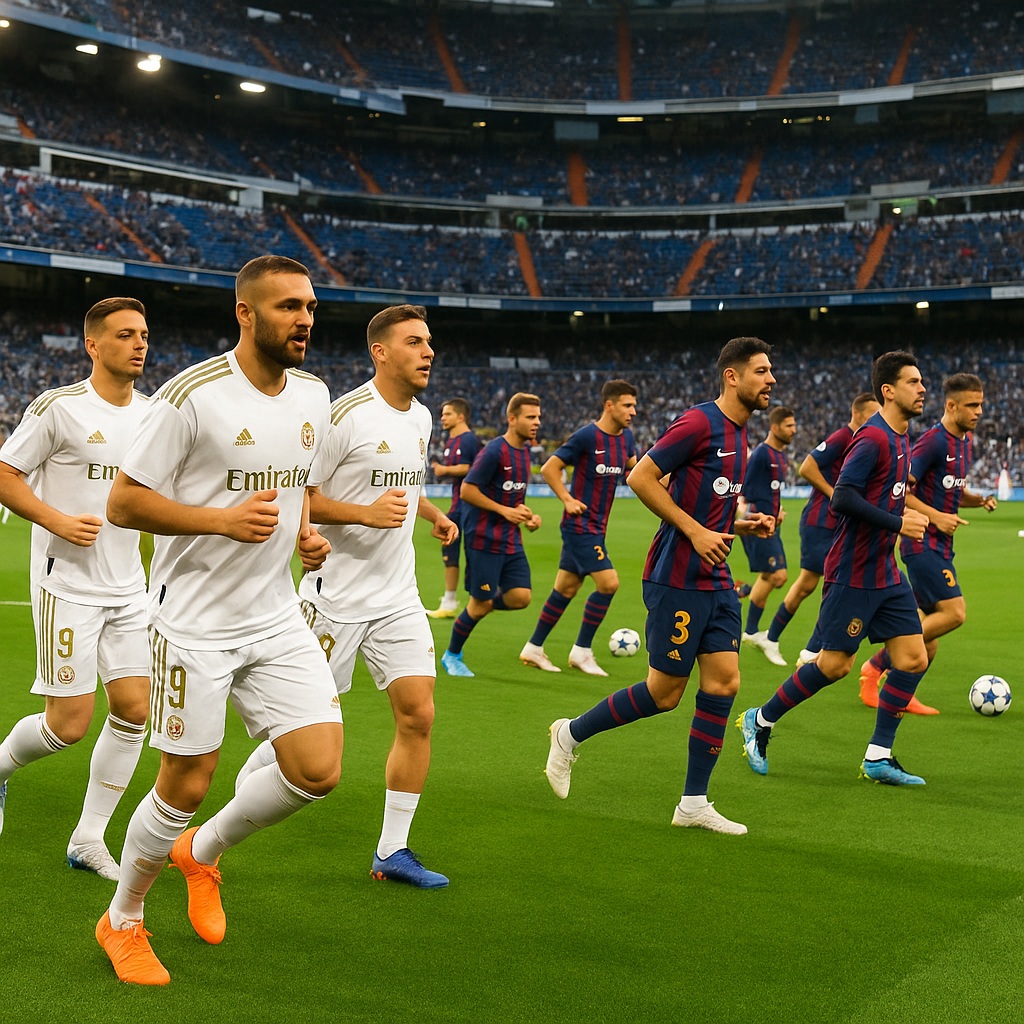
Spanish giants look to steady domestic form following midweek disappointments

The mood across Spain’s two dominant football institutions, Real Madrid CF and FC Barcelona, has shifted markedly in recent days. What began as a week of high European expectations ended with frustration, as both clubs fell short in crucial Champions League fixtures. Now, with LaLiga entering a decisive stretch, the rivals are recalibrating to avoid letting continental setbacks metastasize into domestic slippage.
For Real Madrid, the midweek loss highlighted persistent inconsistency in maintaining control during high-tempo matches. The team’s first hour was marked by confidence and structural coherence, but a late collapse exposed the defense’s vulnerability to rapid transitions. Senior figures inside Valdebebas admitted that the defeat served as an unwelcome reminder of the squad’s periodic lapses in concentration, particularly against opponents willing to overload wide channels.
Carlo Ancelotti, speaking after the match, emphasized that the setback, while disappointing, should not eclipse the broader progress made this season. Real Madrid remains firmly in contention near the top of the LaLiga table, yet must now confront the challenge of managing physical load with a roster that has already absorbed several injury concerns. The coaching staff is expected to rotate more aggressively in the coming fixtures, prioritizing the maintenance of midfield balance and optimizing forward combinations that have alternated between explosive and uneven.
FC Barcelona, meanwhile, faced its own European frustrations after a performance that blended technical fluidity with moments of defensive naivety. The Catalan side dominated possession but failed to convert territorial advantage into tangible control of the match. The subsequent late equalizer conceded exposed longstanding structural issues in defending set pieces, an area that head coach Hansi Flick had worked to address in recent weeks.
At the Ciutat Esportiva Joan Gamper, the message following the draw was one of urgency without panic. Multiple members of the technical staff acknowledged that while the result complicates the club’s Champions League trajectory, it does not derail it. The priority now shifts to restoring momentum in LaLiga, where Barcelona is still well positioned, though the margin for error is narrowing in a season defined by heightened competition among the top six.
Both clubs now approach their upcoming domestic fixtures with the shared recognition that the psychological component is as important as tactical adjustments. Historically, Real Madrid and Barcelona have demonstrated a capacity to convert European adversity into LaLiga resolve, leveraging internal pressure to drive improved performances. Yet analysts note that this season feels different, shaped by the relentless physical demands placed upon lineups containing both ascending talent and veteran leaders.
Looking ahead, Real Madrid’s immediate task lies in reaffirming its compact defensive organization, particularly in the zones between midfield and back line. The team’s attacking trident has shown promise, but the absence of sustained off-ball pressure has allowed opponents to dictate rhythm in key phases. Reestablishing that intensity will be central to Madrid’s rebound strategy.
Barcelona’s path back to form hinges on reasserting its positional identity under Flick. While the side has displayed moments of the controlled verticality the manager has sought to instill, the inconsistency in the final third and recurring vulnerability on rest defense continue to complicate match management. Several squad members privately indicated that sharper decision-making in transition could be the difference between stagnation and resurgence.
The broader LaLiga narrative also adds pressure: several mid-table clubs have produced strong early-season performances, shrinking the point differential typically enjoyed by Spain’s perennial contenders. Both giants understand that the league will not wait for them to recalibrate.
Still, there is no panic inside either camp. The institutional memory within Real Madrid and Barcelona is deep, defined by seasons in which early turbulence gave way to sustained domestic dominance. The coming fixtures will test whether those patterns repeat or whether 2025–26 introduces a more volatile competitive landscape.
What is clear is that this next phase of the LaLiga campaign represents a critical opportunity for both clubs to reassert authority, stabilize performance, and turn European frustration into renewed domestic purpose. As supporters and analysts alike look toward the weekend, the expectation is simple: a response befitting the stature of Spain’s two historic football powers.