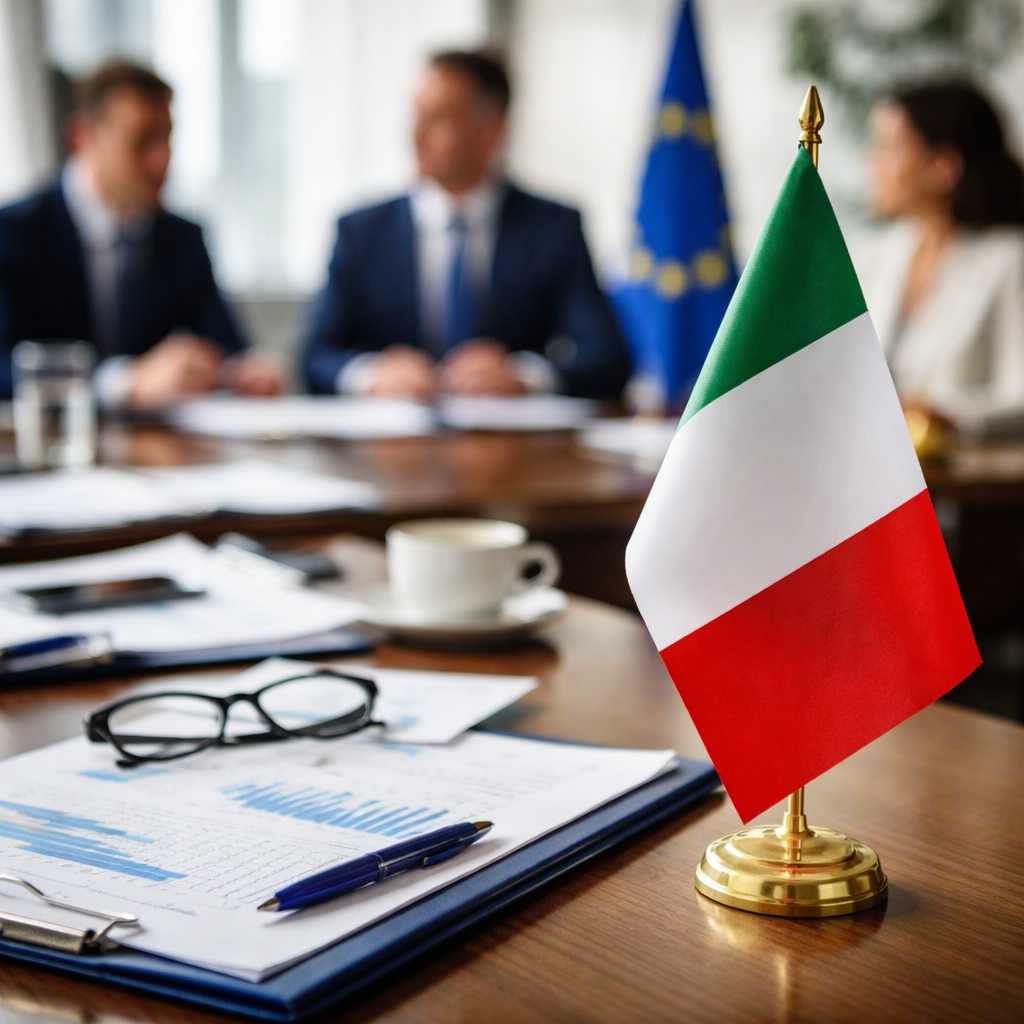
Rome signals a recalibration of its national security screening regime as Brussels presses for clarity, seeking to protect strategic assets without chilling foreign investment.

As the new year begins, Italy is preparing to revise its so-called “golden power” rules, the legal framework that allows the government to block or impose conditions on foreign investments deemed sensitive to national security. The move follows sustained criticism from European Union institutions, which have warned that Rome’s broad and sometimes opaque use of the powers risks undermining the bloc’s single market principles.
According to a government document circulated among ministries and reviewed by officials familiar with the matter, the planned changes aim to narrow the scope of interventions and make procedures more predictable. The initiative reflects a delicate balancing act: safeguarding strategic sectors such as energy, telecommunications, defence and critical technologies, while reassuring international investors that Italy remains open for business.
Introduced more than a decade ago and significantly expanded in recent years, Italy’s golden power regime has become one of the most far-reaching investment screening systems in Europe. Originally focused on defence and national security assets, it was later extended to cover a wide range of sectors, including finance, health, food supply chains and emerging technologies. During periods of heightened geopolitical tension, successive governments relied on the law with increasing frequency, sometimes attaching stringent conditions to transactions or launching in-depth reviews of deals involving non-EU buyers.
European officials have repeatedly voiced concern that Italy’s approach goes beyond what is strictly necessary under EU law. While member states are entitled to protect essential security interests, Brussels has stressed that measures must be proportionate, transparent and non-discriminatory. In private exchanges and formal communications, EU bodies have urged Rome to clarify definitions, tighten timelines and reduce the discretionary margin enjoyed by the executive.
Italian officials say the forthcoming revisions are intended to address these concerns without dismantling the system. One senior policymaker involved in the discussions described the effort as a “fine-tuning exercise rather than a retreat,” adding that the government remains convinced of the strategic importance of screening foreign takeovers in an increasingly fragmented global economy.
At the heart of the proposed changes is a clearer delineation of what constitutes a strategic asset and when the state can intervene. The document points to the need for more precise thresholds, both in terms of ownership stakes and the nature of the technologies involved. It also envisages streamlining notification requirements, which companies have long criticised as burdensome and uncertain, particularly for intra-EU transactions.
Business groups have welcomed signs of reform but remain cautious. International investors have complained that Italy’s golden power reviews can be lengthy and unpredictable, sometimes coming late in the deal-making process and altering transaction economics. Legal advisers note that the mere possibility of intervention has, in some cases, deterred bids or pushed investors to seek opportunities elsewhere.
At the same time, domestic political pressures make any loosening of controls sensitive. Strategic autonomy and protection of national champions have become recurring themes in Italian political debate, cutting across party lines. The government must therefore reassure voters that critical infrastructure and know-how will not be sold off indiscriminately, particularly to state-backed entities from outside the EU.
The timing of the planned revisions is also significant. Across Europe, governments are reassessing their exposure to global supply chain shocks, technological dependencies and geopolitical rivalries. Investment screening mechanisms have multiplied and toughened since recent crises, even as the European Commission seeks to ensure coherence and avoid fragmentation of the single market.
Analysts say Italy’s recalibration could set an important precedent. If Rome succeeds in aligning its golden power rules more closely with EU expectations while retaining effective safeguards, it could offer a model for other member states grappling with similar tensions. Failure to do so, however, risks prolonging disputes with Brussels and adding another layer of uncertainty to Europe’s investment climate.
For now, officials stress that the review is ongoing and that consultations with EU counterparts will continue. The message Rome wants to send at the start of the year is one of pragmatism: a recognition that national security and economic openness are not mutually exclusive, but must be carefully reconciled in a rapidly changing world.