Economic safeguards clash with political pressure as Madrid grants a narrow exception to its military and dual‑use trade restrictions

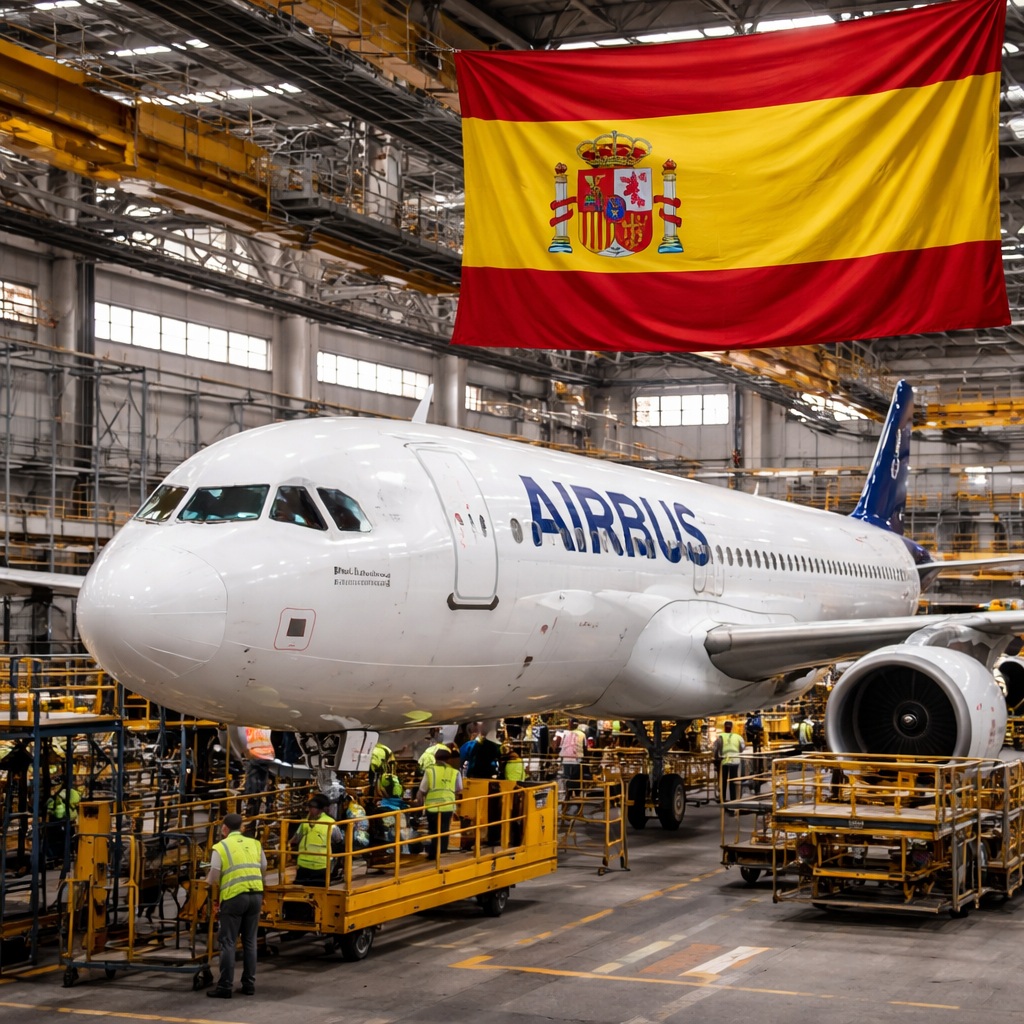
By early winter, Spain’s self‑declared red line on military and dual‑use trade with Israel had already begun to show its first major exception. The government quietly authorized Airbus to continue incorporating Israeli technology into several aircraft and drone programs, despite legislation designed to halt such exchanges. The decision, confirmed by officials and industry sources, underscores the tension between Madrid’s foreign‑policy positioning and the hard realities of industrial dependence in Europe’s aerospace sector.
Spain’s ban, adopted amid mounting domestic pressure over the conflict in Gaza, was framed as a principled stand. It sought to suspend military and dual‑use trade with Israel, aligning Spain with a growing bloc of European voices calling for stricter oversight of defense cooperation. Yet Airbus, Europe’s flagship aerospace manufacturer, sits at the crossroads of globalized supply chains that are not easily disentangled by national decree.
According to government officials, the exemption granted to Airbus is narrowly defined. It allows the continued use of Israeli‑developed components and systems already embedded in ongoing programs, including avionics, sensors, and drone‑related technologies. The rationale, ministers say, is pragmatic rather than ideological: an abrupt cutoff would disrupt production lines, jeopardize export contracts, and threaten thousands of jobs across Spain’s aerospace hubs.
Industry estimates place the number of affected workers at around fourteen thousand, spread across facilities in Andalusia, Madrid, and Castilla‑La Mancha. These sites form part of Airbus’s integrated European manufacturing network, where components cross borders multiple times before final assembly. In this context, officials argue, a unilateral halt would not only damage Spain’s economy but also weaken Europe’s strategic autonomy in aviation and defense.
Airbus itself has trodden carefully. In internal communications, the company has emphasized compliance with national laws while warning of the cascading effects of supply‑chain disruptions. Israeli technology, executives note, is often embedded deep within certified systems, making rapid substitution technically complex and financially costly. Re‑certification alone could take years, potentially sidelining entire product lines.
The exemption has, however, ignited fierce political debate at home. Left‑wing parties and civil‑society groups accuse the government of hypocrisy, arguing that moral commitments lose credibility when economic interests intervene. Several lawmakers have demanded greater transparency, calling for parliamentary oversight of any exceptions granted under the ban. For them, Airbus has become a symbol of double standards: too big, too strategic, and too economically vital to be touched.
The government counters that the choice was not between principle and profit, but between symbolic action and tangible harm. Senior officials stress that Spain has not lifted its broader restrictions and that the Airbus carve‑out does not authorize new contracts or expanded cooperation. Instead, it is portrayed as a temporary shield, designed to prevent immediate damage while Europe debates a more coordinated approach.
This argument resonates with parts of Spain’s business community, which fears that abrupt policy shifts could erode investor confidence. Aerospace exports represent a significant share of Spain’s high‑value manufacturing output, and Airbus programs are deeply entwined with suppliers large and small. Any shock to this ecosystem would ripple far beyond a single company.
At the European level, the episode exposes a familiar fault line. While foreign policy remains largely national, defense and aerospace industries operate on a continental scale. Components sourced from Israel may be integrated in France, assembled in Germany, and tested in Spain. A patchwork of national bans and exemptions risks fragmenting the market and undermining joint programs that the EU increasingly frames as strategic priorities.
For now, Spain’s decision buys time. It preserves jobs and export revenue at a moment of economic uncertainty, while postponing a reckoning over how far ethical considerations can realistically reshape entrenched industrial relationships. Yet the controversy shows no sign of fading. As public scrutiny intensifies, the government will face growing pressure to justify where it draws the line—and why that line bends when Airbus is involved.
As the new year approaches, Spain’s Airbus exemption stands as a case study in the limits of unilateral action in a globalized defense economy. It reflects a balancing act familiar to many European governments: asserting moral leadership abroad while safeguarding industrial strength at home. Whether that balance can hold, politically and ethically, remains an open question.