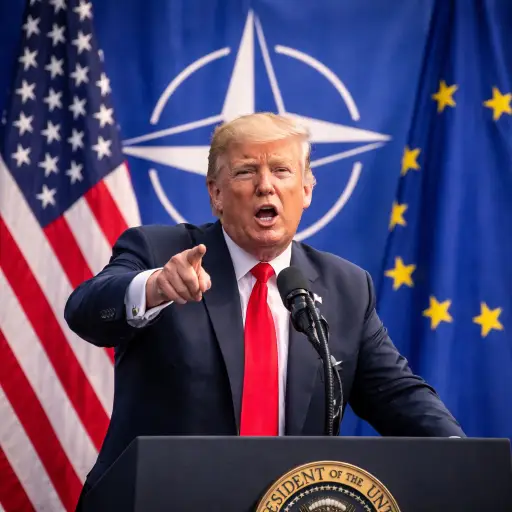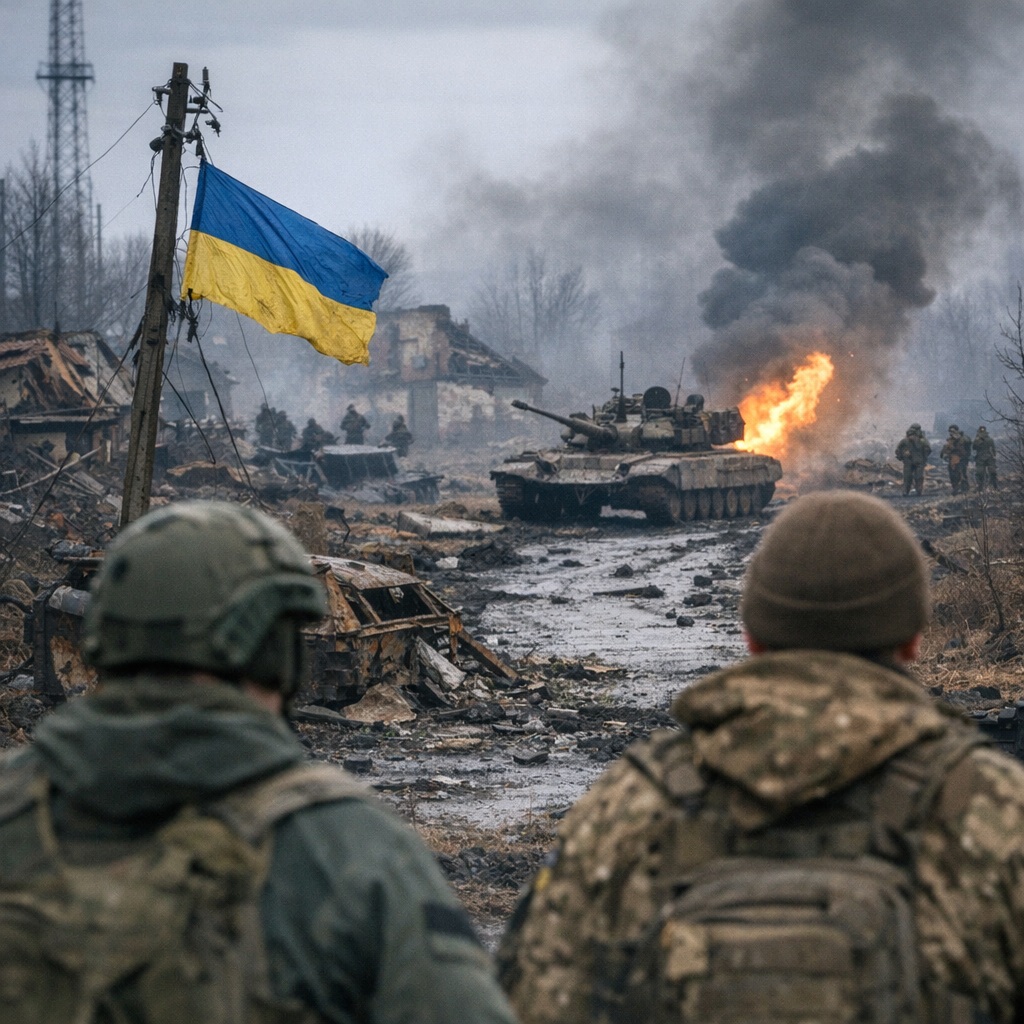
Despite renewed diplomatic signals, Moscow shows little inclination to halt its campaign, leaving Europe braced for prolonged conflict and fragile security.

A cold stillness hangs over diplomatic corridors across Europe, but it is a stillness heavy with doubt rather than hope. As the war in Ukraine grinds on, talk of a ceasefire has once again surfaced in international forums, carried by cautious statements and carefully worded communiqués. Yet on the ground, the fighting continues with unrelenting intensity, underscoring a widening gap between diplomatic optimism and military reality.
For Ukraine, the promise of a ceasefire has become a recurring mirage. Each new round of discussions, whether held openly or behind closed doors, is greeted with guarded expectation in Kyiv and deep skepticism along the front lines. Ukrainian officials insist they remain open to negotiations, but only on terms that respect sovereignty and territorial integrity. Moscow, by contrast, has offered few concrete signals that it is prepared to halt its campaign, instead maintaining maximalist demands that Kyiv and its European backers view as unacceptable.
Russian forces continue to press forward in contested regions, using a strategy that blends attrition warfare with periodic escalations designed to test Ukrainian defenses and Western resolve. Missile strikes, drone attacks, and sustained artillery fire have become grimly routine, keeping civilian populations under constant strain and further eroding trust in any near-term peace process. The message from the Kremlin appears consistent: negotiations may be useful tactically, but the broader strategic objectives remain unchanged.
This posture has alarmed European leaders, many of whom had hoped that war fatigue and economic pressures might push Moscow toward compromise. Instead, capitals across the continent are preparing for a future in which the conflict remains unresolved for the foreseeable future. Defense spending plans are being revised upward, military stockpiles replenished, and civil defense discussions revived in ways unseen for decades.
The concern is not limited to Ukraine alone. European officials increasingly warn that a frozen or unresolved conflict could destabilize the continent’s security architecture. A prolonged war risks normalizing high-intensity conflict on Europe’s eastern flank, blurring the line between war and peace and increasing the chances of miscalculation. Border states, in particular, fear that persistent instability could spill over through cyberattacks, disinformation campaigns, or covert operations.
Diplomatic efforts have not ceased. Envoys shuttle between capitals, and international organizations continue to search for formulas that might bring both sides to the table. Yet the fundamental problem remains one of intent. While Ukraine seeks a pause in fighting as a step toward a just and durable peace, Russia appears to view any ceasefire primarily as an opportunity to consolidate gains and regroup.
This divergence has shaped Western strategy as well. European governments, alongside their transatlantic partners, are balancing support for Ukraine with the need to manage escalation risks. Military aid continues, albeit amid debates over sustainability and domestic political pressures. At the same time, leaders are careful to frame their support as defensive, seeking to avoid providing Moscow with a pretext for widening the conflict.
Public opinion across Europe reflects this tension. Sympathy for Ukraine remains strong, but concerns about energy prices, inflation, and the long-term costs of war are increasingly prominent. Governments must navigate these pressures while maintaining a united front, aware that any visible fracture could be exploited by Moscow.
For Ukraine’s population, the strategic debates offer little immediate relief. Daily life remains shaped by air raid sirens, damaged infrastructure, and the constant uncertainty of war. Communities far from the front lines are not immune, as long-range strikes and economic disruption ripple across the country. The resilience displayed by Ukrainian society has impressed allies, but officials in Kyiv are frank about the toll being taken.
As winter deepens, the risks associated with a failed ceasefire grow sharper. Energy infrastructure remains a vulnerable target, humanitarian needs are mounting, and the prospect of another year of full-scale war looms large. In this context, the absence of genuine commitment from Moscow to de-escalation is not merely a diplomatic setback; it is a direct threat to regional stability.
European leaders, meeting in emergency sessions and long-planned summits alike, are increasingly candid in their assessments. Few now expect a breakthrough in the near term. Instead, planning assumptions are shifting toward endurance: sustaining Ukraine, deterring further aggression, and preparing societies for a prolonged period of insecurity.
The danger, analysts warn, is that normalization of the conflict could dull the sense of urgency required to prevent escalation. A war that becomes background noise is a war more likely to spread, whether through accident or design. In that sense, the elusive ceasefire is not just a missed opportunity for peace, but a warning sign.
As the new year unfolds, the central question is no longer whether talks will continue, but whether they can produce outcomes that change realities on the ground. For now, the answer appears bleak. With Russia showing little inclination to halt its advance and Ukraine determined to resist, Europe stands at a crossroads, bracing for a future in which peace remains promised but perpetually postponed.