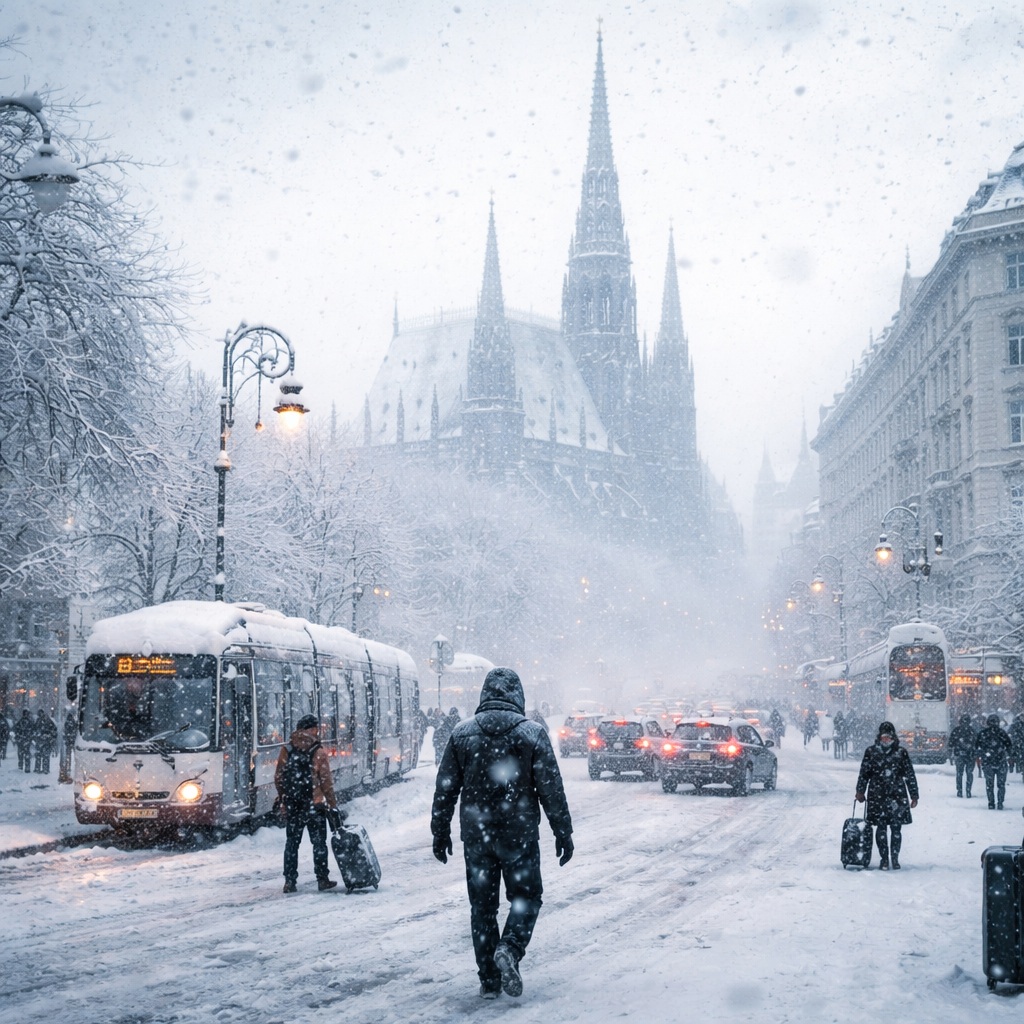
A surge of polar air drives snow, gales, and travel chaos across the continent as authorities brace for prolonged impacts.
A powerful Arctic air mass has swept across Europe, plunging temperatures far below seasonal norms and triggering widespread disruption from the Atlantic coast to Central and Eastern Europe. The cold snap, driven by a deep northerly flow, has delivered heavy snowfall in several regions, battered islands with violent winds, and strained transport networks already grappling with winter demand.
Across Central Europe, snow blanketed cities and countryside alike. In Poland, plows worked through the night as commuters faced delayed trains and treacherous roads. Local authorities urged residents to limit non-essential travel, warning that refreezing could turn slush into ice within hours. Similar scenes unfolded in mountainous areas, where snowfall intensified at higher elevations and avalanche services raised their alert levels.
The Alps were again at the center of winter’s force. Resorts reported fresh snow that delighted skiers but complicated access, as mountain passes were periodically closed for safety checks. Rail operators reduced services in exposed corridors, citing the risk of drifting snow and frozen switches. Energy providers monitored demand closely, as the sharp drop in temperatures pushed heating systems to their limits.
Farther south, the Arctic surge manifested not as snow but as ferocious winds. On the Mediterranean island of Corsica, hurricane-force gusts battered coastal towns, forcing port closures and grounding ferries. Emergency services responded to fallen trees and power outages, while authorities cautioned residents to avoid exposed areas. The contrast underscored the breadth of the system’s reach, delivering different hazards across Europe’s varied geography.
Meteorologists described the event as one of the most intense cold incursions of the season so far. The Arctic air mass, funneled southward by a disrupted jet stream pattern, allowed frigid air to spill deep into the continent. Forecasters warned that the cold could persist, with nights remaining bitter and daytime recovery limited, particularly in inland regions.
The prolonged chill raised concerns about infrastructure resilience. Water utilities cautioned about frozen pipes, while municipalities opened warming centers for vulnerable populations. Farmers assessed potential damage to winter crops, and transport officials prepared contingency plans should conditions deteriorate further.
Despite the challenges, communities adapted with a familiar winter resilience. Volunteers assisted stranded motorists, and local governments coordinated shelters and emergency responses. Still, officials emphasized vigilance, noting that the combination of cold, snow, and wind posed ongoing risks.
As Europe remains under the grip of Arctic air, authorities continue to monitor conditions closely. With forecasts offering little immediate relief, the continent braces for several more days of winter’s harshest face, a stark reminder of the power of polar weather systems to disrupt daily life across borders.

 The Tower Post