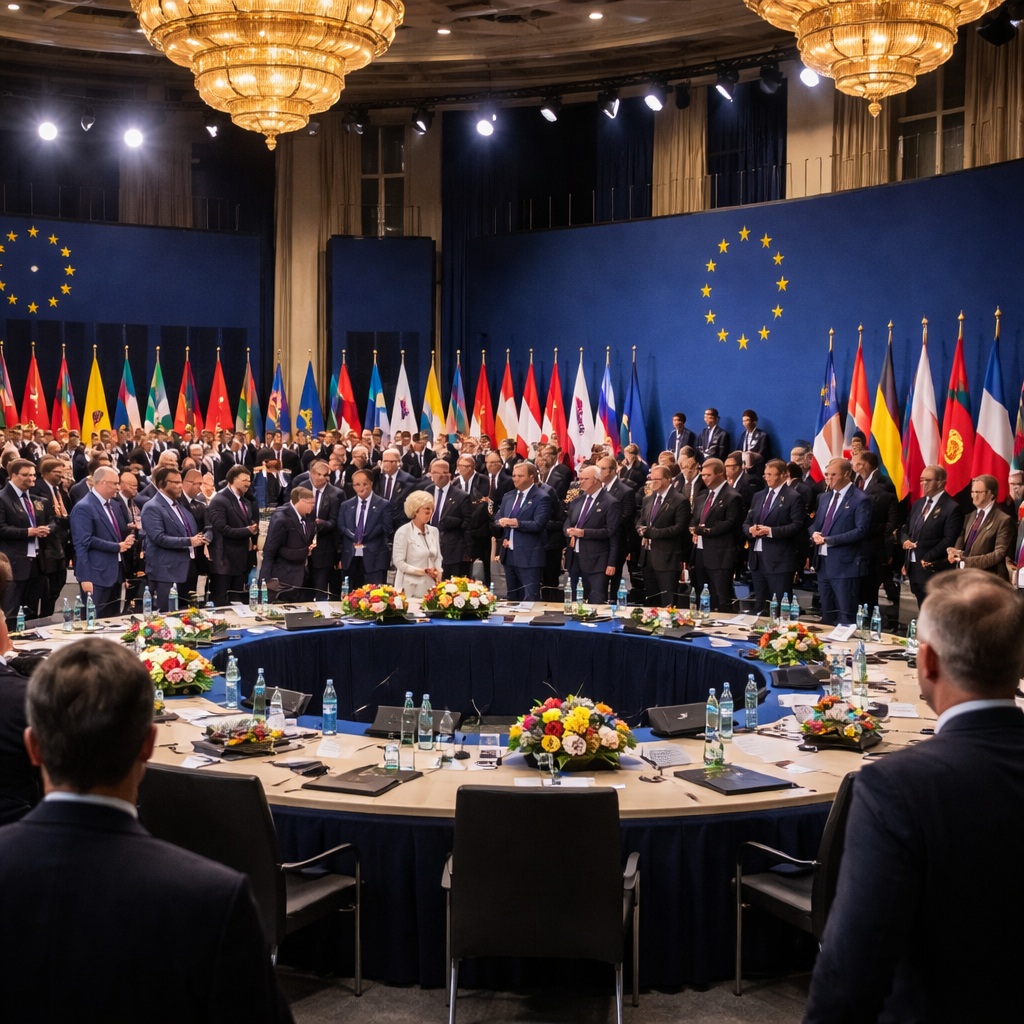
From Berlin to Paris and beyond, governments and parties recalibrate strategies as 2026 agendas take shape.

Europe enters the new year in a state of political recalibration. Across the European Union, power centers are quietly adjusting their priorities, alliances, and narratives, reflecting a broader effort to position national agendas for the year ahead. While no single crisis dominates the landscape, a convergence of economic pressure, security concerns, and institutional reform debates is reshaping political dynamics inside the bloc’s most influential capitals.
In Berlin, the tone is pragmatic but cautious. Germany’s governing coalition faces the dual challenge of sustaining economic competitiveness while managing voter fatigue with compromise politics. Budget discipline remains a defining theme, but it is now paired with renewed attention to industrial resilience and supply-chain security. Party maneuvering within the coalition has become more visible, as partners seek to differentiate themselves ahead of a decisive political year, even while publicly emphasizing stability and European responsibility.
Paris, by contrast, is marked by strategic assertiveness. The French government has intensified its focus on European sovereignty, framing domestic reforms as part of a broader continental ambition. Defense cooperation, technological autonomy, and reform of EU fiscal rules dominate internal debates. At the same time, opposition forces are sharpening their critique, accusing the executive of prioritizing European leadership over social cohesion at home. This tension is likely to define France’s political discourse throughout the year.
Southern European capitals are navigating a different set of pressures. In Rome and Madrid, economic recovery and fiscal flexibility remain central concerns. Governments are keen to demonstrate compliance with EU frameworks while quietly advocating for more adaptable interpretations of common rules. Party dynamics in these countries reflect a balancing act between reformist promises and the realities of coalition politics, with European negotiations often serving as a stage for domestic positioning.
In Central and Eastern Europe, the focus is increasingly strategic. Security policy, migration management, and relations with Brussels dominate discussions. Governments in the region are investing political capital in redefining their role within the Union, emphasizing sovereignty while acknowledging the practical benefits of coordination. Party maneuvering here is often framed in national terms, but the underlying objective is clear: influence the EU’s long-term direction rather than merely react to it.
Brussels itself reflects these shifting dynamics. Within EU institutions, there is a growing awareness that consensus-building will require greater political sensitivity. Legislative priorities are being refined to account for diverging national agendas, particularly on climate policy, industrial regulation, and enlargement. Informal diplomacy between capitals has intensified, signaling a recognition that formal summits alone are no longer sufficient to manage the Union’s complexity.
Across the board, the political mood is one of cautious anticipation. Governments are not only responding to immediate challenges but also laying groundwork for future debates that will define Europe’s trajectory. Party leaders are positioning themselves for credibility on the European stage, aware that domestic legitimacy increasingly depends on how effectively they navigate EU politics.
As the year unfolds, Europe’s political capitals are likely to continue this quiet repositioning. The absence of dramatic confrontation should not be mistaken for inertia. Instead, it reflects a Union in transition, where strategy, timing, and alignment matter more than spectacle. The decisions shaped in these months will influence not just national politics, but the broader direction of the European project in the period ahead.