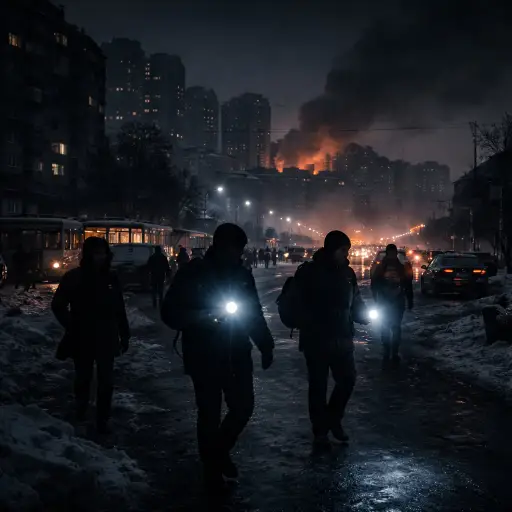
Widespread power outages ripple across Ukraine and Moldova as diplomacy falters amid shifting regional priorities.

Power grids across Ukraine and neighboring Moldova were plunged into renewed disruption this week as widespread blackouts swept through major cities and rural regions alike, underscoring the fragility of civilian infrastructure nearly two years into the war with Russia. Energy officials described cascading failures linked to damaged transmission lines and emergency load-shedding, while residents reported hours without electricity, heating, or reliable communications during winter conditions.
In Ukraine, the outages were uneven but extensive. Urban centers experienced rolling blackouts that halted public transport, darkened hospitals operating on backup generators, and forced businesses to close early. In smaller towns and villages, the loss of power translated into water shortages and limited access to mobile networks, compounding humanitarian pressures already strained by displacement and economic hardship.
Moldova, long vulnerable due to its interconnected energy system and reliance on external supply routes, was also affected. Authorities there confirmed disruptions in multiple districts, prompting emergency coordination with European partners to stabilize the grid. The outages renewed political debate in Chisinau over energy independence and the risks of spillover from the conflict next door.
Energy analysts say the incidents highlight a persistent pattern: infrastructure resilience has improved since earlier phases of the war, but remains exposed to both direct damage and systemic stress. Repair crews continue to work under difficult conditions, often racing to restore service while contending with shortages of equipment and the threat of further disruptions.
Beyond the immediate humanitarian impact, the blackouts have sharpened the political atmosphere in Kyiv. Ukrainian leaders voiced skepticism about the viability of upcoming peace talks, suggesting that the diplomatic track has lost momentum as international attention shifts toward broader regional tensions and crises elsewhere. Officials emphasized that while Ukraine remains committed to dialogue in principle, conditions on the ground — including ongoing infrastructure instability — complicate any meaningful negotiations.
The uncertainty reflects a wider diplomatic stalemate. Previous rounds of talks yielded limited progress, and expectations for breakthrough have steadily diminished. Western allies continue to balance support for Ukraine with their own domestic pressures and evolving foreign policy priorities, leaving Kyiv wary of waning focus on its security needs.
For ordinary citizens, however, the geopolitical calculations feel distant compared to the practical realities of life without power. Families have adapted with generators, battery packs, and improvised heating, but fatigue is evident. “You plan your day around electricity,” said one resident in central Ukraine. “When it’s gone, everything stops.”
As winter continues, authorities warn that further disruptions cannot be ruled out. Energy systems remain under strain, and the path toward a durable ceasefire or negotiated settlement is as uncertain as the flickering lights across the region. What is clear is that the war’s impact extends far beyond the front lines, embedding itself in the daily rhythms of millions whose lives are shaped by both darkness and doubt.