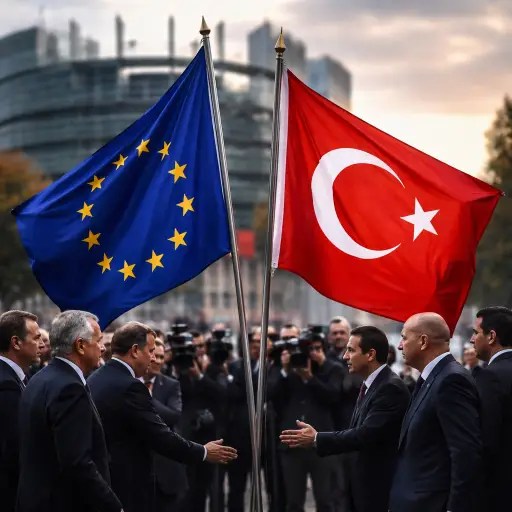
European lawmakers denounce Ankara’s reported removals as diplomatic tensions simmer while Turkish officials reject the accusations and warn of further strain in EU relations

The European Parliament has sharply condemned what it describes as the alleged expulsion of foreign Christian residents and clergy from Turkey, intensifying already strained relations between Ankara and Brussels and adding a new layer of friction to a partnership long marked by cautious cooperation and recurring political disputes.
Members of the European Parliament adopted a resolution criticizing Turkish authorities over reports that foreign pastors, humanitarian workers, and long-term Christian residents had been denied residence permits or issued deportation notices on grounds described as security concerns without detailed public explanation.
Lawmakers from across the political spectrum argued during plenary debate that the cases raise serious questions about religious freedom, transparency, and adherence to international commitments, stressing that candidate countries are expected to uphold fundamental rights as a cornerstone of relations with the European Union.
The resolution calls on Ankara to provide clear justifications for the reported removals and urges the European Commission and the European External Action Service to raise the matter formally with Turkish counterparts while closely monitoring developments affecting religious minorities.
Several parliamentarians framed the controversy as part of a broader pattern of democratic backsliding, contending that measures perceived as targeting faith communities risk deepening mistrust at a time when both sides have sought pragmatic engagement on trade, migration management, and regional security.
Turkish officials swiftly rejected the accusations, describing them as politically motivated and asserting that all residency and deportation decisions are conducted strictly within national law and based on legitimate security assessments rather than religious affiliation.
In statements carried by Turkish media, government representatives emphasized that Turkey does not discriminate on the basis of religion and pointed to the country’s historical Christian heritage as evidence of longstanding coexistence among different faith communities.
Human rights organizations have called for greater transparency, noting that several foreign Christian workers reportedly received entry bans or non-renewals of residence permits without detailed reasoning, a practice critics say creates uncertainty and undermines confidence in legal predictability.
Within Turkey, small Protestant congregations and other Christian communities often rely on foreign clergy or volunteers for pastoral leadership and humanitarian coordination, meaning that shifts in residency policy can have disproportionate effects on their ability to function and maintain international connections.
The European Parliament’s resolution is non-binding but symbolically significant, signaling mounting impatience within EU institutions regarding Turkey’s human rights trajectory and potentially influencing broader discussions on customs union modernization and visa facilitation.
Diplomats describe the current atmosphere between Brussels and Ankara as cautious yet brittle, characterized by cooperation where interests align but marked by limited political goodwill and recurring disputes over governance, foreign policy direction, and domestic reforms.
For Turkey, the renewed criticism arrives amid efforts to recalibrate foreign relations and strengthen economic diplomacy, a strategy that could be complicated if the issue gains wider traction within EU member states and national parliaments.
European officials have reiterated that dialogue remains the preferred approach while underscoring that respect for freedom of religion or belief is a core expectation in relations with any partner seeking closer ties with the Union.
As the controversy unfolds, both sides appear entrenched in their narratives, with European lawmakers portraying the alleged expulsions as emblematic of broader rights concerns and Turkish authorities warning against what they view as external interference in sovereign decisions.
The episode underscores once again the fragile equilibrium of EU–Turkey relations, a partnership that remains strategically important yet persistently fraught, and highlights how disputes touching on faith, sovereignty, and legal standards can quickly escalate diplomatic tension at a sensitive political moment.