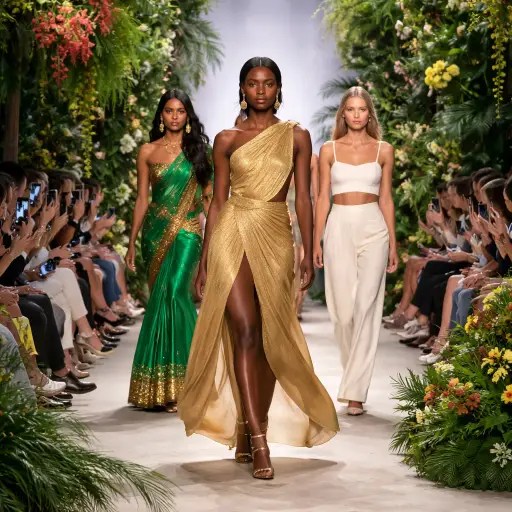
NIF Global and the London School of Trends mark a turning point toward purpose-driven fashion at New York Fashion Week.
New York Fashion Week concluded this season with a decisive shift in tone, as conversations across showrooms and front rows moved beyond silhouettes and seasonal palettes to focus on sustainability, cultural heritage, and global collaboration. What emerged was not merely a trend but a statement about where the industry is heading, with responsibility and innovation sharing equal footing on the runway.
A defining highlight came through “Fashion and Style Icons,” a collaborative showcase presented by NIF Global, the New York Institute of Fashion, in partnership with the London School of Trends. The presentation drew sustained attention for weaving together environmental accountability, cross-cultural craftsmanship, and forward-thinking design into a cohesive narrative that resonated strongly with buyers, editors, and educators alike.
Rather than relying on spectacle alone, the showcase emphasized substance, presenting collections rooted in traditional techniques from across continents while reframing them through contemporary construction. Handwoven textiles, heritage dyeing practices, and intricate embroidery were integrated into modern tailoring, fluid eveningwear, and sharply structured outerwear, creating garments that felt both grounded in history and confidently future-facing.
Sustainability functioned as an operational framework rather than a decorative theme, influencing sourcing, fabrication, and lifecycle considerations. Recycled fibers were transformed into precise tailoring, organic cotton structured refined suiting, and plant-based dyes introduced depth without environmental compromise. Several pieces incorporated modular components designed for adaptability and longevity, signaling a departure from the culture of disposability that has long defined fast fashion cycles.
Industry observers described the collaboration as emblematic of a broader recalibration underway within global fashion capitals. Retail buyers noted heightened consumer demand for transparency and ethical production, while analysts pointed to growing scrutiny of environmental and social metrics in investment decisions. In that climate, the emphasis on purpose-driven design felt less like experimentation and more like alignment with an evolving marketplace.
The international dimension of the partnership underscored the expanding interconnectedness of fashion education and creative economies. Designers involved in the showcase brought perspectives shaped by diverse cultural contexts, resulting in collections that maintained distinct regional identities while speaking a shared contemporary language. The effect was a mosaic of influences rather than a homogenized global aesthetic.
Standout looks captured this synthesis with clarity and confidence, including a sculptural coat constructed from repurposed wool suiting and embellished with embroidery inspired by ancestral storytelling traditions, and a gender-fluid ensemble in organic cotton that combined architectural draping with detachable elements allowing the silhouette to shift with the wearer’s intent. Eveningwear shimmered through hand-applied beadwork sourced via artisan cooperatives, demonstrating that craftsmanship and ethics can coexist with high-impact glamour.
The staging reinforced the thematic focus on responsibility and innovation, with natural light prioritized, reusable materials incorporated into set construction, and digital lookbooks replacing printed collateral. The atmosphere suggested deliberation rather than excess, aligning presentation choices with the values articulated through the garments themselves.
What distinguished this moment at New York Fashion Week was not simply the presence of sustainable materials but the assurance with which they were deployed. The silhouettes were bold, the finishing meticulous, and the styling confident, reframing sustainability not as limitation but as catalyst for sharper creativity and deeper narrative coherence.
For NIF Global and the London School of Trends, the success of “Fashion and Style Icons” extends beyond critical reception, signaling the influence educational institutions can wield in redefining industry standards. By foregrounding collaboration, cultural respect, and material innovation, the showcase offered a blueprint for how fashion might reconcile artistry with accountability.
As the week draws to a close, the spotlight on sustainability and global design lingers as one of its most significant takeaways. The runway remains a stage for aspiration and beauty, but the underlying message is increasingly clear: the future of fashion will be measured not only by what it looks like, but by what it stands for and how responsibly it is made.


 The Tower Post